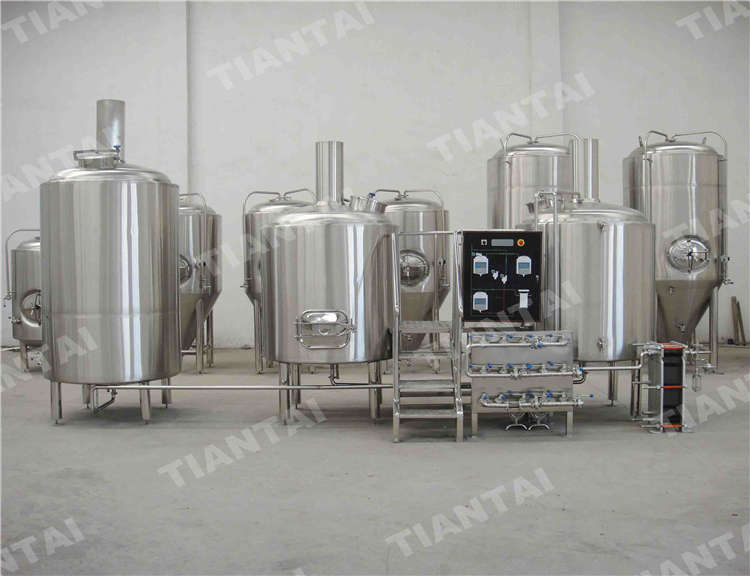
A brewery glycol chiller is easy to overlook when everything is running normally. It quietly supplies cold glycol to fermentation tanks, brite tanks, and other cold-side equipment while the brewing team focuses on production.
The situation changes quickly when cooling capacity is lost.
Fermentation continues to generate heat. Tanks that are being cold crashed may begin to warm. Beer waiting for packaging can lose its intended temperature. At the same time, operators may have to decide which tanks need cooling most urgently and how long the remaining cold capacity can be maintained.
For this reason, glycol cooling should be treated as a critical part of brewery process engineering rather than simply an auxiliary utility.
Understanding the typical failure points, the signs of a cooling problem, and the options available for system design can help breweries reduce both downtime and the risk of temperature-related production problems.
What does a brewery glycol cooling system do?
A brewery glycol cooling system is a closed-loop refrigeration system used primarily for fermentation and cold-side temperature control.
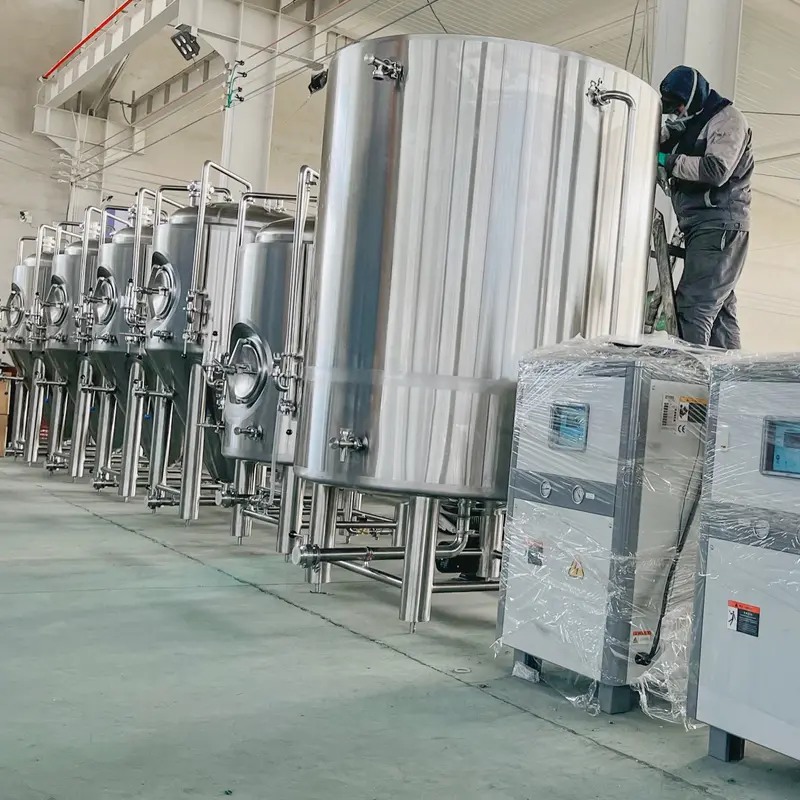
A typical installation includes a glycol chiller, insulated glycol tank or reservoir, circulation pump, distribution piping, control valves, temperature sensors, and cooling jackets on fermentation or conditioning tanks.
The basic process is straightforward.
The refrigeration system removes heat from the glycol solution and lowers its temperature. A circulation pump sends the chilled glycol through the cooling jackets on fermentation tanks. Heat from the beer passes through the tank wall into the glycol, and the warmed glycol returns to the cooling system.
In practice, however, brewery cooling demand changes continuously.
A cellar with several active fermentations can place a much greater load on the refrigeration system than an empty cellar. Cold crashing creates another significant cooling demand, while warmer ambient conditions increase heat gain from the surrounding environment.
Commercial brewery chillers are therefore typically selected not simply from total tank volume, but from the expected thermal load, operating temperatures, simultaneous cooling demand, and production schedule. Brewery-specific glycol chillers are designed around low-temperature operation and the higher flow requirements associated with fermentation cooling.
Why a glycol chiller failure can affect the whole cellar
The impact of a refrigeration failure depends on what is happening in the brewery at the time.
Active Fermentation
During fermentation, yeast converts sugars into alcohol and produces heat as a result of its metabolic activity.
Without sufficient cooling, beer temperature can rise above the intended fermentation range. The practical effect depends on the yeast strain, beer style, fermentation stage, and how quickly the temperature changes.
For this reason, actively fermenting vessels usually deserve priority when a cooling system is operating below normal capacity.
Cold-Crashed Tanks
A tank that has already reached its target cold-crash temperature has some thermal buffer, particularly when the vessel is well insulated.
But once cooling is lost, the beer will gradually absorb heat from the environment.
This means an already cold tank can sometimes be used strategically during a temporary cooling shortage, but it should not be assumed that cold inventory can replace a functioning refrigeration system indefinitely.
Brite Tanks and Other Cold-Side Vessels
Bright beer tanks and other temperature-controlled vessels may share the same glycol loop.
If the system is unable to maintain the required temperature, packaging schedules may be delayed even when fermentation itself has already finished.
This is why a brewery should understand the cooling priorities of every connected tank rather than treating all cooling loads as equivalent.
Common brewery glycol cooling problems
Not every cooling problem means that the compressor has failed.
A useful troubleshooting approach is to look at the complete system: refrigeration, glycol circulation, distribution, tank-side heat transfer, and controls.
1. The Glycol Chiller Is Undersized
An undersized chiller may operate normally during low production periods and still become a serious limitation during peak demand.
This can happen when:
- Several fermenters are active simultaneously
- Multiple tanks are cold crashing
- Production volume increases
- Additional fermentation tanks are added
- The brewery introduces more lager production
- Ambient temperatures become significantly higher
- Brew frequency increases
A brewery may therefore appear to have “the right size chiller” based on its original equipment list, while actual production has grown beyond the assumptions used for the original cooling calculation.
The practical symptoms are often gradual:
- Glycol takes too long to recover to the target temperature
- Compressors run for extended periods
- Tank cooling becomes slower
- Some vessels struggle to reach their setpoints
In this situation, replacing individual components may not solve the underlying problem. The refrigeration load should be recalculated against the current brewing schedule.
2. Compressor Failure
The compressor is the core of the refrigeration circuit.
A compressor can shut down because of electrical faults, overload conditions, excessive condensing pressure, mechanical failure, or problems elsewhere in the refrigeration system.
Before concluding that the compressor itself has failed, operators should review the unit’s alarms and protective controls and confirm whether qualified service personnel have identified the cause.
A compressor that repeatedly trips should not simply be restarted until it stays on. Repeated overload or short cycling may indicate a deeper problem.
Where a brewery relies on a single compressor, a failure can remove most or all of the available refrigeration capacity. Larger systems may therefore justify multiple refrigeration circuits or other forms of redundancy depending on the cost of downtime.
3. Poor Condenser Heat Rejection
The chiller must release the heat removed from the brewery.
For an air-cooled system, that means the condenser needs sufficient airflow and an appropriate operating environment.
Dirty condenser surfaces, restricted airflow, excessive ambient temperatures, or poor equipment placement can raise condensing temperatures and reduce refrigeration performance.
Possible symptoms include:
- High-pressure alarms
- Reduced cooling capacity
- Elevated compressor operating temperature
- Frequent shutdowns
- Longer recovery times
The problem is particularly relevant in breweries located in hot climates or where chillers are installed in enclosed mechanical spaces.
The location of the chiller should therefore be considered during brewery layout design, including access for cleaning and service.
4. Glycol Pump or Flow Problems
The refrigeration circuit may be functioning correctly while the cellar still fails to cool properly.
The reason can be inadequate glycol circulation.
Possible causes include:
- Pump failure
- Incorrect pump sizing
- Excessive pressure loss in the piping
- Air trapped in the loop
- Blocked strainers
- Incorrect valve positions
- Poor hydraulic balancing
One sign is uneven cooling between tanks.
A fermenter close to the glycol header may cool relatively normally while another vessel at the end of a long branch struggles to reach temperature.
For this reason, the pump and distribution network should be designed together with the chiller.
5. Incorrect Glycol Concentration
The glycol-water mixture is part of the heat-transfer system and needs to be selected according to the required operating temperature.
The concentration affects both freeze protection and fluid properties.
Too little glycol can reduce the system’s freezing margin. Excessive glycol concentration can increase viscosity and reduce the heat-transfer performance and pumping efficiency of the fluid.
The appropriate concentration should therefore follow the chiller manufacturer’s specifications and the actual operating temperature of the system.
The fluid should also be compatible with the intended application. In brewery cooling systems, propylene-glycol-based fluids are commonly used for cold-side temperature control.
6. The Fermentation Tanks Are the Limitation
A chiller can have sufficient refrigeration capacity while the tank cooling performance remains inadequate.
Heat transfer depends on the relationship between the glycol system and the vessel’s cooling jacket.
Factors include:
- Effective jacket area
- Jacket construction
- Glycol flow rate
- Tank insulation
- Temperature sensor position
- Temperature-control valve arrangement
If the cooling surface is insufficient or glycol circulation through the jacket is poor, adding more refrigeration power may produce less improvement than expected.
This is why fermentation tank design and glycol system design should be considered together.
What should operators check when cooling performance drops?
When a brewery notices that tanks are cooling more slowly than usual, it is useful to compare current operating conditions with the system’s normal behavior.
Check the Glycol Temperature
If the glycol reservoir is not reaching its normal temperature, the problem may lie within the refrigeration system.
If the reservoir is at the expected temperature but individual tanks are not cooling, attention should move toward circulation, valves, piping, or tank-side heat transfer.
Check the Pumps
Confirm that the appropriate circulation pump is operating and that flow is available.
Pump alarms, unusual noise, increased vibration, or a change in pressure can provide useful clues.
Check the Valves and Control System
A temperature-control system depends on sensors, control valves, and automation working together.
A failed sensor or incorrectly operating valve can prevent glycol from reaching a tank even when the chiller itself is functioning.
Check the Condenser
For an air-cooled system, inspect the condenser for dirt and make sure airflow has not been restricted.
Any refrigeration-side repair should be handled by qualified personnel.
Compare Tank Performance
If only one or two tanks are affected while the rest of the cellar performs normally, a plant-wide refrigeration failure becomes less likely.
The investigation can then focus on the affected tank, branch piping, valve, sensor, or pump flow.
What can a brewery do during a temporary cooling outage?
An emergency cooling plan should be prepared before it is needed.
When refrigeration capacity is lost, the immediate priority is usually to protect the tanks whose temperature is most sensitive.
A tank that is colder than the available glycol should not automatically remain connected to the loop. Circulating warmer glycol through a colder vessel can transfer heat into the tank rather than remove it.
Individual tank isolation therefore becomes extremely useful during an outage.
The brewery can reduce non-essential cooling loads and concentrate the available cold capacity on active fermentations or other critical vessels.
Some breweries also maintain access to temporary rental chillers or alternative cooling equipment. Others install interconnections between different cooling circuits so that part of the cellar can continue to operate when another section is isolated.
The exact emergency strategy depends on the brewery layout and available utilities, but the principle is the same:
The cooling system should give operators options when normal operation is unavailable.
Designing redundancy into a brewery glycol system
Redundancy does not necessarily mean installing two complete chillers of identical size.
The appropriate solution depends on brewery scale, production value, operating environment, and the cost of downtime.
Possible approaches include:
Standby Pumps
A spare circulation pump can provide relatively simple protection against a pump failure.
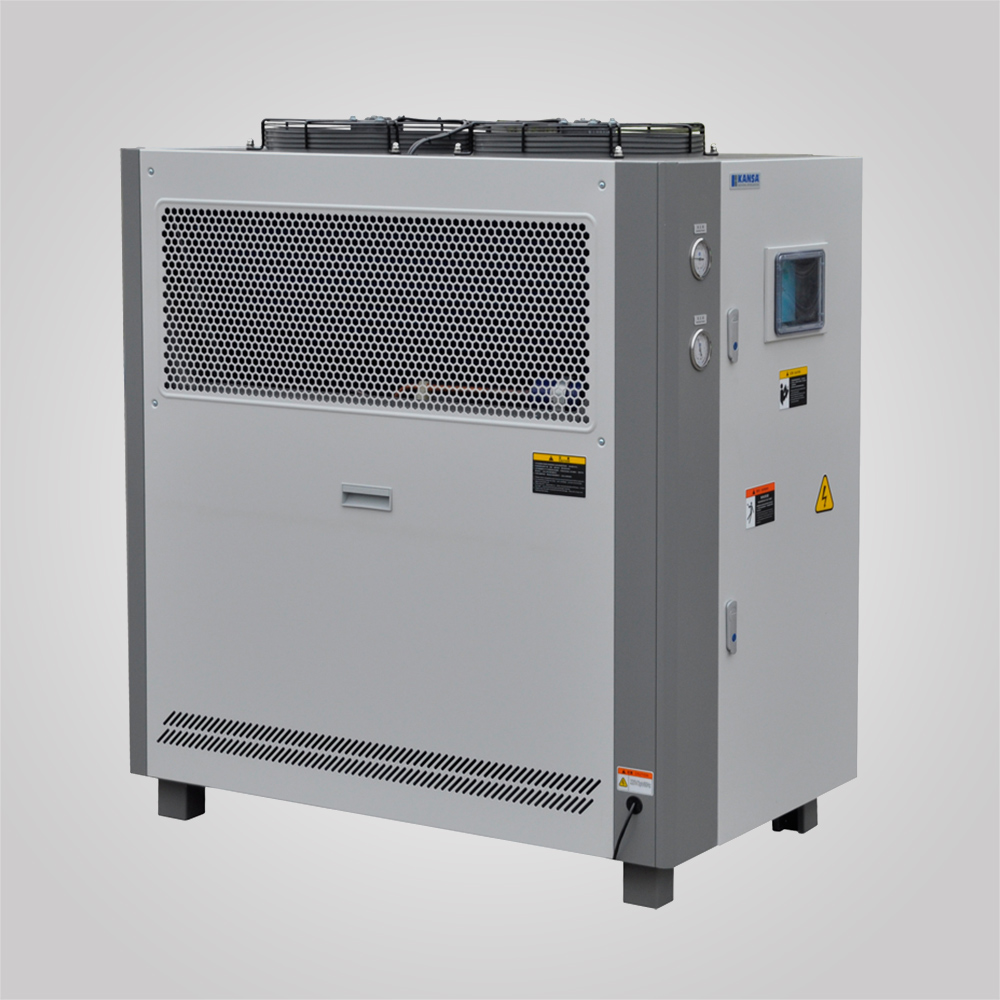
Multiple Refrigeration Circuits
Larger systems can use more than one compressor or refrigeration circuit so that one failure does not necessarily eliminate the entire cooling capacity.
Separate Cooling Zones
The cellar can be divided into zones with isolation valves, allowing different groups of tanks to be managed independently.
Cross-Connections
Where appropriate, cross-ties between cooling circuits can provide additional flexibility during maintenance or equipment failure.
Emergency Connections
A strategically located connection point can make it easier to connect temporary cooling equipment without redesigning the cellar during an emergency.
The right level of redundancy should be evaluated during the design stage rather than added after the brewery has already experienced a costly outage.
Cooling capacity should be based on peak demand
Brewery cooling load is dynamic.
A useful design calculation needs to consider more than the nominal volume of the fermentation cellar.
Factors include:
- Number of active fermenters
- Fermentation heat load
- Fermentation temperature
- Cold-crashing requirements
- Number of tanks cooling simultaneously
- Brite tank requirements
- Wort cooling requirements
- Glycol supply temperature
- Ambient conditions
- Brewing frequency
- Future expansion
A brewery producing a larger proportion of lager may have a very different refrigeration requirement from one producing mostly warm-fermented ales.
Likewise, a brewery operating one brew per day may have a different peak demand from a plant running several brews per day.
The chiller, glycol tank, pumps, piping, and tank jackets should therefore be evaluated as one thermal system.
Why a glycol buffer or reservoir matters
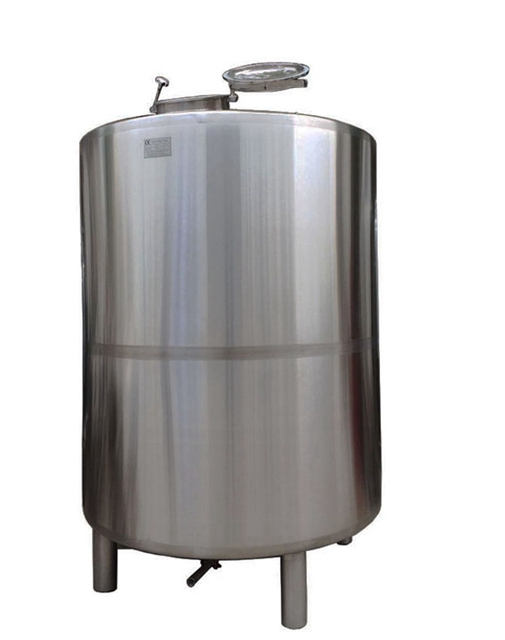
The glycol tank provides more than simple fluid storage.
It acts as a thermal buffer between refrigeration capacity and changing process demand.
When several tanks call for cooling simultaneously, the stored cold glycol provides an immediate cooling source while the refrigeration system removes heat from the loop.
A properly sized reservoir can also help stabilize the glycol temperature during variable loads. Brewery cooling systems commonly combine a glycol tank or reservoir with the chiller and circulation pumps for this reason.
Reservoir size should be selected according to the cooling load, chiller capacity, operating temperature, and control strategy rather than by using a fixed ratio for every brewery.
Cooling system layout matters as much as chiller capacity
A brewery can have sufficient refrigeration capacity and still experience poor tank performance because of the distribution system.
Long pipe runs, undersized piping, excessive fittings, inadequate insulation, or poor branch balancing can increase pressure loss and reduce the available flow at individual vessels.
For a new brewery, the glycol header should be planned together with the fermentation cellar layout.
The design should account for:
- Distance between chiller and cellar
- Number of cooling branches
- Future tank locations
- Pump head
- Pipe insulation
- Drain and service access
- Isolation of individual vessels
This becomes increasingly important as a brewery grows.
An initial cellar may have four fermenters. Several years later, it may have fifteen or twenty. If the original distribution system was not designed with expansion in mind, the piping itself can become a limitation.
Tiantai brewery glycol cooling systems
Tiantai designs glycol cooling as part of the complete brewery process rather than treating the chiller as a standalone machine.
A brewery cooling package can include:
- Glycol water tank
- Brewery glycol chiller
- Circulation pumps
- Glycol distribution piping
- Fermentation and brite tank cooling jackets
- Temperature sensors and control valves
- Cold liquor tank
- Wort cooling heat exchanger
- Control cabinet
The actual configuration depends on brewery capacity, production schedule, fermentation requirements, building layout, local climate, and planned expansion.
Tiantai’s brewery projects demonstrate different cooling configurations, including glycol tanks, chillers, pipelines, fermentation tanks, brite tanks, and wort cooling equipment working as part of a complete brewery system.
For example, a Tiantai brewery project can use multiple glycol chillers rather than relying on one refrigeration unit, while the cooling network is designed around the required fermentation capacity and production schedule.
The purpose is not simply to produce cold glycol.
Our purpose is to deliver the required cooling capacity to the right vessels, at the right time, with enough control and flexibility for normal operation, maintenance, and future expansion.