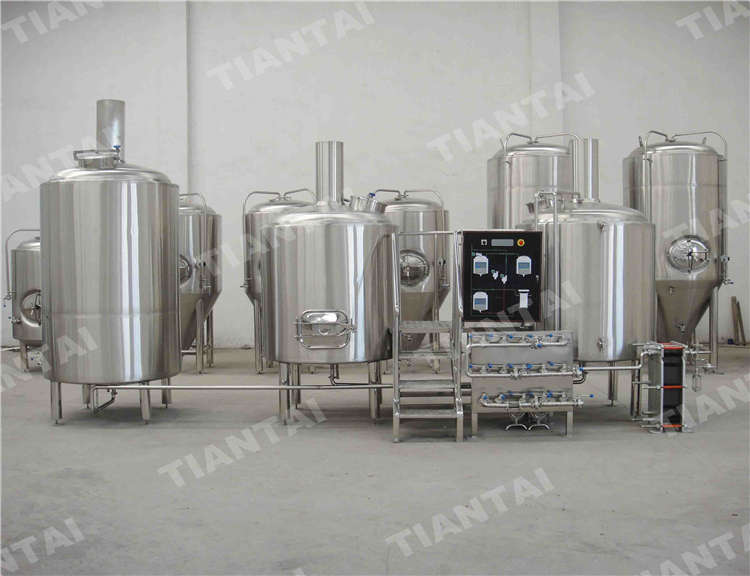
Insulation is easy to overlook in a brewery. A tank may look perfectly sound from the outside, and a section of pipe may continue to operate for years without attracting attention. Yet gaps in the insulation, damaged cladding or moisture trapped beneath the outer layer can gradually increase energy consumption and make process temperatures harder to control.
For breweries that rely on steam, hot water, glycol cooling and temperature-controlled vessels, these losses add up over time. Reheating water, compensating for unwanted heat gain and running refrigeration equipment longer than necessary all increase operating costs.
Improving brewery equipment insulation does not always mean replacing every insulated vessel or adding the thickest layer available. In many cases, the better approach is to identify where heat transfer is occurring, calculate an economically justified insulation thickness, and repair the sections that are no longer performing as intended.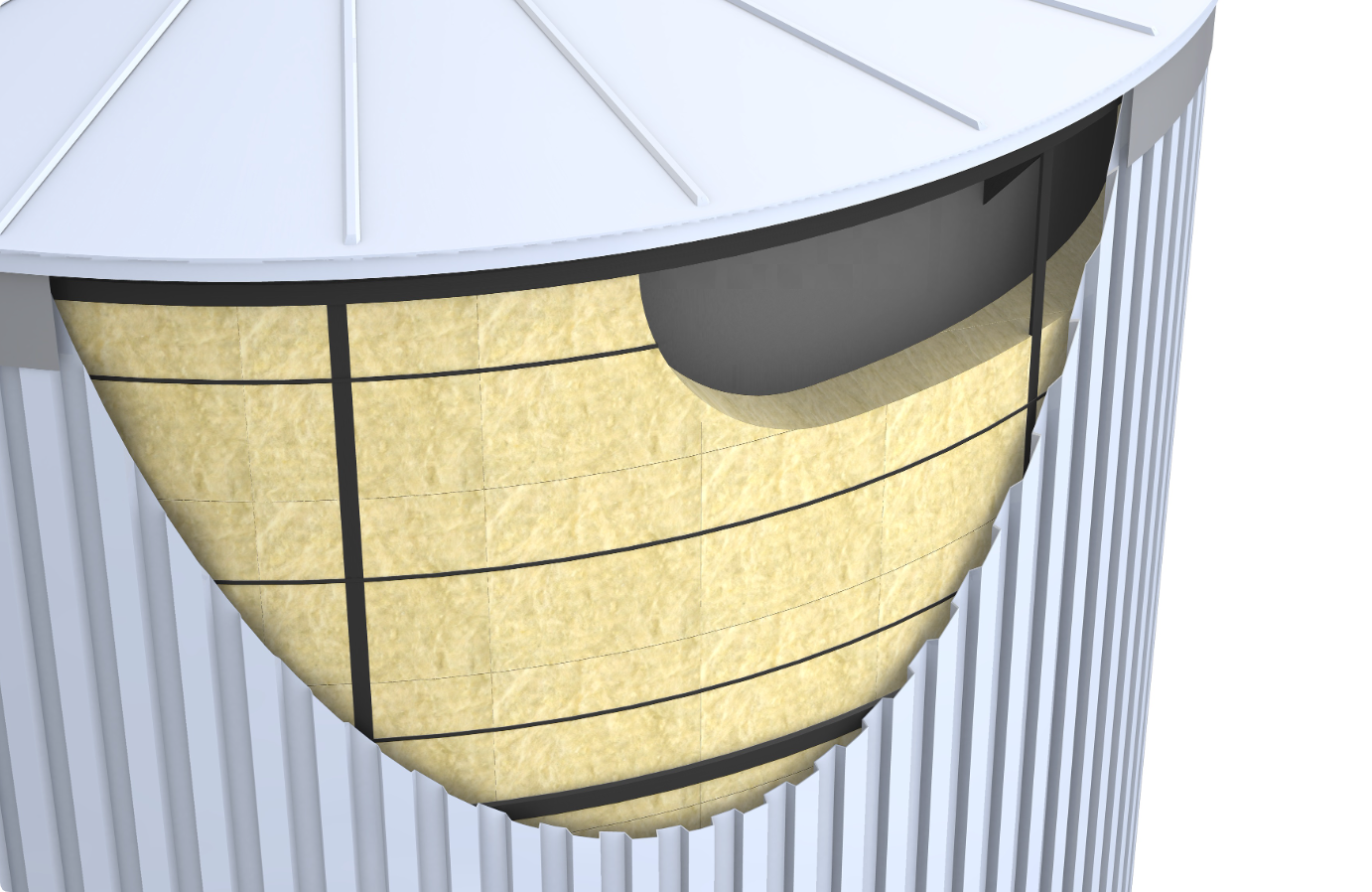
Why Insulation Matters in a Brewery
A brewery handles liquids at widely different temperatures throughout production. Mashing and wort boiling require heat, while fermentation and beer storage often depend on controlled cooling. Hot water tanks, steam pipes, process vessels and glycol lines are therefore all potential locations for unwanted heat transfer.
Effective insulation serves several purposes.
Reducing energy consumption. Insulation around hot water tanks, mash vessels, brew kettles and heated pipelines slows heat loss to the surrounding environment. The heating system needs to supply less replacement energy to maintain the required temperature. Insulation on cold equipment works in the opposite direction by limiting heat entering the process.
Maintaining process temperature. Insulation helps hot liquor and heated process media retain their temperature during holding and transfer. On the cold side, it reduces the heat load placed on the glycol system. It does not replace temperature control, but it helps heating and refrigeration equipment operate under more manageable conditions.
Preventing condensation. Cold process pipes, chilled-water lines and other refrigerated surfaces can fall below the surrounding air’s dew point. Without suitable insulation and a continuous vapour barrier, moisture can collect on surfaces or inside the insulation. This creates maintenance problems and may damage the insulation assembly.
Improving workplace safety. Exposed hot pipework and vessel surfaces can cause burns. Properly designed insulation reduces surface temperatures and can make working areas safer, although additional guarding may still be necessary around accessible hot components.
These benefits extend beyond individual vessels. When heat loss is reduced across a brewery’s process equipment and utility network, the combined effect can improve energy performance and lower the indirect greenhouse gas emissions associated with fuel and electricity consumption.
How to Determine the Economic Thickness of Insulation
More insulation generally reduces heat transfer, but additional thickness also increases material, installation and cladding costs. The economic thickness is the point at which the total cost over the system’s operating life is most favourable.
It is not necessarily the thinnest option, nor is it always the thickest one available.
A useful assessment considers the following factors:
- Operating temperature: A vessel or pipe operating at a high temperature difference from the surrounding air may lose more heat than one operating under milder conditions.
- Operating hours: Equipment that runs continuously or holds hot water for long periods generally offers more opportunity for energy savings than equipment used only occasionally.
- Insulation performance: Thermal conductivity, material density and performance at the actual operating temperature affect how much heat the insulation can resist transferring.
- Installed cost: Material prices are only part of the calculation. Labour, outer cladding, access, supports and future maintenance also contribute.
- Energy prices: The cost of electricity, natural gas or other heating fuels affects the financial value of each unit of energy saved.
- Operating requirements: Surface-temperature limits, condensation control, hygiene requirements and available installation space may influence the final specification.
The assessment should compare the additional installed cost of each insulation thickness against the expected reduction in energy losses over the equipment’s service life. Where possible, use actual operating schedules, utility costs and equipment temperatures rather than relying solely on general estimates.
Different parts of the brewery may justify different solutions. A hot water storage tank that operates throughout the day has a different heat-loss profile from a short section of transfer pipe used during one part of a brew cycle. Valves, flanges, tank supports and pipe connections also need attention because they can remain poorly insulated even when the main vessel or pipe has a substantial insulation layer.
There is no single thickness that is economically optimal for every brewery. The specification should reflect the application, local conditions and expected operating life.
Choosing Insulation Materials for Brewing Equipment
The insulation material must suit the temperature range, moisture exposure, mechanical conditions and cleaning practices of the installation. Thermal performance alone is not enough.
For example, insulation used on a steam line must tolerate the line’s operating temperature. Insulation around a chilled glycol pipe must also work with a vapour-control system that prevents humid air from reaching the cold surface.
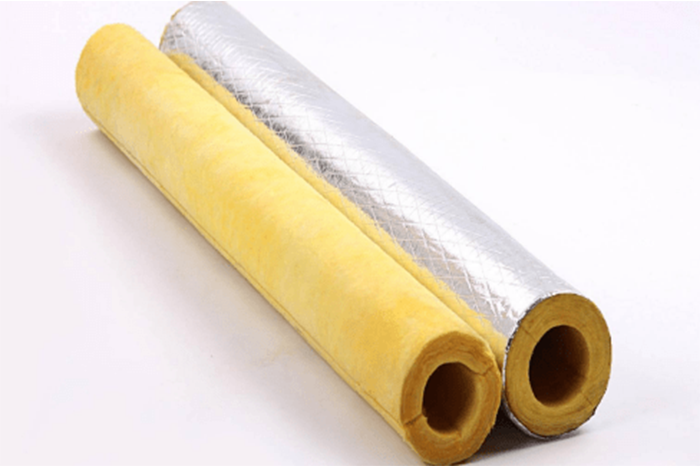
When comparing materials, consider thermal conductivity, service-temperature limits, fire performance, environmental requirements, resistance to moisture and mechanical durability. Purchase price should be evaluated alongside expected service life and maintenance requirements.
The outer cladding deserves the same attention as the insulation underneath it. A suitable jacket protects the material from rain, washdown water, impact and routine handling. Poorly sealed joints, damaged seams or openings around pipe penetrations can allow water to enter the insulation and gradually reduce its effectiveness.
Cold process lines require particular care. Their vapour barrier must remain continuous at joints, fittings and penetrations. If warm, humid air enters the insulation, condensation may develop inside the assembly even when the outer surface appears dry.
For hot equipment, the cladding and moisture-management arrangement should be suitable for the operating temperature and installation environment. The assembly should prevent water ingress while allowing any trapped moisture to escape where the system design requires it.
Material selection should also account for how the brewery operates. Insulation near frequently accessed valves or equipment requiring regular inspection must be designed so that maintenance can be carried out without repeatedly damaging the entire assembly.
Why Wet or Damaged Insulation Becomes an Energy Problem
Many insulation materials work by retaining air within a structure that slows heat transfer. When water enters the material, it can displace insulating air and substantially reduce thermal resistance.
The result is not always immediately visible. A vessel may continue to maintain its process temperature because the heating or cooling system compensates for the additional load. Energy consumption can rise before operators recognise that the insulation has deteriorated.
Moisture can enter insulation through several routes:
- Leaking steam, hot-water or condensate lines.
- Rain entering damaged outdoor cladding.
- Washdown water penetrating open joints.
- Condensation caused by an incomplete vapour barrier on cold equipment.
- Physical damage around pipe supports, valves or maintenance access points.
Water can also contribute to corrosion beneath the cladding, particularly where moisture remains trapped against metal surfaces. Simply covering the affected area with another layer of insulation does not solve the underlying problem.
The appropriate response is to identify the moisture source, inspect the affected assembly, repair any leaks and replace insulation that has lost its required performance. The outer jacket should then be restored with properly sealed joints and suitable protection against future exposure.
Inspecting Existing Insulation in an Operating Brewery
An insulation system should not be treated as maintenance-free once installed. Vibration, equipment access, cleaning, weather and ordinary wear can all affect its condition over time.
A practical inspection programme begins with a walk-through of the brewery’s hot and cold process systems. Operators or maintenance personnel should look for missing insulation, loose or dented cladding, open seams, water staining, corrosion, damp patches and visible condensation.
Pay particular attention to areas that are easy to overlook:
Pipe fittings and valves. Insulation is sometimes removed during maintenance and not restored properly. These exposed sections may become recurring heat-loss points.
Supports and penetrations. Pipe supports, vessel connections and points where services pass through walls can create thermal bridges or openings through which water enters.
Outdoor equipment. Weather exposure can damage cladding even when the insulation underneath was originally installed correctly.
Hot and cold service lines. Unexpectedly high surface temperatures on hot equipment or recurring condensation on cold surfaces may indicate inadequate insulation, damaged vapour protection or another operating problem.
For larger breweries, infrared thermography can help locate unusual surface-temperature patterns over tanks, pipework and building envelopes. A thermal imaging survey is especially useful when a large installation makes manual inspection difficult.
However, thermal images should be treated as a screening tool rather than a complete diagnosis. Readings can be affected by surface emissivity, reflections, operating conditions and the type of outer cladding. Suspected defects should be checked against equipment conditions and, where necessary, confirmed through physical inspection.
The findings can then be used to rank repairs by likely energy impact, safety implications, risk of further deterioration and cost.
A Practical Upgrade Plan for Brewery Insulation
Replacing an entire insulation system is rarely the only option. An upgrade programme can begin with repairs and progress towards larger investments as the available evidence becomes clearer.
Start by documenting the condition of insulated vessels and process lines. Record visible defects, recurring condensation, exposed fittings and areas where insulation has been removed. For larger systems, a thermographic survey can help establish a more complete picture.
Next, address leaks and damaged cladding. Repairing a water source before replacing insulation prevents the same problem from recurring. Missing insulation on frequently used hot-water or steam lines may also deserve early attention, particularly where there is a substantial temperature difference or a clear safety concern.
The next step is to assess insulation thickness and performance on the equipment with the greatest potential for savings. This may include hot-water storage tanks, heated process vessels, continuously operating utility lines and cold systems with excessive heat gain. Existing insulation should be evaluated on its actual condition rather than assumed to be effective simply because it is present.
Finally, monitor the results. Where metering is available, compare heating and cooling energy use before and after the upgrade while accounting for changes in production volume, batch schedules and ambient conditions. This makes it easier to distinguish genuine savings from normal variations in brewery operation.
For a smaller brewery, repairing a few damaged sections may be the most cost-effective starting point. A larger production facility may gain more from a structured audit of its process equipment, piping network and building envelope.
Consider Insulation During Brewery Design and Expansion
Insulation is easier to incorporate into a brewery project when operating temperatures, equipment placement and maintenance access are considered during the design stage. Retrofitting a finished installation can require additional labour, temporary shutdowns and modifications to existing pipework or cladding.
Tank design, insulation material, outer jacket construction and the arrangement of process connections all influence long-term performance. Pipe routing and access to valves also matter: equipment that is difficult to inspect or maintain is more likely to develop neglected insulation defects.
For breweries planning a new brewhouse, adding fermentation capacity or upgrading existing production facilities, these details belong in the wider equipment and plant-layout discussion rather than being left until installation is complete.
Tiantai provides customized brewing equipment and turnkey brewery solutions, covering brewhouse systems, fermentation tanks and related production equipment. Discussing operating temperatures, insulation requirements, cleaning practices and maintenance access during project planning helps ensure that equipment specifications serve both production needs and long-term operating costs.
Final Thoughts
Brewery equipment insulation is not simply a matter of wrapping tanks and pipes in a suitable material. Its effectiveness depends on choosing an appropriate thickness, installing the insulation correctly, protecting it from moisture and maintaining it throughout the equipment’s service life.
For an existing brewery, the most useful first step is to identify where insulation is damaged, wet, missing or no longer adequate for the operating conditions. For a new project, it is to evaluate insulation as part of the overall process and equipment design.
A well-planned insulation system reduces avoidable heat transfer, supports stable process operation and can lower long-term energy costs. The real value comes from matching the specification to the brewery’s operating conditions and keeping the system in good condition after installation.