Refrigeration is one of the major energy consumers in a brewery. It is needed to cool wort after boiling, control fermentation temperatures, maintain beer storage conditions, and keep certain production areas cold.
However, high electricity consumption does not always mean a brewery needs a larger or more powerful chiller. In many cases, unnecessary cooling, poorly adjusted temperature settings, inefficient compressor operation, and excessive pump and fan use are responsible for much of the wasted energy.
Improving refrigeration efficiency starts with understanding where cooling is needed, how the refrigeration system operates, and whether the equipment is delivering more cooling than the production process actually requires.
Understand the Cooling Loads in a Brewery
A brewery refrigeration system serves several processes, each with different cooling requirements.
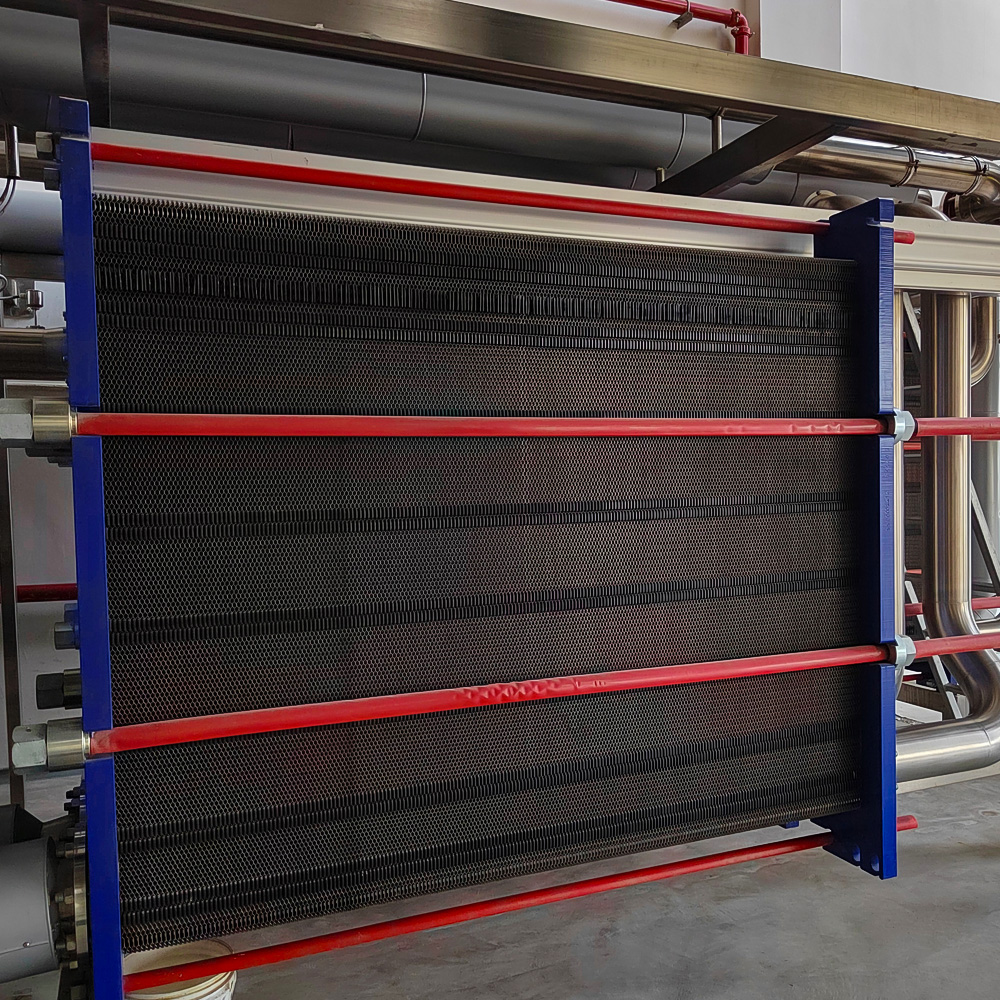
Wort cooling: After boiling and whirlpool separation, hot wort must be cooled to the appropriate pitching temperature before fermentation. A plate heat exchanger typically uses cooling water and glycol to complete this process.
Fermentation cooling: Yeast generates heat as fermentation progresses. Cooling jackets on fermentation tanks remove this heat to maintain the required temperature. The cooling demand changes throughout the fermentation cycle.
Beer maturation and storage: Conditioning tanks and bright beer tanks may require continuous temperature control to maintain product quality and storage conditions.
Cold-room cooling: Refrigerated storage areas and other temperature-controlled spaces also contribute to the total cooling load.
These demands do not always occur at the same time or require the same cooling temperature. A system that operates every circuit at the lowest available temperature may consume more electricity than necessary.
Brewers should first review the actual cooling requirements of each process and distinguish essential process cooling from unnecessary or excessive cooling.
Avoid Unnecessary Cooling
One of the simplest ways to reduce refrigeration costs is to stop cooling areas and products below their required temperatures.
For example, fermentation tanks should follow the temperature schedule required by the beer recipe. Setting the temperature lower than necessary does not automatically improve fermentation or beer quality. It simply increases the cooling demand.
The same principle applies to beer storage tanks and cold rooms. Their temperature settings should reflect the actual storage requirements rather than being kept unnecessarily cold.
Seasonal conditions also create opportunities for energy savings. During winter, lower ambient temperatures may reduce the refrigeration demand of certain processes. Incoming cold water may also provide more cooling during wort heat exchange, reducing the amount of glycol cooling required.
Brewers should review these opportunities regularly while maintaining the temperature conditions required for product quality and process stability.
Optimize Evaporating and Condensing Temperatures
The evaporating and condensing temperatures have a direct influence on refrigeration system efficiency.
Evaporating temperature
The evaporating temperature determines the conditions under which the refrigerant absorbs heat from the glycol or another cooling medium.
When this temperature is unnecessarily low, the compressor has to work harder, increasing electricity consumption.
Raising the evaporating temperature can improve compressor efficiency, provided the system can still deliver enough cooling to meet production requirements.
For brewery operators, this means checking whether the glycol supply temperature is colder than necessary. If fermentation tanks and other connected equipment can maintain their required temperatures with warmer glycol, the chiller may be able to operate more efficiently.
Heat transfer problems should also be investigated. Fouled evaporators, blocked passages, poor glycol circulation, and excessive pressure losses can reduce cooling performance. Lowering the chiller temperature to compensate for these problems is usually not the best solution.
Condensing temperature
The condensing temperature affects how efficiently the refrigeration system releases heat to the surrounding air or cooling water.
A higher condensing temperature generally increases the pressure against which the compressor must work.
Keeping the condensing temperature as low as operating conditions allow can therefore reduce energy consumption.
For air-cooled systems, condenser coils should be kept clean and provided with sufficient airflow. For water-cooled systems, cooling tower performance, water circulation, and heat exchanger cleanliness deserve regular attention.
Automatic fan-speed and pressure controls can also help the refrigeration system respond to changes in ambient temperature.
As a general engineering reference, a 1°C increase in evaporating temperature or a 1°C reduction in condensing temperature may improve compressor energy performance by approximately 2–4% in many applications. Actual results depend on refrigeration system design and operating conditions.

Match Compressor Operation to Cooling Demand
A brewery rarely requires maximum refrigeration capacity throughout the day.
Wort cooling may create a large demand over a short period, while fermentation tanks require temperature control over much longer periods. Cold rooms and beer storage areas may have relatively steady cooling requirements.
When compressor operation does not match these changing loads, the refrigeration plant may operate inefficiently.
Common problems include frequent starting and stopping, running large compressors at inefficient part-load conditions, and operating more compressors than necessary.
Depending on the system configuration, improvements may include:
- Automatic compressor sequencing according to cooling demand.
- Variable-speed control where compatible with the compressor.
- Lead-lag operation to distribute running hours.
- Appropriate pressure and temperature settings.
- Protection against unnecessary short cycling.
Regular maintenance is also important. Incorrect control settings, oil-related problems, and worn components can reduce compressor performance.
The objective is not simply to reduce compressor running time, but to maintain the required cooling capacity with the lowest practical power consumption.
Control Pumps, Fans, and Auxiliary Equipment
The compressor is not the only electricity consumer in a brewery refrigeration plant.
Glycol circulation pumps, condenser fans, evaporator fans, cooling tower pumps, oil pumps, and defrost heaters also contribute to total electricity use.
In some systems, auxiliary equipment accounts for a significant share of refrigeration energy consumption, particularly when the cooling demand is low.
For example, a glycol pump that runs continuously at full speed may consume unnecessary electricity when only a few fermentation tanks require cooling.
Variable-speed drives can adjust pump and fan operation according to actual demand. Automatic on/off controls and equipment sequencing can also prevent unnecessary operation.
Flow and pressure settings should be checked to ensure that circulation rates are sufficient without being excessive.
It is important to look at the entire refrigeration system rather than focusing only on compressor efficiency.
Conclusion
Reducing brewery refrigeration energy consumption does not necessarily require replacing the chiller or installing additional cooling equipment.
In many cases, better temperature settings, appropriate compressor control, reduced cooling loads, and more efficient pump and fan operation can make a meaningful difference.
However, operating adjustments are only part of the solution. Damaged insulation, inefficient wort cooling, poor defrost control, and refrigerant problems can also increase refrigeration costs.
These issues require closer attention to equipment condition and system maintenance.
In the next article, we will look at common brewery cooling problems and explain how insulation, heat recovery, and regular maintenance can further improve refrigeration system performance.