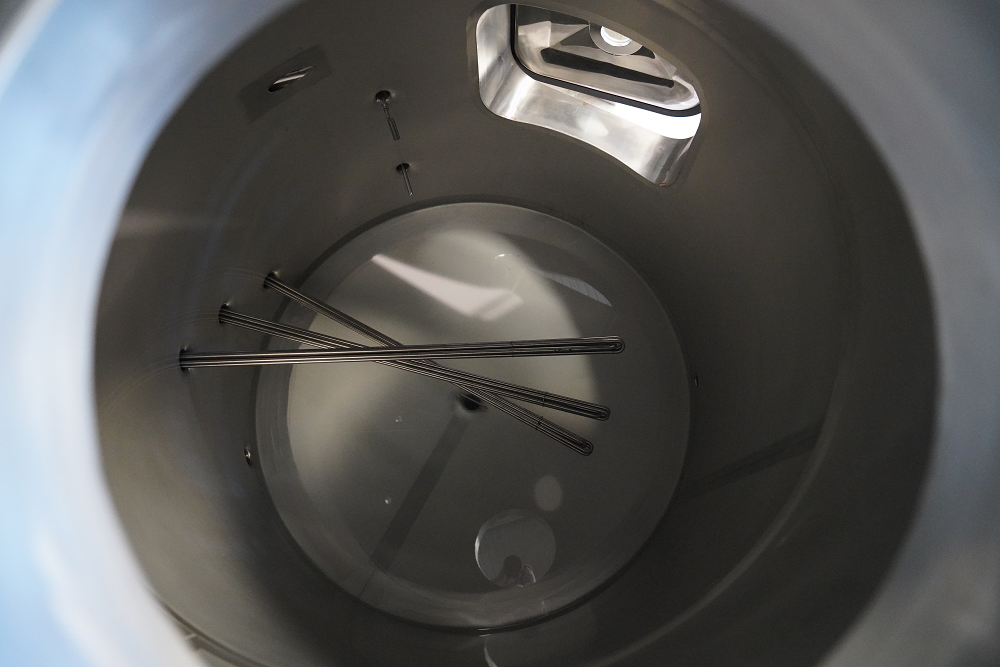
Rust-colored marks around an electric heating element are easy to dismiss as a cleaning issue. In a commercial brewery, however, recurring discoloration around the element mounting hardware or support spacer may point to a more fundamental problem involving material compatibility, water chemistry, or equipment design.
The distinction matters. You can sometimes remove surface iron contamination on a stainless steel component, but active corrosion caused by unsuitable materials or an incompatible metal interface may return even after you clean the affected area.
For breweries using electric heating in a hot liquor tank (HLT), brew kettle, or other process vessel, identifying the cause is more useful than repeatedly scrubbing the same area. It also highlights several considerations when selecting an electric brewhouse, especially if the equipment will operate frequently under demanding production conditions.
What Does Rust Around a Brewery Heating Element Actually Mean?
The first step is to establish what has accumulated on the surface and which component is affected.
An electric heating assembly contains more than the heating sheath itself. Depending on the design, it may include mounting flanges, spacers, support brackets, fasteners, seals, and electrical terminals. Each component has a different function and may use a different material.
A reddish-brown deposit around a spacer does not necessarily mean the heating element sheath has corroded. The residue could originate from the spacer or another adjacent metal part, or it could be iron contamination on an otherwise serviceable stainless steel surface.
Other deposits can look similar at first glance:
- Orange or reddish-brown staining: May indicate free iron contamination, rust transferred from another component, or active corrosion.
- White or chalky buildup: Often associated with mineral scale from heated water.
- Dark, hardened deposits: May be baked-on residue or evidence of localized overheating.
- Pitting, flaking, or visible material loss: Suggests damage that requires closer inspection rather than simple surface cleaning.
Appearance alone cannot establish the root cause. The component material, location of the deposit, operating history, and condition beneath the residue all need to be considered.
Why Do Electric Heating Elements Corrode in Breweries?
Dissimilar Metals Can Create a Corrosion Problem
One possibility is galvanic corrosion.
When dissimilar metals are electrically connected in the presence of a conductive liquid, one metal can corrode preferentially. The severity depends on the materials involved, their relative electrochemical properties, the exposed surface areas, and the water chemistry.
In a brewery heating assembly, the relevant interface may be between the heating element, spacer, support hardware, mounting components, or fasteners.
The component that looks rusted is not necessarily the main heating element. A lower-cost support part or an unsuitable material combination can be the source of repeated staining and deterioration.
If similar marks appear around the same component on multiple heating elements, the shared material or assembly design deserves particular attention.
The appropriate response is to identify the materials rather than assume that polishing the affected area will resolve the problem. Replacing a spacer with a compatible material may be necessary if the original component is contributing to corrosion.
Stainless Steel Can Develop Surface Rust
Stainless steel resists corrosion because a thin, chromium-rich passive film protects its surface. That protection does not make every stainless steel component immune to corrosion or contamination.
Iron particles transferred during machining, fabrication, handling, or contact with carbon steel tools can contaminate the surface. If those particles subsequently oxidize, rust-colored staining may appear even though the underlying stainless steel has not suffered significant material loss.
Surface condition also matters. Damaged areas, deposits, and poorly cleaned interfaces can make corrosion more likely under unfavorable operating conditions.
This is why stainless steel fabrication and finishing are important considerations when specifying brewery equipment. Material grade alone does not tell the whole story; component design, surface condition, cleaning, and the surrounding operating environment also influence service life.
Hard Water and Mineral Scale Can Shorten Element Life
Water chemistry is particularly important in a hot liquor tank because the water is heated repeatedly and may leave mineral deposits behind.
Hard water contains elevated concentrations of calcium and magnesium. When conditions favor precipitation, these minerals can form scale on the heating surface.
Scale acts as a thermal barrier. Heat transfer becomes less effective, causing the heating element sheath to run hotter than intended for a given operating duty. Continued accumulation can shorten element life and increase the likelihood of overheating or burnout.
However, mineral scale and corrosion are not interchangeable diagnoses. Hard water is a common cause of scaling, but reddish staining around a spacer should not automatically be attributed to water hardness.
A useful assessment looks at both the deposits and the water chemistry, including hardness, alkalinity, chloride concentration, and pH where relevant.
Water treatment should follow the brewery’s water-quality requirements and equipment specifications. Adjusting mash pH alone does not necessarily correct the mineral content of the water used in the HLT.
Heating Load and Operating Conditions Matter
Electric heating elements convert electrical energy into heat at the element sheath. Their performance depends partly on watt density, which describes the electrical power dissipated per unit of heated surface area.
If watt density is too high for the application, or if deposits interfere with heat transfer, local surface temperatures can increase.
Other operating conditions also deserve attention:
- Insufficient liquid coverage or dry operation
- Inadequate circulation around the heating surface
- Heavy mineral deposits
- Incorrect temperature control
- Heating elements operated outside their design limits
These conditions do not necessarily explain corrosion around a spacer by themselves. They can, however, contribute to premature element deterioration and should be reviewed when repeated heating-element problems occur.
For a commercial brewhouse, heater power should be selected according to the vessel’s working volume, required heating time, circulation arrangement, and process duty rather than electrical rating alone.
Cleaning Chemicals and Abrasive Tools Can Make Matters Worse
A cleaning method that removes visible rust may also damage the surface or leave the underlying cause untouched.
Aggressive abrasives, carbon steel brushes, incompatible chemicals, and poorly controlled acid treatments can damage surfaces or introduce additional contamination. Chloride-containing cleaning residues can also be detrimental to stainless steel under susceptible conditions.
The correct cleaning method depends on the material, the type of deposit, and the manufacturer’s instructions.
Mineral scale requires a different treatment from iron contamination. Neither should be confused with pitting or actual material loss. Applying a stronger chemical simply because the staining has returned is not a substitute for identifying the problem.
How to Inspect a Corroded Heating Element
Before deciding whether an element can be cleaned and returned to service, establish the condition of the complete assembly.
Start with electrical and process safety. Isolate the equipment from its power supply, apply the site’s lockout/tagout procedure, verify the absence of voltage, allow the vessel to cool, and drain it as required. Inspection and electrical testing should be carried out by appropriately qualified personnel.
Then examine the affected area.
Check Where the Corrosion Begins
Determine whether the staining is concentrated on the heating sheath, the spacer, the mounting flange, fasteners, or the area where two components meet.
A recurring deposit around one interface can indicate a material or crevice-related problem. Discoloration spread across the heated surface may instead suggest contamination or deposits associated with water quality and operation.
Identify the Materials
Consult the equipment documentation to establish the specified material for the heating sheath and adjacent hardware.
Do not assume that a spacer is stainless steel simply because it is installed beside a stainless steel heating element. If the material cannot be confirmed, contact the equipment manufacturer before deciding how to clean or replace it.
Look for Physical Damage
After removing loose deposits using an approved method, examine the surface for pits, cracks, flaking, deformation, or metal loss.
A component with significant pitting or damaged sealing surfaces may no longer be suitable for continued operation. Corrosion near electrical terminals also warrants particular attention because moisture or material deterioration can compromise electrical safety.
Compare Both Heating Elements
If several elements show a similar pattern, investigate common factors before replacing them one by one.
These include the spacer material, assembly design, incoming water quality, cleaning procedure, operating temperature, and duration of service.
A common pattern does not prove a shared root cause, but it is a useful reason to review the system as a whole.
Can Rust Be Scrubbed Off and the Surface Passivated?
Sometimes. The answer depends on whether the problem is surface contamination or actual corrosion.
Where an otherwise sound stainless steel component has superficial iron staining, appropriate cleaning followed by a suitable passivation treatment may restore a clean, corrosion-resistant surface.
Passivation is not simply another name for scrubbing. It is a controlled treatment intended to promote the protective passive film on a chemically clean stainless steel surface. Established passivation practices include citric-acid-based and nitric-acid-based treatments, with the process selected according to the material and application. Thorough rinsing and appropriate verification are part of the procedure.
The important limitations are:
- Passivation cannot restore metal that has been lost through pitting or corrosion.
- It will not correct galvanic corrosion caused by an unsuitable material combination.
- It cannot compensate for recurring scale buildup or an operating condition that repeatedly damages the element.
- It should not be applied indiscriminately to an assembled heating unit containing components with different material and chemical-compatibility requirements.
For brewery equipment, follow the heating element manufacturer’s cleaning and passivation instructions. If the affected component’s material is uncertain, confirm its specification before applying acid or other chemical treatments.
Replace damaged components where necessary rather than treating appearance as the only acceptance criterion.
How to Prevent Heating Element Corrosion in an Electric Brewhouse
The most effective prevention measures begin with equipment specification and continue through operation and maintenance.
Specify Compatible Materials Throughout the Assembly
The heating element sheath is only one part of the wetted assembly. Spacers, mounting hardware, fasteners, and other exposed components also need to be suitable for the actual temperature, water chemistry, and cleaning regime.
Material selection should consider the complete assembly, including interfaces where dissimilar metals may contact one another.
For brewery installations, unverified hardware or coatings should not be accepted simply because they are inexpensive or easy to obtain. Components exposed to hot process water or cleaning solutions must be appropriate for those conditions.
Select the Correct Watt Density
A heating element with suitable watt density can reduce excessive sheath temperatures and improve tolerance to the application’s operating conditions.
The appropriate value depends on the heating medium, liquid circulation, scale potential, required heating rate, and element geometry.
Low-watt-density elements are often considered where water quality and deposit formation make surface overheating a concern. The final selection still needs to match the manufacturer’s design limits and the brewery’s production requirements.
Manage Water Quality
Water analysis provides a better basis for maintenance planning than assumptions based on location alone.
Where mineral scale is a recurring problem, the brewery can review its water treatment strategy, cleaning frequency, and element selection with the equipment supplier or water-treatment specialist.
If corrosion is suspected, investigate the wider chemistry rather than focusing exclusively on hardness. The presence of chloride, unsuitable pH, incompatible metals, and residual cleaning chemicals may be relevant depending on the installation.
Keep Heating Surfaces Clean
Deposits should be removed before they become difficult to clean or begin interfering significantly with heat transfer.
A practical maintenance program records the condition of the heating elements, the type of deposits found, cleaning methods used, and any repeated areas of discoloration. Comparing inspections over time helps distinguish occasional surface staining from progressive deterioration.
Cleaning tools and chemicals should be compatible with the specified material. Metal tools that can transfer iron to stainless steel surfaces should be avoided.
Make Inspection and Replacement Straightforward
Heating elements are service components. Their mounting arrangement should allow safe inspection, removal, and replacement without unnecessary disassembly of the vessel.
A brewery operating a production-critical electric brewhouse should also establish a suitable spare-parts policy. Having a compatible replacement element available can reduce downtime, particularly where procurement lead times are long.
Recurring corrosion should prompt a review of the original specification rather than repeated replacement with the same component.
What to Consider When Choosing Electric Heating for a Commercial Brewery
For a brewery planning a new electric brewhouse, heating-element material and service life should be part of the initial specification.
Several factors need to be reviewed together.
Vessel function. The hot liquor tank and brew kettle have different process duties. Heating requirements should reflect whether the vessel is preparing hot water, heating wort, or maintaining a particular process temperature.
Heating capacity. Element power must meet the intended heating time and production schedule while remaining compatible with the available electrical supply.
Element surface loading. Watt density, circulation, water quality, and deposit formation influence operating conditions at the heated surface.
Materials and cleanability. The sheath, mounting hardware, seals, and other wetted components should be specified for their actual environment and designed for practical inspection and cleaning.
Controls and protection. Temperature regulation and appropriate electrical and low-liquid-level protection help the equipment operate within its intended limits. Control components must be correctly rated and installed.
Maintenance access. The operator should be able to inspect and replace service components without turning routine maintenance into a major production interruption.
These details may seem minor compared with the overall brewhouse capacity, but they can have a direct effect on equipment reliability over years of operation.
Tiantai Electric Brewhouse Solutions
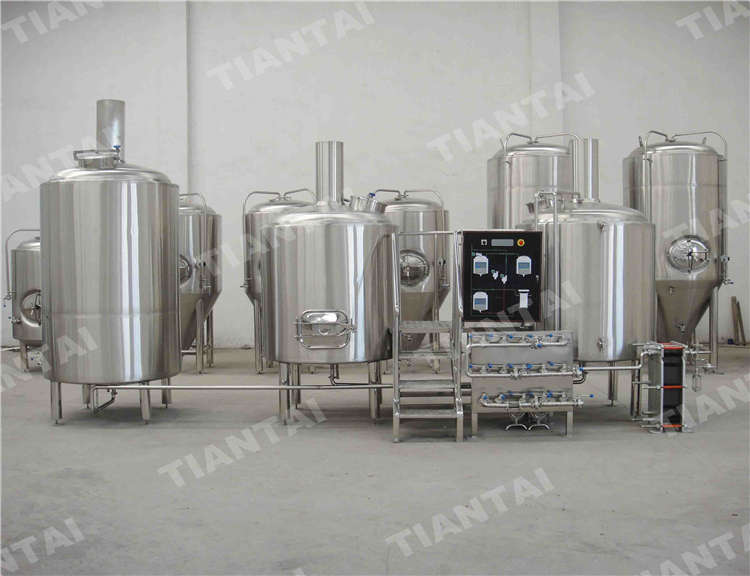
Tiantai supplies electric brewing systems that use immersion heating elements for applications such as hot liquor preparation and wort boiling. Electric brewhouse configurations can incorporate temperature-control panels to regulate heating output and support repeatable brewing operations.
For a commercial project, heating equipment should be selected alongside vessel capacity, required heating time, available electrical service, temperature-control strategy, water conditions, and maintenance requirements.
The heating element assembly deserves attention as well. Its material specification, mounting hardware, watt density, accessibility, and compatibility with the planned cleaning regime all influence long-term serviceability.
Tiantai’s approach to electric brewhouse planning is to match the heating configuration to the intended production process and equipment requirements. For breweries evaluating a new installation or replacing an aging electric brewing system, these details are worth confirming during the design stage rather than after corrosion or repeated element failures appear.