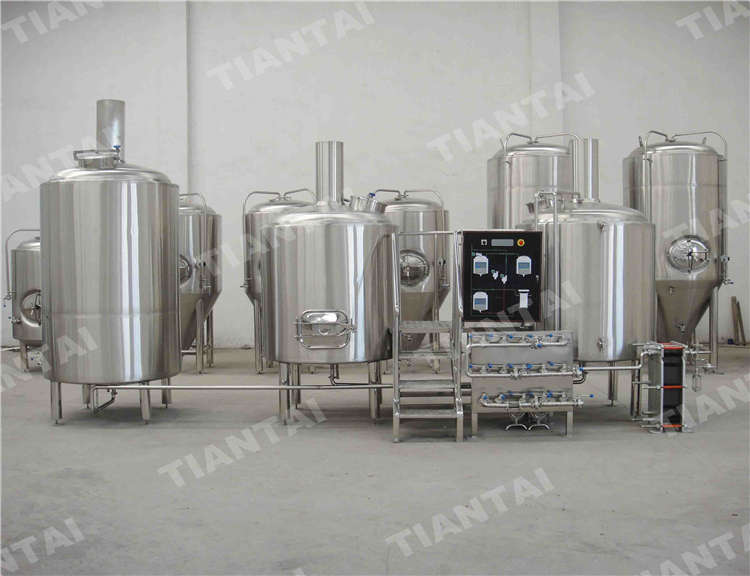
Improving refrigeration efficiency in a brewery involves more than adjusting chiller temperatures and compressor settings. The condition of pipes, heat exchangers, cooling equipment, and control systems also affects how much electricity the refrigeration plant consumes.
As discussed in our previous article on brewery refrigeration efficiency, unnecessary cooling loads and inefficient equipment operation are major sources of energy waste. Even when the refrigeration plant is correctly sized, poor maintenance and operating practices can prevent it from reaching its expected performance.
The following are some common refrigeration problems in breweries and practical ways to address them.
Check for Inefficient Wort Cooling
Wort cooling is one of the most important refrigeration-related processes in a brewery.
After boiling and whirlpool separation, hot wort passes through a plate heat exchanger before entering the fermentation tank. Incoming cold water can remove a large amount of heat during the first cooling stage, while chilled glycol provides the final temperature adjustment.
The efficiency of this process depends on several factors:
- Incoming water temperature.
- Wort flow rate and cooling water flow rate.
- Plate heat exchanger condition.
- Glycol supply temperature.
- Required wort pitching temperature.
Seasonal changes can affect the process considerably. During winter, incoming water may be cold enough to provide more cooling than it does in summer.
If the cooling water and glycol circuits are not adjusted accordingly, the refrigeration system may continue removing heat that could have been handled by the incoming water.
Regularly inspect the plate heat exchanger for fouling and check whether water and glycol flow rates are appropriate. Proper flow control helps reduce unnecessary refrigeration demand while maintaining the required wort outlet temperature.
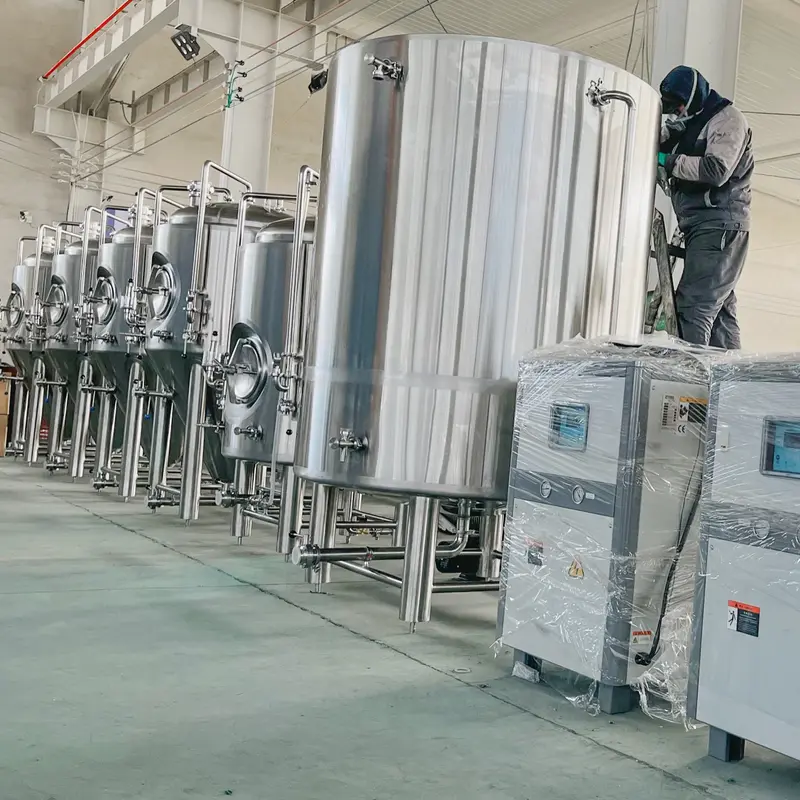
Prevent Heat Gain in Cold Rooms and Cellars
Cold rooms and fermentation cellars often create additional refrigeration loads that are unrelated to the beer production process itself.
Every time warm air enters a refrigerated space, the refrigeration system has to remove the additional heat.
Common causes include:
- Cellar doors left open for long periods.
- Damaged door seals.
- Poorly insulated walls and ceilings.
- Frequent forklift movement.
- Excessive lighting and equipment operation inside cold areas.
These problems are relatively easy to overlook because they do not directly affect the operation of fermentation tanks or other process equipment.
Use self-closing doors, appropriate door seals, and strip curtains where suitable. Motion sensors can also help reduce unnecessary lighting in cold storage areas.
Fans, pumps, and other equipment operating inside refrigerated spaces should be reviewed as well. Their electricity consumption creates additional heat that the refrigeration system must subsequently remove.
Controlling these auxiliary loads can reduce both direct electricity use and the additional cooling required.
Maintain Proper Insulation on Glycol Pipes and Tanks
Insulation plays an important role in maintaining the efficiency of a brewery cooling system.
Glycol pipelines, fermentation tanks, beer storage tanks, and cold-room structures all require suitable insulation to limit unwanted heat transfer.
When insulation is damaged, missing, or exposed to moisture, heat can enter the cooling system more easily.
Waterlogged insulation is particularly problematic because moisture reduces its thermal performance and may contribute to corrosion beneath the insulation.
During routine inspections, check for:
- Condensation forming on insulated pipes.
- Damaged or missing insulation around valves and connections.
- Moisture entering insulation joints.
- Exposed sections of glycol pipelines.
- Poorly sealed tank insulation panels.
Pay particular attention to pipe joints, valve assemblies, and areas exposed to humid production environments.
Replacing damaged insulation may seem like a minor maintenance task, but it can reduce unnecessary cooling demand and help prevent condensation-related problems.
Avoid Excessive or Inadequate Evaporator Defrosting
In refrigerated storage areas, ice accumulation on evaporator surfaces can restrict airflow and reduce heat transfer performance.
Defrosting is necessary to remove this ice, but the defrost cycle should be properly controlled.
Excessive defrosting introduces unnecessary heat into the refrigerated space. The refrigeration system then has to remove that heat again, increasing electricity consumption.
On the other hand, insufficient defrosting allows ice to accumulate, reducing cooling performance and potentially restricting airflow.
Defrost controls should be adjusted according to actual operating conditions. Suitable automatic temperature-based termination controls can stop the cycle once sufficient ice has been removed.
The evaporator should also be checked regularly for blocked airflow, dirty surfaces, and drainage problems.
Recover Waste Heat from the Refrigeration Plant
A refrigeration system removes heat from the brewery’s production processes and releases it through the condenser.
Some of this heat may be recovered and reused instead of being completely rejected to the surrounding environment.
One practical application is preheating water for cleaning and sanitation.
Breweries use substantial amounts of hot water to clean fermentation tanks, pipelines, heat exchangers, and other production equipment. Heat recovered from the refrigeration system can raise incoming water temperature before it enters the main heating system.
Depending on the refrigeration plant configuration, recovered heat may also support other suitable water-heating applications.
A heat recovery arrangement generally requires an additional heat exchanger and appropriate control valves.
The system must still be able to reject excess heat when there is insufficient demand for hot water. Heat recovery should improve overall energy utilization without interfering with the normal operation of the refrigeration plant.
For breweries with regular hot-water demand, evaluating refrigeration heat recovery can be a useful part of an energy-saving project.
Prevent Refrigerant Leakage and Monitor System Performance
Refrigerant leakage affects both operating performance and environmental and safety conditions.
A system with insufficient refrigerant charge may experience reduced cooling capacity and abnormal operating conditions. Simply adjusting other operating parameters will not solve the underlying problem.
Regular inspections by qualified refrigeration technicians are important.
Maintenance should cover:
- Refrigerant leak detection.
- Compressor operating pressures and temperatures.
- Expansion valve operation.
- Condenser and evaporator cleanliness.
- Glycol concentration and fluid condition.
- Pump and valve performance.
- Temperature and pressure sensor accuracy.
- Unusual changes in compressor operating hours.
Electricity consumption should also be monitored over time.
Instead of looking only at monthly electricity bills, breweries can compare refrigeration energy consumption with production output. Tracking electricity use per hectoliter of beer produced provides a more useful way to identify changes in energy performance.
A sudden increase in electricity consumption may indicate changes in cooling demand, equipment deterioration, refrigerant problems, or incorrect control settings.
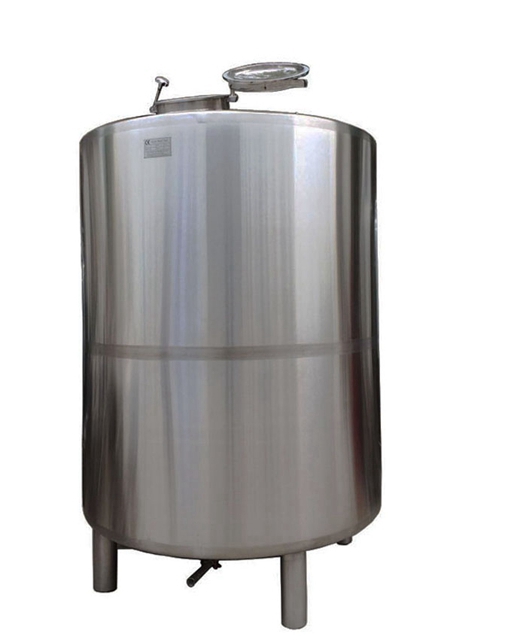
Consider Refrigeration Requirements During Brewery Design
For a new brewery, energy efficiency should be considered before the refrigeration equipment is selected and installed.
Choosing a chiller based only on brewhouse batch capacity is not sufficient. The actual refrigeration demand also depends on fermentation tank capacity, production schedules, simultaneous cooling requirements, ambient temperature, and future expansion plans.
For example, a brewery with many fermentation tanks operating simultaneously may require a different refrigeration configuration from a brewery with the same brewhouse capacity but a smaller fermentation cellar.
Other important design considerations include glycol pipe sizing, circulation pump selection, tank cooling jacket design, heat exchanger capacity, and insulation.
The refrigeration system should be coordinated with the brewery’s overall production process rather than designed as an independent utility.
Tiantai provides brewery equipment manufacturing and turnkey brewery project delivery. When planning a new brewery or expanding an existing facility, the cooling requirements of fermentation tanks, bright beer tanks, wort heat exchangers, and other process equipment need to be considered together.
This integrated approach helps ensure that refrigeration capacity, glycol distribution, and production equipment are properly matched to the brewery’s operating requirements.
For breweries planning a new production facility, the refrigeration system is an important part of the overall equipment configuration and should be evaluated from the beginning of the project.
Conclusion
Brewery refrigeration efficiency depends on more than the chiller itself. Wort cooling performance, cold-room insulation, defrost controls, refrigerant condition, and heat recovery all influence total energy consumption.
Regular maintenance can identify problems before they drive up operating costs. For new brewery projects, considering cooling requirements during the equipment design stage can also prevent avoidable energy losses later.
By combining appropriate equipment selection, proper system configuration, and consistent maintenance, breweries can maintain stable production conditions while controlling refrigeration costs.