
Product Overview
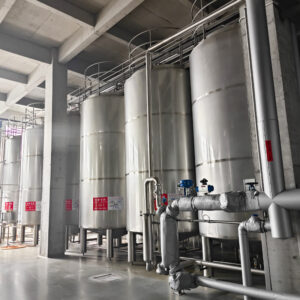
The six-tank CIP (Cleaning in Place) System is suitable for brewing production lines of large and medium-sized breweries and craft breweries. Adopting a six-tank independent zoning design, the media are stored separately and the pipelines do not interfere with each other. Without disassembly, the system operates fully automatically in a closed loop, which not only ensures cleaning effect and sterility standards, but also significantly saves water and cleaning agent costs. It adapts to the strict hygiene control and large-scale production needs of breweries, and is an ideal choice for brewing enterprises to achieve standardized and traceable hygiene management.
System Composition
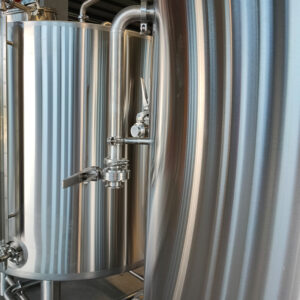
The six-tank CIP System consists of six functional tanks and supporting components, with clear division of labor and reasonable layout, completely eliminating cross-contamination and meeting the cleaning needs of the fermentation section of breweries:
Recovery Water Tank: Stores the sterile water from the last cleaning step, which is used to initially rinse loose materials such as wort and hop residues in the equipment, reducing the consumption of subsequent cleaning agents and lowering operating costs.
Hot Caustic Tank: Stores NaOH solution, which can strongly decompose proteins, organic matter, caramel and hop resins on the inner wall of the equipment, and kill thermoduric bacteria at the same time, suitable for high-temperature cleaning scenarios.
Cold Caustic Tank: Stores normal temperature/low temperature caustic solution, specially designed for temperature-sensitive equipment such as fermentation tanks and bright beer tanks, realizing mild caustic cleaning and protecting the inner wall coating and seals of the equipment from damage.
Acid Tank: Stores acid solution, mainly used to dissolve mineral deposits such as scale, calcium salts and beer stone in the equipment, restore the smoothness of the equipment surface, and extend the service life of the equipment.
Sterile Water Tank: Stores deoxygenated water, which is used for final rinsing to neutralize residual acid and caustic in the equipment, ensuring that the pH value of the inner wall of the equipment meets the standard after cleaning.
Disinfectant Tank: Stores food-grade disinfectant (peracetic acid/sodium hypochlorite), which is used in circulation at normal temperature to efficiently kill bacteria, yeasts and molds, ensuring a sterile environment for beer production.
Cleaning Process Flow
The system adopts a standardized closed-loop cleaning process, which is fully monitorable, recordable and verifiable, perfectly matching the cleaning needs of the fermentation section of breweries. The specific steps are as follows:
- Pre-rinsing: Rinse loose residues in the equipment with normal temperature clean water, and discharge the wastewater to the sewage pipe network.
- Hot caustic cleaning: NaOH solution emulsifies organic matter, decomposes proteins, and kills thermoduric bacteria at the same time.
- Caustic Solution Recovery: The used hot caustic solution is automatically pumped back to the hot caustic tank, and recycled after filtration.
- Hot Water Rinsing: Thoroughly drain the residual caustic solution in the equipment with hot water to avoid subsequent acid-base neutralization interfering with the acid cleaning effect.
- Acid Cleaning: Phosphoric acid solution dissolves mineral deposits such as scale, calcium salts and beer stone.
- Intermediate Rinsing: Rinse the residual acid solution in the equipment with normal temperature clean water, and confirm to neutral through pH detection.
- Sterilization and Disinfection: Peracetic acid solution comprehensively kills microorganisms in the equipment to achieve sterilization treatment.
- Final Rinsing: Rinse with clean water until there is no residue or peculiar smell in the equipment, and the conductivity meets the standard.
- Deoxygenated Water Rinsing: Finally rinse with deoxygenated water to prevent oxidation of the inner wall of the equipment and protect the stability of beer flavor.
Advantages
Multiple Control Modes, Flexible Operation
Supports three-level control: fully automatic, semi-automatic and manual. The PLC presets standardized cleaning formulas, the HMI touch screen enables intuitive operation, and parameters are editable, adapting to the needs of different production scenarios.
Independent Zoning Design, Eliminating Cross-Contamination
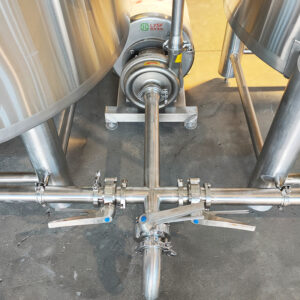
Six tanks are stored independently with dedicated pipeline loops, and acid, caustic and disinfectant are not mixed.
Precise Monitoring, Verifiable Cleaning
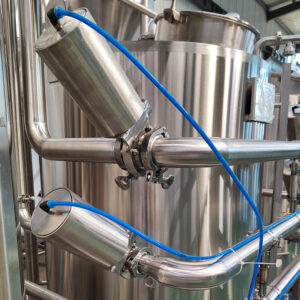
Real-time monitoring of key parameters such as temperature, pressure, liquid level, conductivity, flow rate and pH value. Data is automatically recorded, stored and exported, meeting GMP and brewing quality audit requirements.
Recycling, Energy Saving and Consumption Reduction
Hot caustic, cold caustic and disinfectant can be recycled and reused after filtration, significantly reducing the operating costs of enterprises.
Tank Self-Cleaning, No Hygiene Dead Corners
The tank is equipped with a 360° rotating spray ball, which can realize self-cleaning of the inner wall of the tank, avoiding residual dirt from breeding bacteria.