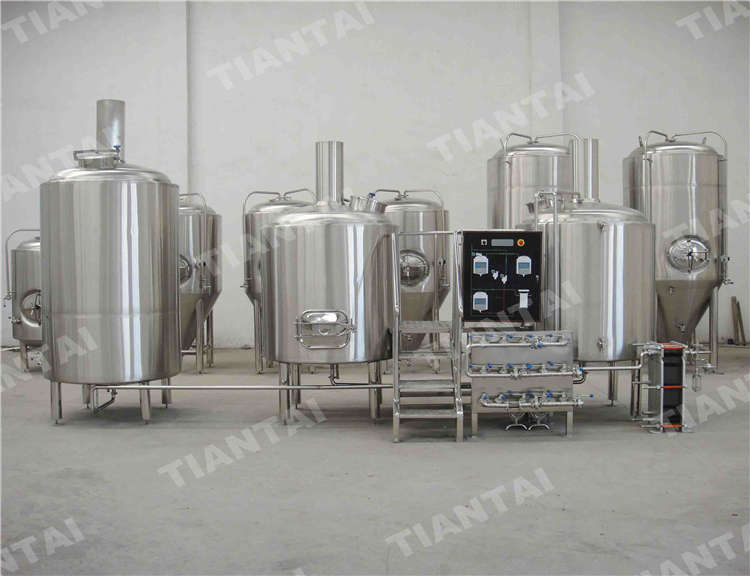
Conical cylindro‑conical fermenters (CCT) represent the global mainstream for beer fermentation.
One critical detail frequently overlooked during procurement: a fermenter is not merely an independent pressure vessel. Its installation mode — indoor or outdoor — defines structural configuration, insulation specification, cooling scheme and safety accessory selection. Indoor and outdoor fermenters cannot be designed by simply scaling up the dimensions of one another. Divergent environmental loading brings significant variations in capital cost, refrigeration energy consumption, production stability and equipment service life.
Two Distinct Design Routes
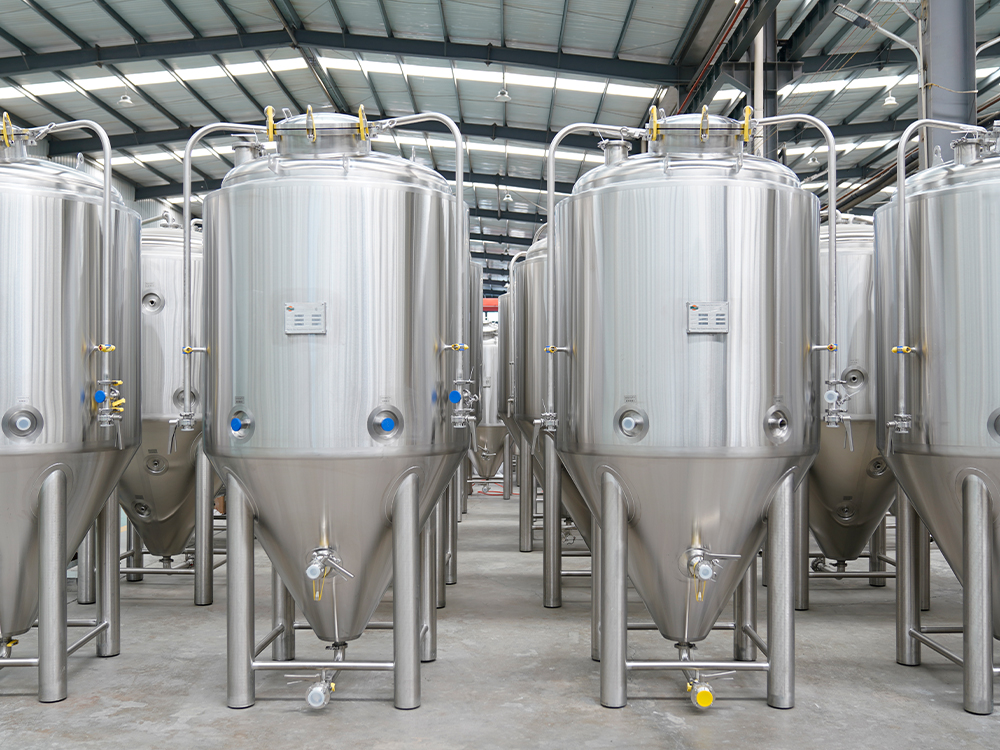
Small‑ and medium‑sized craft‑brewing projects mostly adopt indoor conical fermenters installed inside temperature‑controlled brewhouses. Sheltered indoors, tanks suffer limited thermal interference from solar radiation and diurnal temperature fluctuations. Indoor fermenters are commonly supported by support legs, with cone angles ranging from 60° to 75°. A too‑narrow cone leads to excessive overall tank height, while an over‑wide cone hinders yeast discharge. This angular range has been repeatedly verified in practical brewery engineering.
Cooling is achieved by segmented glycol jacketing on the cylindrical shell plus an independent jacket for the cone section. Multi‑zone independent refrigerant control dissipates metabolic heat generated during peak fermentation. Polyurethane foam serves as thermal‑insulation material. Product‑contact surfaces are polished to Ra < 0.4 μm, and all welds are fully penetrated and polished on both inner and outer sides. Pressure‑relief valves and vacuum breakers are mounted on tank tops to counteract negative‑pressure shocks caused by tank emptying and cyclic CIP (Clean‑in‑Place) operations.
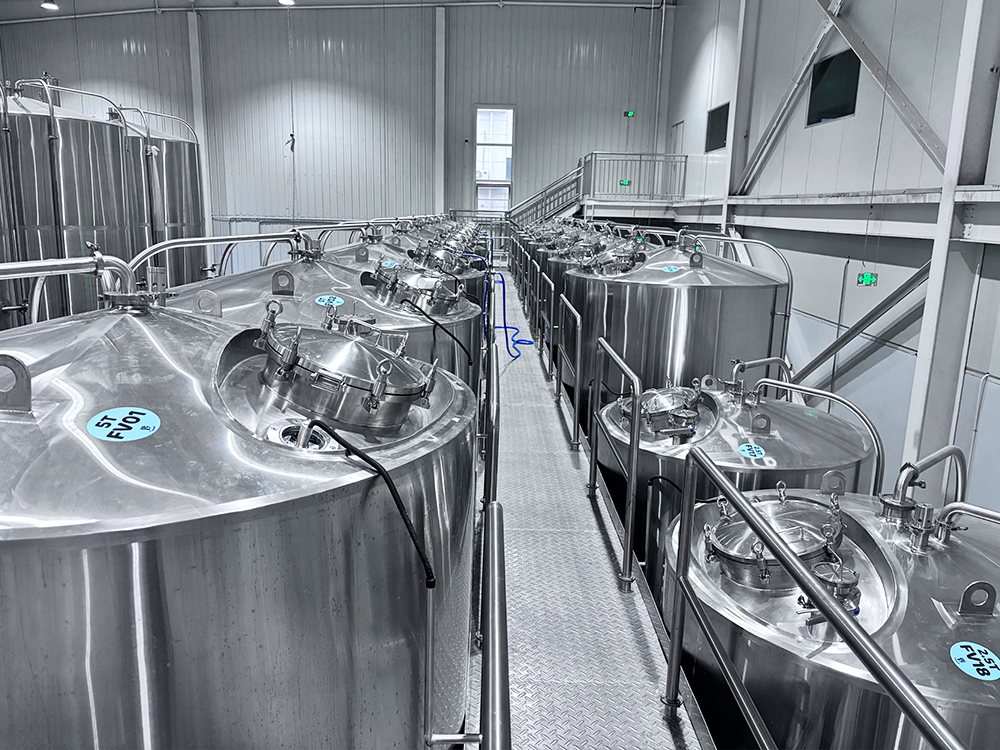
For brewpubs and small‑to‑medium craft breweries, indoor fermenters enable convenient inspection and maintenance. Manways, sampling ports and instrumentation are positioned for ergonomic manual operation. Flexible equipment layout supports incremental capacity expansion by adding extra tanks. On the downside, indoor tanks occupy valuable building floor area; ceiling height and floor‑loading capacity set hard limits on the maximum volume per single tank.
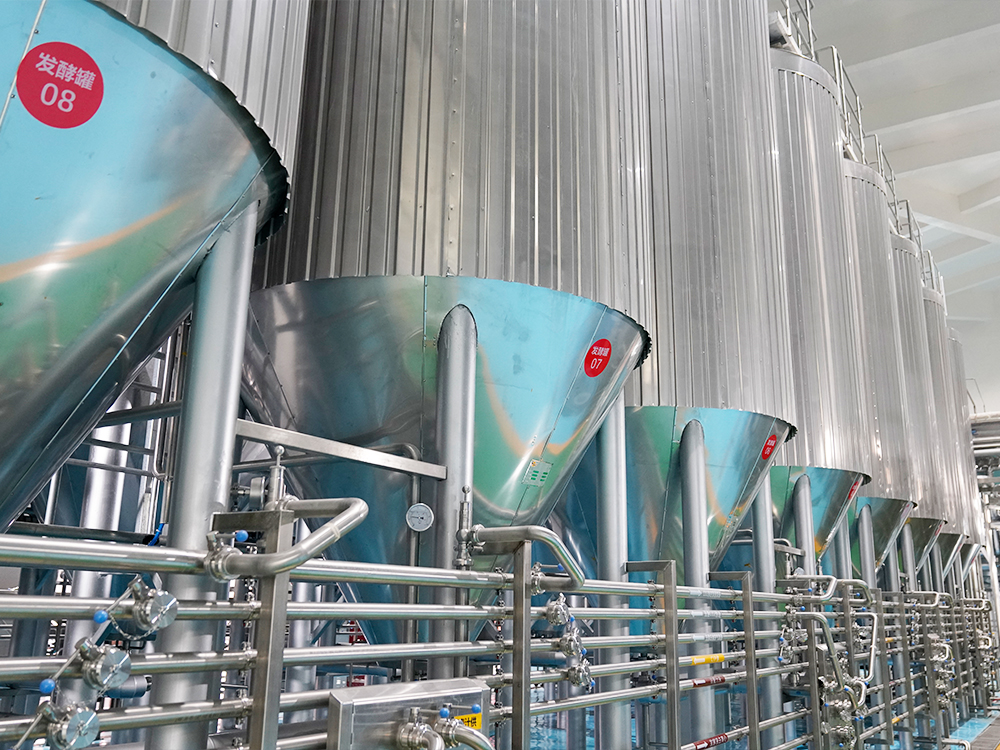
Large‑scale commercial breweries typically deploy vertical outdoor conical fermenters. Placed in open yards instead of production buildings, these tanks save building space and facilitate large‑scale phased expansion of tank farms. Nonetheless, outdoor fermenters operate under harsh service conditions: high shell temperature from direct summer sunlight, frost hazards in winter, substantial diurnal temperature swings, plus continuous weather‑driven corrosion. These external conditions necessitate comprehensive adjustments to structural and process design; outdoor fermenters are never simple enlarged copies of indoor‑use vessels.
For insulation, outdoor fermenters require 150‑220 mm‑thick polyurethane insulation, protected by external cladding of aluminium panels or corrugated colour‑steel sheets. The cladding prevents rainwater infiltration into the insulation interlayer. Once water penetrates and degrades insulation performance, substantial cold loss occurs, refrigeration energy consumption surges, and vertical thermal stratification emerges inside the tank. Such stratification impairs diacetyl reduction in wort‑beer and weakens yeast sedimentation performance.
Structurally, outdoor fermenters cannot reuse support legs designed for small‑capacity indoor tanks. Support assemblies must deliver enhanced mechanical strength and anti‑overturning performance. For large outdoor beer fermenters in the industry, heavy‑duty support legs paired with reinforced annular ring beams are the prevailing solution.
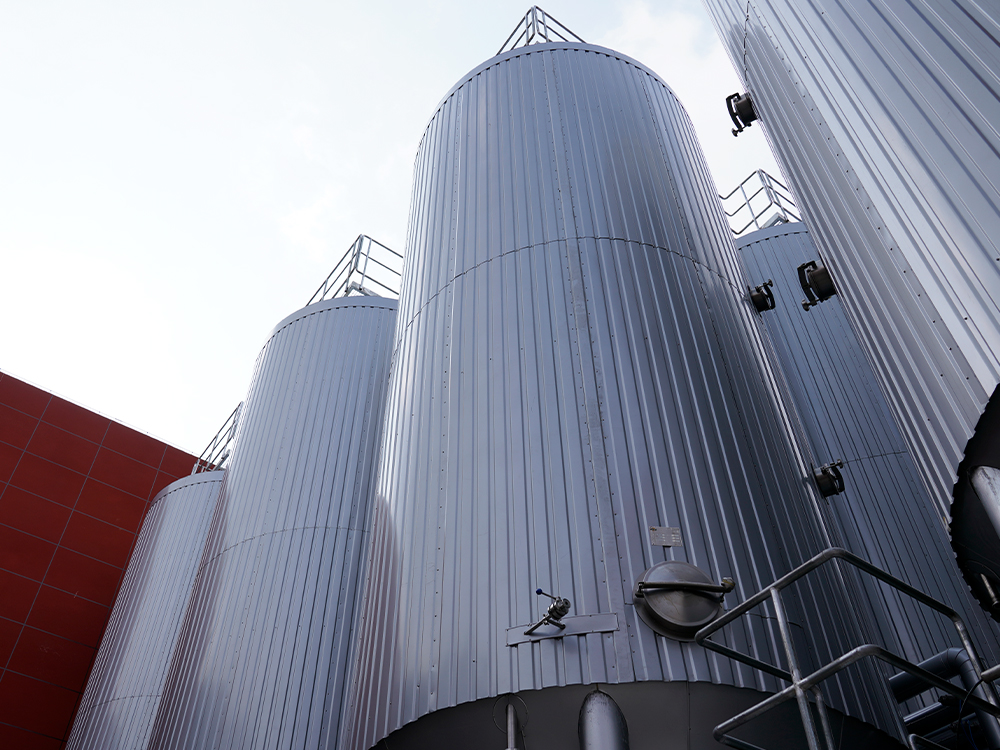
In pressure‑vessel engineering verification, wind load and snow load frequently become governing design factors for outdoor fermenters. By contrast, indoor fermenters are enclosed within building structures, so wind and snow loads are generally non‑governing design conditions.
Total thermal load acting on outdoor fermenters consists of two components: metabolic heat released by yeast fermentation, plus heat ingress transferred from the ambient environment. Heat ingress rises dramatically under intense summer solar exposure. Therefore, outdoor fermenters require finely segmented jacket zoning: separate cooling control for upper, middle and lower shell sections as well as the cone. The cooling jacket is normally divided into 2‑3 shell segments plus one dedicated cone segment.
Safety accessories for outdoor service demand stricter specifications. In addition to standard over‑pressure relief valves and vacuum breakers, projects located in cold northern regions shall select freeze‑resistant breather valves characterised by high flow capacity, low leakage rate and superior corrosion resistance for outdoor low‑temperature service.
A common pitfall within brewery projects: designing large‑capacity outdoor fermenters by directly copying parameter sets originally developed for indoor tanks. After commissioning, this improper practice will trigger multiple issues including excessive refrigeration consumption, tank‑internal thermal stratification and frequent valve failures.
As a professional beer‑equipment manufacturer and integrated brewery‑project service provider, Tiantai delivers customised design and fabrication tailored to each client’s practical capacity planning and on‑site plant conditions. We convert mechanical hardware performance into consistent beer quality and ensure controllable batch‑to‑batch product performance.