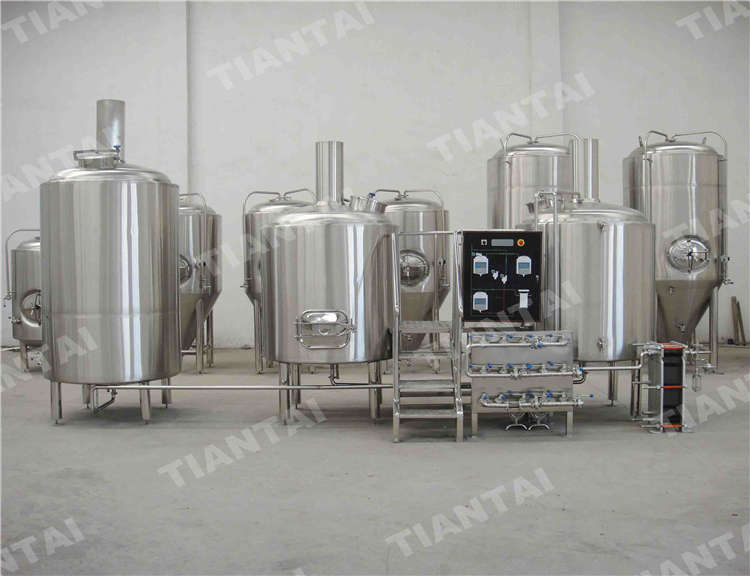
Brewing does not end when fermentation is complete.
At this stage, beer can still contain yeast, hop particles, proteins, polyphenols, and other suspended or haze-forming materials. Depending on the beer style and the brewer’s quality objectives, some of these components may need to be removed before the beer is transferred to a bright beer tank or sent to packaging.
Filtration can therefore serve several different purposes. It can clarify beer after fermentation, reduce the particle load before a finer filtration stage, improve visual stability, or provide microbiological stabilization before packaging. Some beers, however, are intentionally left cloudy and may require little or no final filtration.
The choice of filtration equipment depends on the beer style, solids concentration, production capacity, desired clarity, packaging requirements, and the brewery’s preferred production method.
For breweries ranging from small craft operations to large commercial and industrial beer plants, the most relevant technologies include centrifugal separation, diatomaceous earth filtration, depth filtration, plate-and-frame filtration, cartridge filtration, and membrane filtration.
Common Filtration and Separation Equipment for Beer
| Equipment / Technology | Main Function in Beer Production | Typical Application |
|---|---|---|
| Disc Stack Centrifuge | Rapid clarification and separation of yeast and suspended solids | Green beer, yeast separation, pre-filtration |
| Diatomaceous Earth (Kieselguhr) Filter | Depth filtration and beer clarification | Conventional beer filtration |
| Plate & Frame Filter | Pressure filtration using filter sheets | Small and medium-batch beer filtration |
| Depth Filter / Filter Sheets | Fine clarification and polishing | Yeast, particles and haze reduction |
| Cartridge Filter | Fine and final particulate filtration | Polishing and downstream protection |
| Membrane / Cross-Flow Filtration | Fine filtration and microbiological stabilization | Kieselguhr-free beer filtration |
| Bag Filter | Coarse or auxiliary filtration | Selected pre-filtration applications |
These technologies are not simply different levels of the same filter.
A centrifuge separates particles by centrifugal force. DE and depth filters retain particles within a filtration medium. Cartridge filters provide controlled particle retention, while membrane systems use selective membrane separation.
For this reason, a brewery normally selects filtration equipment according to the process objective rather than choosing the finest available filter.
Clarification Before Fine Filtration
The beer entering a fine filter is very different from the beer leaving fermentation.
Freshly fermented beer can contain substantial amounts of yeast and other suspended matter. Sending this entire solids load directly to a fine filter can quickly increase pressure drop, shorten filter life, and increase beer losses.
Primary clarification is therefore often used first.
In the brewhouse, the whirlpool already performs an important clarification step by separating hot trub from wort before cooling and fermentation. After fermentation, however, the solids are much finer and consist largely of yeast and other fermentation-derived material.
This is where centrifugal separation, sedimentation, DE filtration, or other clarification technologies become relevant.
A typical process might be:
Fermentation → Maturation → Primary Clarification → Fine Filtration → Bright Beer → Packaging
Not every brewery needs every stage. The most appropriate arrangement depends on the beer and the required finished-product characteristics.
Disc Stack Centrifuges
A disc stack centrifuge uses centrifugal force rather than a filter medium to separate suspended solids from beer.
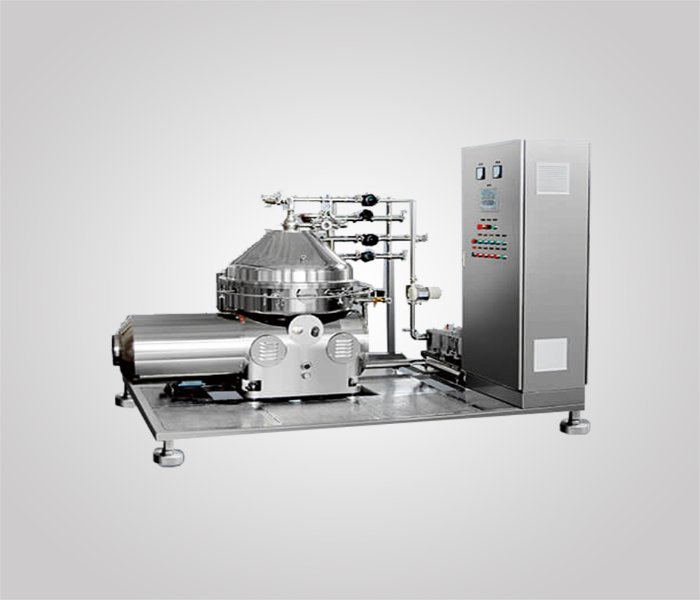
Inside the rotating bowl, a stack of conical discs increases the effective separation area. Yeast and other suspended particles are separated from the liquid and discharged according to the centrifuge configuration.
In beer production, disc stack centrifuges can be used for:
- Green beer clarification
- Yeast separation
- Fine solid-liquid separation
- Pre-clarification before filtration
- Reduction of solids entering downstream filters
- Beer recovery
The major advantage is speed and continuous operation. A centrifuge can remove a significant portion of the yeast load before the beer reaches a finer filtration stage.
This can be particularly valuable in larger breweries where beer throughput is high, and filtration capacity must be maintained over long production runs.
Diatomaceous Earth (Kieselguhr) Filtration
Diatomaceous earth, also known as DE or kieselguhr, has traditionally been one of the most widely used filter aids in beer production.
During filtration, DE forms a porous filter cake through which the beer passes. Yeast, suspended particles, and other haze-forming material are retained within the filter cake.
The principal reason for its continued use is its ability to handle a relatively substantial solids load while producing bright, clarified beer.
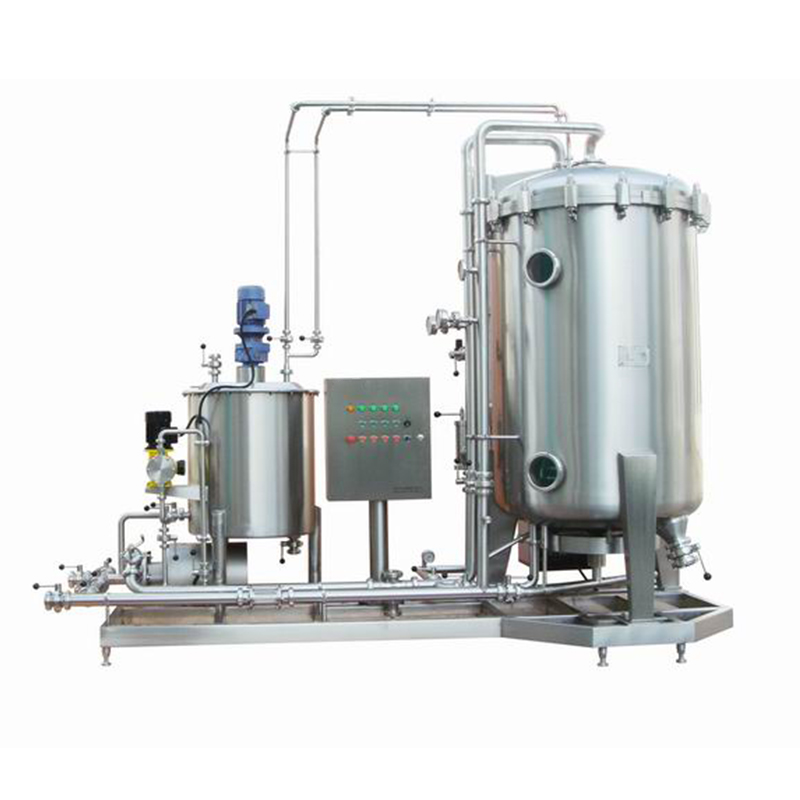
A conventional process can be:
Matured Beer → DE Filtration → Fine Filtration → Bright Beer Tank
Different grades of filter aid can be used according to the required filtration performance. Coarser material can provide higher dirt-holding capacity, while finer grades can be used for more intensive clarification.
DE filtration is suitable for breweries that want a proven conventional filtration process. It can be used in both craft and industrial brewing, with the filtration system and filter area scaled according to production requirements.
There are also limitations. DE is a consumable filtration aid, so the brewery needs to manage storage, dosing, handling, and disposal of spent filter material. Beer can also be retained in the filter cake, creating product loss.
These factors have encouraged many breweries to investigate centrifugation, depth filtration, or membrane filtration as alternatives or complementary technologies.
Plate & Frame Filters
Plate and frame filters use filter sheets installed between a series of plates. Beer is pumped through the sheets under pressure, with yeast and suspended particles retained by the filtration media.
The system is particularly useful for batch filtration because the filtration area can be adjusted according to the production requirement and the filter sheets can be selected according to the desired clarification level.
Plate and frame filters can be used for:
- Batch beer clarification
- Fine filtration
- Polishing
- Specialty beer processing
- Small and medium-scale brewery production
For smaller breweries, the relatively simple design and flexible filter-sheet selection can make plate and frame filtration a practical option.
The main limitation is manual operation. Conventional systems need to be opened for filter-sheet installation, replacement, and cleaning, and beer losses can occur during these operations.
Membrane and Cross-Flow Filtration
Membrane filtration provides an alternative to conventional filter-aid filtration.
In cross-flow filtration, beer flows tangentially across the membrane surface rather than directly through a static filter cake. A portion of the liquid passes through the membrane while retained solids remain on the feed side and are swept away by the cross-flow.
This approach can provide clarification and, depending on the membrane configuration, microbiological stabilization without the use of kieselguhr.
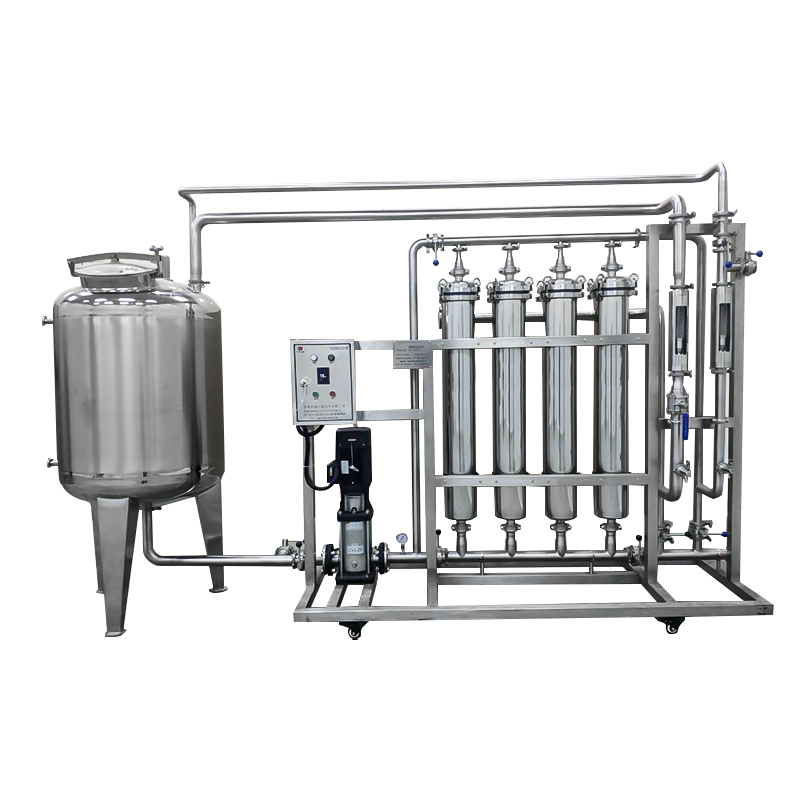
Potential advantages include:
- No diatomaceous earth handling
- Reduced filter-aid waste
- Enclosed processing
- Repeatable filtration performance
- Potentially lower consumable costs
- High degree of process automation
However, membrane systems are not simply a drop-in replacement for a DE filter.
Membrane fouling can become a major consideration when beer entering the system contains large amounts of yeast or colloidal material. Effective pre-clarification and a suitable cleaning regime are therefore essential.
For smaller breweries, the decision should also consider capital cost, production volume, cleaning requirements, membrane replacement, and whether the brewery actually needs this degree of automation.
Bag Filters
Bag filters have a more limited role in beer production than in some other beverage processes.
They are generally used as coarse or auxiliary filters rather than as the main final beer filter.
A brewery may use a bag filter to remove relatively large particles before a finer filtration stage or to protect downstream equipment.
For example:
Coarse Particle Removal → Bag Filter → Fine Filter
However, bag filtration is generally not the first choice for final clarification of finished beer.
For a brewery seeking stable bright beer quality, centrifugation, DE filtration, depth filtration, cartridge filtration, or membrane filtration will generally provide a more targeted solution.
Beer Filtration: Why “Finer” Does Not Always Mean “Better”
A centrifuge does not operate according to a nominal micron rating in the same way as a filter medium. Its performance depends on factors such as particle size, particle density, solids concentration, beer viscosity, temperature, and centrifugal force.
Membrane filtration is different again and is selected according to membrane characteristics and the required separation.
For brewery process design, the more useful question is:
What needs to be removed, and at which stage should it be removed?
Choosing Filtration for Different Beer Styles
Different beers do not necessarily need the same filtration process.
Lager and Pilsner
Clear lager styles generally have a strong emphasis on bright appearance and stable clarity.
A conventional brewery may instead use DE filtration followed by a fine filtration stage.
For larger breweries, centrifugation can reduce the solids load on the downstream filtration system and help maintain consistent throughput.
IPA and Hoppy Beer
Hoppy beers can be more challenging to clarify because hop particles and polyphenol-related haze can contribute to turbidity.
Aggressive filtration is not always desirable because excessive removal can affect the characteristics the brewer wants to retain.
For many modern hop-forward beers, the objective is controlled clarification rather than maximum brightness.
Wheat Beer and Naturally Cloudy Beer
Some beer styles are intentionally packaged with suspended yeast or haze-forming material.
In these cases, extensive filtration may be unnecessary or undesirable.
This is an important consideration when designing a brewery: filtration equipment should serve the beer style rather than force every beer through the same clarification process.
Large-Scale Commercial Beer Production
As brewery capacity increases, filtration becomes an operational and economic issue as much as a product-quality issue.
A large commercial brewery may need to consider:
- Continuous clarification
- High beer throughput
- Filter consumption
- Beer losses
- CIP requirements
- Automation
- Consistent turbidity
- Integration with bright beer tanks
- Integration with packaging lines
A larger brewery may therefore combine centrifugal clarification with depth, cartridge, or membrane filtration, depending on its product range and process philosophy.
By contrast, a smaller brewery may prefer a plate and frame filter or compact cartridge system because lower capital expenditure and operational simplicity are more important.
What Should Be Considered When Selecting a Beer Filter?
The right filter should be selected based on the brewery’s process requirements rather than from filtration rating alone.
Beer Style
A brilliant lager, a hazy IPA, and a naturally cloudy wheat beer have different clarification targets.
Yeast and Solids Load
The more solids entering the filter, the faster a fine filter will load. Effective clarification upstream can therefore have a major effect on filtration efficiency.
Required Clarity
The target may range from naturally cloudy beer to brilliant clarity.
Shelf Stability
Beer intended for longer distribution and storage may require more stringent final filtration or microbiological stabilization.
Product Loss
Every filter retains some beer. The system should therefore be evaluated not only by filtration performance but also by product recovery.
Consumables
DE filtration requires filter aid, while disposable filter sheets and cartridges generate recurring material costs. Membrane systems reduce reliance on disposable media but introduce membrane cleaning and replacement requirements.
Production Capacity
The appropriate filtration system for a 500L batch brewery may be very different from the system required for a brewery producing several batches per day at 5,000L or 8,000L per batch.
Tiantai’s brewery solutions cover 500L to 8000L per batch in this range, with brewing systems scaled through different brewhouse configurations, fermentation capacity, automation levels, utilities, bright beer storage, and filling systems. Tiantai also provides brewery systems beyond this range, extending from small-scale breweries to commercial and industrial installations.
Tiantai Brewery Filtration Solutions
Tiantai designs and manufactures complete brewery systems for both craft breweries and large commercial and industrial beer plants.
Brewery capacity can range from small batch systems to large-scale production facilities, with brewhouse, fermentation, clarification, bright beer storage, CIP, refrigeration, filling, automation, and utility systems configured according to the production requirements. Tiantai’s published brewery solutions range from 100L systems to more than 200HL, while its 500L–8000L solutions provide different configurations and automation levels according to brewery capacity.
The goal is not simply to make beer as clear as possible.
It is to achieve the right level of clarification and filtration for the beer, while protecting flavor, minimizing product loss, controlling operating costs, and maintaining stable brewery production.
Planning a new brewery or upgrading an existing beer filtration system? Tiantai can design the clarification and filtration process around your beer style, production capacity, and complete brewery workflow.