Compressed air is an important utility in commercial beer production, although it often receives less attention than steam, water, and refrigeration systems.
From controlling pneumatic valves to operating packaging equipment, compressed air supports many everyday brewery operations. It provides a convenient way to power automated equipment and control production processes.
However, generating compressed air requires a considerable amount of electricity. An improperly designed system can result in unnecessary energy consumption, unstable pressure, and higher operating costs.
Understanding where compressed air is needed and how much pressure each application requires is essential when planning a brewery’s utility system.
Where Is Compressed Air Used in a Brewery?
Compressed air serves a variety of functions throughout a brewery. Its main applications are related to process automation, equipment operation, and material handling.
Pneumatic valves and process control
Many brewery systems use pneumatic actuators to open, close, and regulate valves. These components are commonly found in brewhouse piping, fermentation systems, CIP circuits, and automated process lines.
Compressed air allows valves to operate quickly and reliably, supporting automatic control of liquid flow and production sequences.
Bottle, can, and keg packaging
Packaging equipment often uses pneumatic cylinders to move and position containers, operate mechanical components, and control filling-related operations.
A stable air supply is important for maintaining consistent equipment movement and avoiding interruptions during packaging.
Material and liquid handling
Compressed air can also be used in certain applications to move solids or transfer liquids when conventional pumping is unsuitable. For example, some brewery designs use pneumatic conveying or pressure-assisted discharge arrangements for specific materials.
However, these applications should be selected according to the process requirements rather than used as a general replacement for pumps or mechanical conveying equipment.
Pneumatic tools and auxiliary equipment
Maintenance workshops and production areas may also use compressed air to operate suitable pneumatic tools and auxiliary machinery.
Because these applications have different operating patterns and pressure requirements, the total air demand should be evaluated before selecting the compressor.
Choose the Right Air Compressor for the Production Demand
The type and capacity of an air compressor should be selected according to how a brewery operates.
Some equipment requires compressed air continuously, while other applications only consume air during specific production steps.
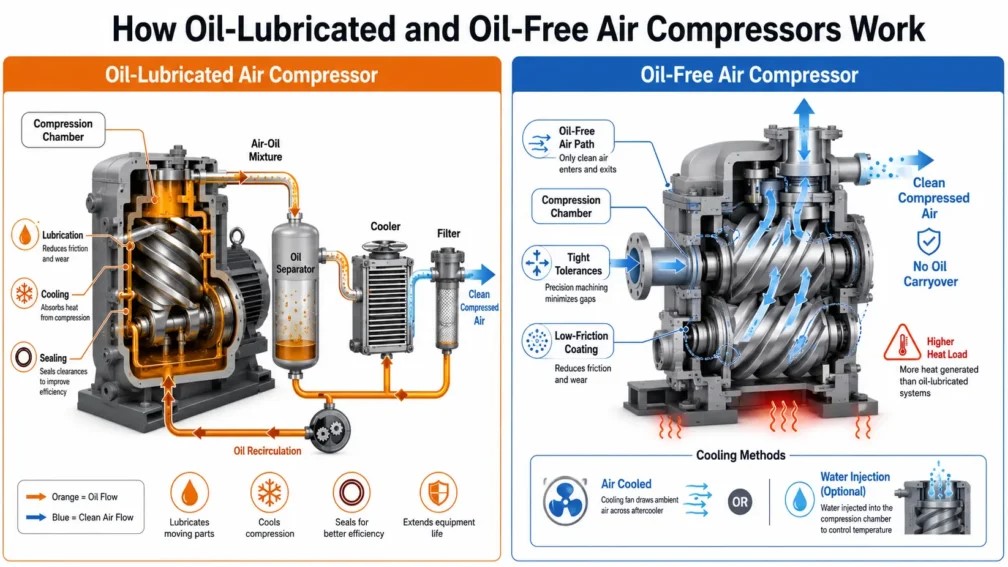
Two commonly used compressor types are reciprocating piston compressors and rotary screw compressors.
Reciprocating piston compressors
These compressors use pistons to compress air inside cylinders.
They are suitable for various smaller or intermittent air-demand applications. Depending on their design, they can operate in single-stage or multistage configurations.
Rotary screw compressors
Rotary screw compressors use two intermeshing rotors to compress air continuously.
They are commonly considered for facilities with relatively steady and higher compressed air demand. Their capacity control options also make them suitable for many automated production environments.
For breweries with multiple compressors, the control system should coordinate their operation according to actual demand. Running several compressors inefficiently at partial load can increase electricity consumption.
The final equipment selection should consider required airflow, working pressure, operating hours, peak demand, and future production expansion.
Set the Correct Working Pressure
Operating a compressed air system at a higher pressure than necessary is one of the simplest ways to increase energy costs.
The required system pressure should be based on the actual needs of the equipment connected to the network.
For example, if most brewery equipment operates at a relatively low pressure but one application requires a higher pressure, it may be unnecessary to increase the pressure of the entire system.
Instead, consider whether the high-pressure application can use a separate supply arrangement or a local pressure booster.
Pressure losses must also be considered. Air passes through dryers, filters, separators, valves, and distribution pipes before reaching the end user. Poorly designed or restricted piping can reduce the pressure available at the equipment.
Simply increasing compressor discharge pressure to compensate for these losses is not an efficient long-term solution.
A properly planned system should provide the required pressure at each point of use without generating more pressure than the production process needs.
Consider Air Quality and Distribution During System Design
Pressure and airflow are not the only factors that matter.
Compressed air used in different brewery applications may require different levels of filtration, drying, and oil control.
For example, pneumatic actuators and general workshop tools may have different air quality requirements from equipment where compressed air could contact beer, product-contact surfaces, or packaging materials.
The required air treatment should therefore be determined by the actual application and relevant hygiene requirements.
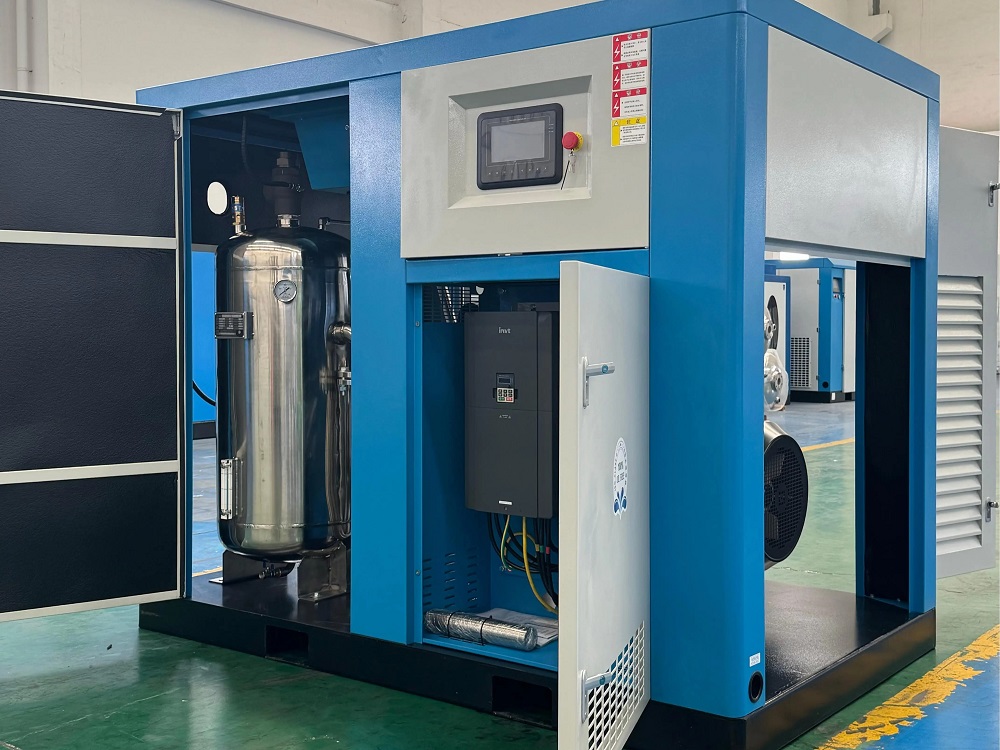
The distribution network also needs appropriate pipe dimensions, branch connections, air receivers, filters, dryers, and condensate drainage arrangements.
A suitable air receiver helps manage short periods of high demand and reduces unnecessary compressor cycling. Properly designed piping minimizes pressure losses and makes it easier to isolate individual production areas when they are not operating.
Compressed Air Should Be Planned as Part of the Complete Brewery
A compressed air system is more than a standalone compressor. Its performance depends on equipment selection, air quality, pressure requirements, distribution layout, and production demand.
For a new brewery, these requirements should be considered alongside the brewhouse, fermentation tanks, CIP system, and packaging line.
Tiantai provides brewery equipment manufacturing and turnkey brewery project delivery, including supporting utility systems. Coordinating compressed air requirements with the overall production layout helps ensure that the air supply matches the actual needs of each process.
Once the compressed air system is installed, however, equipment selection alone cannot guarantee low operating costs. Leaks, excessive pressure, and unnecessary air consumption can still waste significant electricity.
These operating issues are the focus of our next article, which explains how breweries can identify compressed air losses and improve system efficiency.