
생산 라인 소개
The vodka production line provided by Tiantai Company is a highly automated system centered on the core principles of “impurity removal and the pursuit of purity.” Its design objective is to convert the starch found in raw materials—such as grains and tubers—into high-purity alcohol. Through a unique multi-stage filtration process, the system removes trace flavor compounds including fusel oils, aldehydes, and acids from the liquid spirit, ultimately yielding a distilled spirit characterized by its “colorless, odorless, pure, and fiery-on-the-palate” qualities.
A modern vodka production line typically comprises several key sections: raw material handling, fermentation and distillation, alcohol rectification, activated carbon filtration, product blending, liquid filling and packaging, as well as supporting utility systems (such as steam boilers, water treatment units, and CIP cleaning systems). This production line is not only suitable for dedicated vodka distilleries but is also commonly utilized for the production of high-quality neutral grain spirits or as a base spirit production line for pre-mixed cocktails.
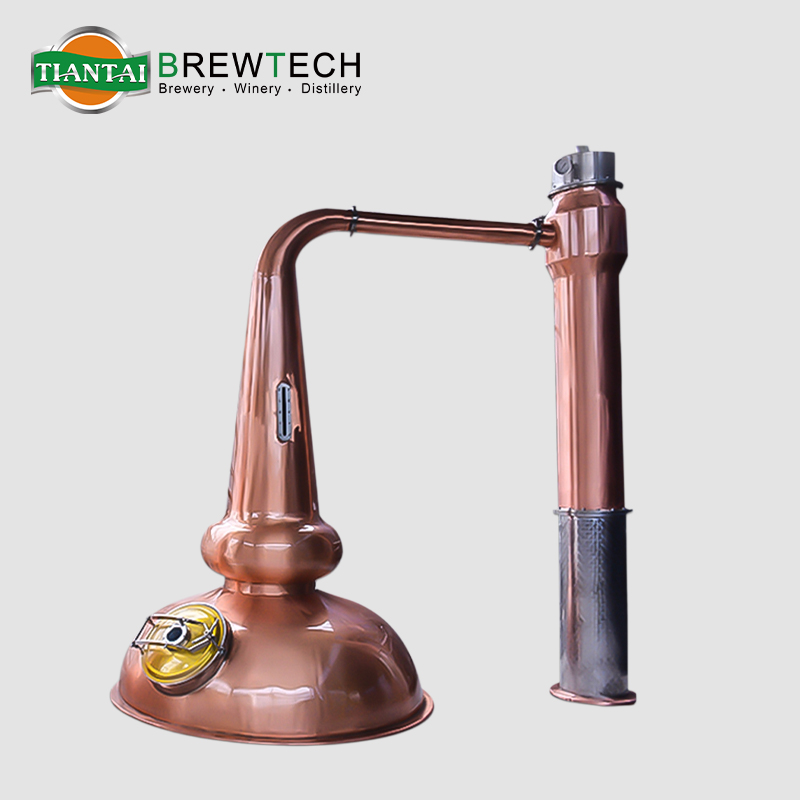
공정 설명
The vodka production process is primarily divided into two major stages: “Base Alcohol Preparation” and “Refining and Filtration.” Unlike spirits such as whiskey or Baijiu,which emphasize the preservation of the raw materials’ inherent flavors the core of the vodka process lies in the systematic removal of any unique flavor characteristics derived from the raw materials through repeated distillation and filtration.
Raw Material Handling and Mashing
Raw Materials:Primarily utilizes starch-rich agricultural crops, such as grains (wheat, rye, barley, etc.), potatoes, or molasses.
Process:After being milled or crushed, the raw materials are mixed with hot water to undergo gelatinization. Enzymes are then added to convert the starch into fermentable sugars.
Support Systems:This process requires a substantial supply of heat via steam, typically provided by equipment such as Circulating Fluidized Bed boilers, which serve as a stable heat source.
발효
Process:The cooled mash is pumped into fermentation tanks, where yeast is added to initiate fermentation. The yeast converts the sugars into alcohol and carbon dioxide, resulting in a fermented mash with an alcohol content of approximately 7–10%.
Distillation and Rectification
Core Operation:This is the critical stage that determines the ultimate quality of the vodka. The fermented mash enters the distillation system.
Initial Distillation:The alcohol within the fermented mash is separated from the water and solid residues. Rectification: Within a multi-functional rectification column, the principle of differing boiling points—among alcohol, water, and various impurities—is utilized to facilitate multiple cycles of vaporization and condensation. Through the precise control of temperature and reflux ratio, high-purity potable alcohol—reaching concentrations of 95% to 96% vol—is extracted.
Extraction: During this process, the “heads” (early distillates) and “tails” (late distillates) are separated and discarded, retaining only the purest fraction of the alcohol.
Activated Carbon Filtration
The Signature Process: High-purity alcohol is not consumed directly; it must be diluted to a concentration of 40–60% vol. Both before and after this dilution, the spirit must undergo filtration using activated carbon.
Method: Typically, filtration tanks containing birch-based activated carbon are employed. The spirit flows through the activated carbon bed at a relatively slow pace.
Function: Acting much like a sponge, the activated carbon adsorbs residual trace esters, aldehydes, and fusel oils. This process eliminates all harsh notes and off-flavors, rendering the spirit “crystal-clear, smooth on the palate, and delivering only a fiery, intense sensation.”
Blending and Water Treatment
Water Quality: Vodka consists primarily of alcohol and water; consequently, the quality of the water used determines the final mouthfeel of the spirit. Typically, deionized water or purified soft water is required to dilute the alcohol to the desired proof during the blending process.
Bottling and Packaging
Process: After undergoing a final stage of fine filtration, the finished spirit enters a fully automated bottling line. This line integrates a comprehensive sequence of operations, including bottle rinsing, filling , capping/sealing, labeling, shrink-wrapping, and case packing.
Key Features: Given that vodka is a highly transparent liquid, bottling lines dedicated to its production are typically equipped with high-precision liquid-level control systems and empty-bottle detection mechanisms to ensure impeccable packaging aesthetics.