
Présentation de la chaîne de production
La ligne de production de jus d'orange NFC est spécialement conçue pour la fabrication industrielle de jus d'orange non concentré (NFC) de haute qualité, avec une capacité de traitement annuelle pouvant s'adapter de manière flexible à des besoins en matière première allant de 100 tonnes à 100 000 tonnes. Le cœur de cette chaîne de production réside dans ses procédés optimisés de pressage en ligne, de séparation fine et de dégazage à basse température. Cela permet de préserver au maximum la saveur naturelle, la couleur et les nutriments thermosensibles des oranges fraîches, tout en contrôlant avec précision la teneur en huile d’écorce et en pulpe, garantissant ainsi un goût pur, une saveur stable et mettant parfaitement en valeur la texture riche du jus d’orange fraîchement pressé.
Description du processus
Nettoyage des matières premières : Les oranges fraîches sont déchargées en douceur dans la section de nettoyage via un système de convoyage à eau. Tout d’abord, une machine de nettoyage à brosses, associée à un jet d’eau, effectue un récurage en profondeur, éliminant efficacement la poussière et les salissures de surface, notamment au niveau des cavités du pédoncule. Ensuite, une pulvérisation uniforme de désinfectant contenant 10 à 30 ppm de chlore disponible est utilisée pour la stérilisation. Enfin, un rinçage à l'eau sous haute pression est effectué pour rincer soigneusement les matières premières, garantissant ainsi que la charge microbienne initiale soit réduite au minimum.
Classement et tri : après le lavage, les oranges passent dans une machine de classement optique ou mécanique afin d’être triées avec précision selon des normes définies. Ce processus élimine automatiquement les petits fruits non conformes (moins de 30 mm de diamètre), les fruits déformés et les fruits malades, ne conservant que des matières premières de taille uniforme et de haute qualité pour l’étape d’extraction du jus. Il s'agit là d'une condition préalable essentielle pour garantir le fonctionnement efficace et stable des équipements d'extraction de jus ainsi que la constance de la qualité du jus.
Coupe en deux et extraction du jus : un extracteur de jus à double tambour de pointe, capable de couper les fruits en deux, constitue le cœur de la chaîne de production. Les fruits entiers sont coupés en deux de manière continue et automatique par un mécanisme de convoyage de type cuvette, puis acheminés vers deux tambours verticaux pour l'extraction du jus. L'équipement permet de séparer automatiquement et en continu le jus, l'écorce, les pépins et l'huile d'écorce, ce qui minimise la fragmentation excessive de l'écorce et de la pulpe pendant le processus d'extraction. C'est la garantie fondamentale pour obtenir un jus de haute qualité, peu amer et à haut rendement.
Filtration fine et ajustement de la pulpe : après la filtration grossière, le jus extrait est immédiatement acheminé vers une centrifugeuse pour une séparation fine. Ce procédé vise à contrôler avec précision la teneur en petites particules de pulpe de fruit dans le jus fini, en la stabilisant généralement dans la fourchette idéale de 3% à 5%, ce qui confère au jus d'orange NFC sa turbidité caractéristique, sa couleur naturelle et sa saveur riche et nuancée.
Dégazage sous vide et mélange d’huiles : le jus finement filtré est acheminé vers une unité de dégazage sous vide. Dans un environnement où le vide et la température sont contrôlés avec précision (par exemple, 50-52 ℃), l’oxygène dissous et les gaz volatils responsables de l’odeur de « vert » sont efficacement éliminés, ce qui améliore la stabilité aromatique et prévient efficacement le brunissement oxydatif. Cette unité permet également d’effectuer simultanément une élimination sélective de l’huile de zeste en ajustant les paramètres du procédé, ce qui permet de maintenir avec précision la teneur en huiles aromatiques du produit final dans la plage optimale de saveur (généralement comprise entre 0,015% et 0,025%).
Homogénéisation (facultative) : Afin de garantir la stabilité de la texture du produit et d'éviter toute stratification pendant sa durée de conservation, un processus d'homogénéisation à basse température peut être ajouté en fonction du positionnement du produit, ce qui assure une suspension homogène des particules de pulpe de fruit.
Stérilisation et refroidissement : après le dégazage, le jus d'orange subit une pasteurisation instantanée à l'aide d'un échangeur de chaleur tubulaire. Grâce à un contrôle précis de la température (par exemple, 95 °C pendant 15 secondes), les bactéries pathogènes et responsables de l'altération des aliments sont efficacement éliminées, tout en préservant au maximum la saveur fraîche et la vitamine C, sensible à la chaleur. Immédiatement après la stérilisation, le jus passe dans une section de refroidissement en plusieurs étapes afin d'être rapidement refroidi à la température requise pour la mise en bouteille.
Conditionnement aseptique : le jus refroidi est conditionné dans des briques en carton stérilisées, des bouteilles en PET ou des sachets aseptiques, dans un environnement totalement aseptique. Ce procédé permet d’obtenir une stérilité commerciale, garantissant ainsi au produit une longue durée de conservation à température ambiante ou prolongeant considérablement sa durée de conservation en réfrigération, ce qui répond aux diverses exigences du marché.
Étiquetage et conditionnement : Une fois le remplissage terminé, le produit fini est contrôlé, étiqueté et codé, puis conditionné et palettisé en vue de son stockage.
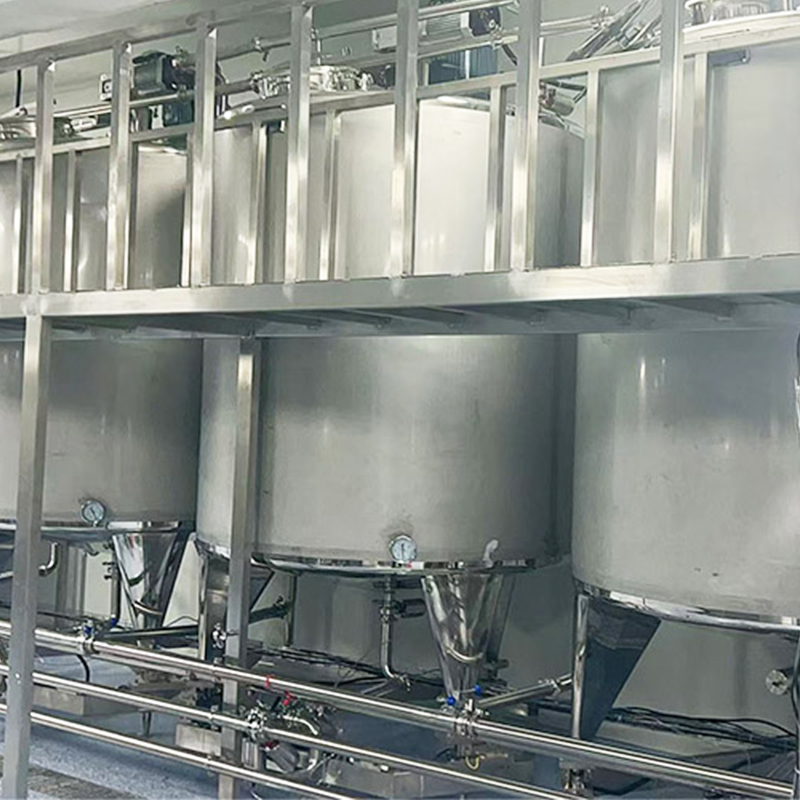
Composants de base de l'équipement
Cuve de transport hydraulique et élévateur : transportent en douceur les oranges brutes de la zone de déchargement vers la section de lavage, réduisant ainsi efficacement les dommages mécaniques.
Machine à laver à brosses : utilise des brosses rotatives associées à un jet d'eau pour nettoyer en profondeur la surface des oranges.
Unité de désinfection par pulvérisation et de rinçage : intègre des systèmes indépendants de pulvérisation de désinfectant et d'eau propre pour une stérilisation efficace et un rinçage final.
Machine de tri : Équipée d'un système de tri à tambour ou électro-optique permettant d'éliminer avec précision les matières premières non conformes en fonction de leur taille ou de leur poids.
Machine de pressage partiel : élément central de la chaîne de production, elle extrait efficacement le jus des fruits entiers et sépare en continu l'écorce, la pulpe et les pépins.
Réservoir tampon de jus : il stocke temporairement le jus brut, assurant ainsi l'équilibre du débit pour la suite du traitement en continu.
Séparateur centrifuge : permet de contrôler avec précision la teneur en pulpe et la turbidité du produit fini.
Unité de dégazage sous vide et d'élimination de l'huile : élimination intégrée de l'oxygène dissous et de l'excès d'huile de peau, permettant de stabiliser la saveur et la couleur.
Système de pasteurisation : un pasteurisateur tubulaire à haut rendement, doté d'un contrôle précis de la température pour préserver la fraîcheur des produits.
Système de remplissage aseptique : permet de réaliser le conditionnement final dans un environnement stérile afin d'assurer une conservation à long terme.
Système de nettoyage in situ CIP : le nettoyage par circulation entièrement automatique garantit l'hygiène et la sécurité sur l'ensemble de la chaîne de production.
Système de commande automatique : intègre un automate programmable (PLC) et un écran tactile industriel pour surveiller et enregistrer les principaux paramètres tout au long du processus.