
Présentation de la chaîne de production
Apple cider vinegar processing production lines are mainly divided into two categories: brewing and blending. Modern industrial production generally adopts a liquid deep fermentation process, the core of which lies in the two-step conversion of sugars through yeast and acetic acid bacteria, achieving continuous and efficient bio-fermentation and food and beverage processing. The entire line adopts a modular and continuous design, with all material contact parts made of food-grade 304 stainless steel. A PLC system is used for automated and precise control of key process parameters such as temperature, ventilation, and pH, ensuring stable and controllable production throughout the entire process.
This production line has a wide capacity range and can be flexibly configured according to customer needs. Annual production capacity can range from a small-scale boutique line of 100 KL to a large-scale industrial line of 50,000 KL, meeting both the production of fermented fruit vinegar and the direct production of finished apple cider vinegar beverages, adapting to diverse product positioning and market strategies.
Description du processus
The mainstream industrial production of apple cider vinegar adopts a liquid secondary fermentation process, with a complete production cycle typically of 21-25 days. The standardized process flow is as follows: Apple raw material → Washing → Sorting → Crushing and juicing → Crude juice → Alcoholic fermentation → Acetic acid fermentation → Aging → Filtration → Blending → Sterilization → Bottling
Raw material processing and juicing: The raw apples first undergo bubbling and high-pressure spray washing to thoroughly remove surface dirt, impurities, and some pesticide residues. Then, moldy and spoiled fruit is automatically sorted out. Qualified apples are crushed and pressed to extract juice. Some processes can be supplemented with enzymatic treatment such as pectinase to significantly improve juice yield and clarity.
Alcoholic fermentation: The clarified apple juice is pumped into a dedicated alcoholic fermentation tank, the sugar content is adjusted, and selected brewing yeast is added. Anaerobic fermentation takes place in a temperature-controlled environment of 25-30℃. This stage usually lasts 6-7 days, during which the sugar in the juice is efficiently converted into alcohol, producing the “apple wine” base liquid.
Acetic acid fermentation: This is the core conversion process. After adjusting the cider base liquor to the appropriate alcohol content, it is pumped into an acetic acid fermentation tank and inoculated with highly active acetic acid bacteria. Under precise temperature control of 30-35℃, sterile air is introduced through an aeration or stirring system to carry out liquid deep aerobic fermentation, oxidizing the alcohol into acetic acid. This process requires extremely strict control of temperature, dissolved oxygen, and pH.
Aging and Filtration: The newly fermented vinegar has a relatively harsh taste and needs to be transferred to aging tanks for several weeks to months of post-fermentation aging. This process helps the flavor compounds mature, esterify, and blend, making the vinegar smoother, more mellow, and with a harmonious aroma. After aging, the vinegar is finely filtered through a diatomaceous earth filter, plate and frame filter, or membrane filtration system to thoroughly remove residual bacteria, proteins, and insoluble suspended solids, resulting in a clear, transparent, and highly stable base vinegar.
Blending, Sterilization, and Filling: For blended apple cider vinegar beverages, the fermented base vinegar is pumped into a blending tank, diluted with water according to the formula to the standard acidity (e.g., 0.3%-0.5%), and sugar, honey, fruit juice, or other additives are added to balance the flavor and taste. The uniformly blended liquid is homogenized and degassed under vacuum, then treated with ultra-high temperature instantaneous sterilization or pasteurization to rapidly kill microorganisms and preserve the product’s flavor and nutrients to the greatest extent. Finally, in a sterile or clean environment, an automated filling line completes the volumetric filling, sealing (capping), labeling, coding, and boxing, producing the final product.
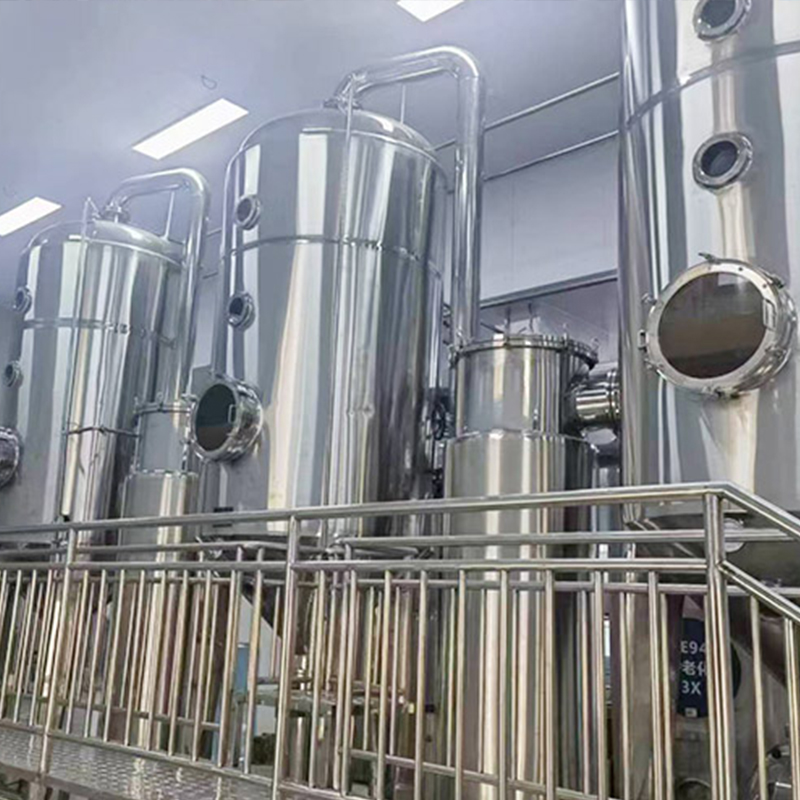
Composants de base de l'équipement
Pre-treatment Equipment: Bubble washing machine, spray washing machine, sorting table/machine, crusher, juicer, enzymatic hydrolysis tank, etc., used for the purification, sorting, and initial juice extraction of raw materials.
Fermentation and Aging System: Alcoholic fermentation tank: equipped with a temperature-controlled jacket/coil and CIP cleaning system, used for the alcoholic fermentation of apple juice.
Acetic acid fermentation tanks: Equipped with a precision aeration system, powerful stirring, and efficient cooling/heating devices, providing the optimal environment for acetic acid bacteria conversion.
Aging tanks: Large storage tanks providing a constant temperature and light-proof aging environment for the vinegar, promoting flavor maturation.
Filtration and refining equipment: Diatomaceous earth filters, plate and frame filters, precision membrane ultrafiltration systems, etc., used for clarifying and sterilizing the vinegar, ensuring product clarity and biological stability.
Blending and sterilization equipment: Blending tanks, sugar dissolving tanks, high-shear emulsifying tanks, homogenizers, vacuum deaerators, UHT ultra-high temperature instantaneous sterilizers/pasteurizers, etc., completing beverage formulation, texture improvement, deoxygenation, and sterilization.
Filling and Packaging Equipment: Automatic bottle washing machines, isobaric/negative pressure filling machines, capping machines, sealing machines, dryers, labeling machines, inkjet printers, film wrapping machines, case packing machines, palletizing machines, etc., achieving fully automated packaging from container cleaning to finished product palletizing.
Control System: Centralized PLC automatic control center, integrating sensors for temperature, pH, dissolved oxygen, liquid level, flow rate, etc., enabling real-time monitoring, data recording, and automated adjustment of process parameters throughout the entire production line, ensuring production consistency, traceability, and high energy efficiency.