
Presentación de la línea de producción
La línea de producción de brandy de manzana es una solución integral que transforma las manzanas frescas en bebidas espirituosas de alto valor añadido mediante procesos mecánicos, fermentación, destilación, envejecimiento y embotellado. La capacidad de la línea de producción abarca desde los 100 KL hasta los 50 000 KL anuales y puede personalizarse para satisfacer necesidades de producción específicas. Su principio de proceso básico consiste en convertir el azúcar de las manzanas en alcohol mediante la acción de la levadura, seguido de la concentración y purificación del alcohol y las sustancias aromáticas mediante equipos de destilación, lo que da como resultado final un licor de alta graduación alcohólica. Las modernas líneas de producción están equipadas con sistemas de control automatizados, que incluyen módulos como el control de la temperatura de fermentación, la limpieza CIP en línea y la automatización eléctrica. Desde el procesamiento de la materia prima hasta el envasado del producto acabado, todo el proceso se gestiona digitalmente, lo que garantiza de forma eficaz la estabilidad de la calidad del producto y la eficiencia de la producción.
Descripción del proceso
La elaboración del aguardiente de manzana sigue estrictamente el proceso clásico de “procesamiento de la materia prima — fermentación alcohólica — destilación — envejecimiento — embotellado”, e incorpora equipos de alta eficiencia en las etapas clave para mejorar la calidad y la eficiencia.
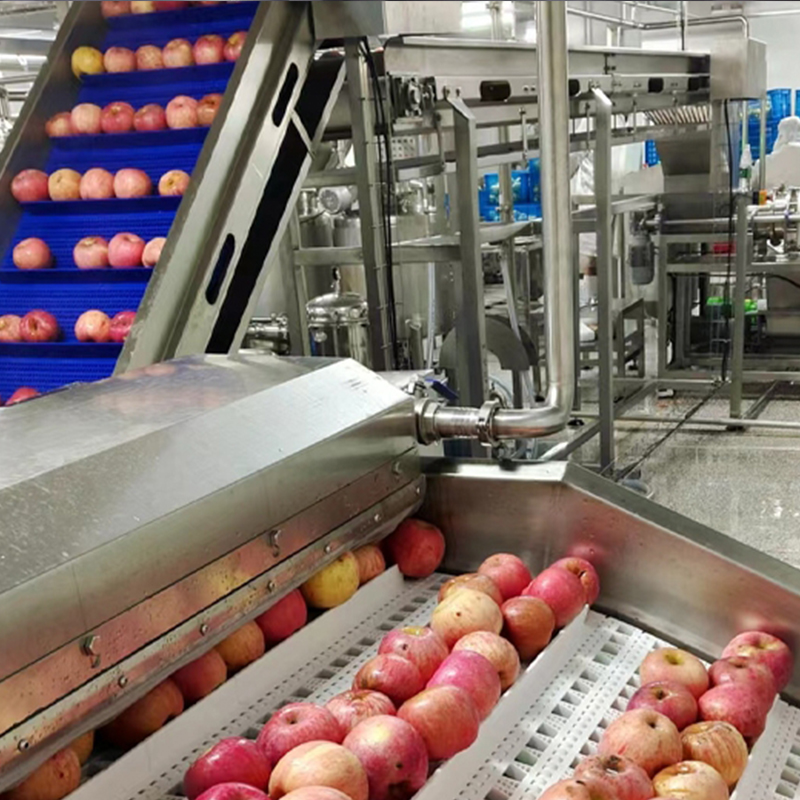
Fase de pretratamiento: Las manzanas frescas se clasifican primero de forma manual o mecánica para eliminar los frutos podridos y las impurezas, y a continuación se lavan a fondo en una lavadora de burbujas. Posteriormente, las manzanas limpias se trituran en pulpa mediante una trituradora de martillos y se bombean a una prensa de cinta para su prensado continuo, lo que permite una separación eficaz del zumo y el orujo y obtener así un zumo de manzana claro para la fermentación. El uso de prensas de cinta resulta especialmente adecuado para líneas de producción a gran escala, ya que mejora significativamente el rendimiento del zumo y la continuidad de la producción.
Fase de fermentación: El zumo de manzana se bombea a un depósito de fermentación con temperatura controlada, donde se añaden pectinasa y levadura seleccionada según los requisitos del proceso. La temperatura de fermentación se controla con precisión mediante un sistema de refrigeración y unidades de refrigeración, y el proceso dura aproximadamente varias semanas. Durante este proceso, la levadura transforma los azúcares en alcohol y dióxido de carbono, lo que da como resultado una sidra de baja graduación alcohólica (Cider) con un contenido de alcohol de aproximadamente 5% vol.
Fase de destilación: La sidra fermentada se bombea a un alambique de brandy. La destilación tradicional suele emplear alambiques de olla para la doble destilación, aprovechando la propiedad física de que el punto de ebullición del alcohol es inferior al del agua. El calentamiento provoca que el alcohol y los compuestos aromáticos se vaporicen, y a continuación se condensan en un condensador para obtener un brandy original de alta concentración. Durante la destilación, se controlan estrictamente las “cabezas y colas”, y solo se recoge el corazón del aguardiente para garantizar su pureza y aroma.
Etapas de envejecimiento y posprocesamiento: El brandy original recién destilado tiene un sabor especiado y áspero, y requiere un envejecimiento prolongado en barricas de roble. En el entorno ligeramente oxigenado de las barricas de roble, el aguardiente adquiere gradualmente un color ámbar dorado, se vuelve más suave y redondo, y extrae los compuestos aromáticos naturales del roble. El periodo de envejecimiento suele ser de al menos dos años. Tras el envejecimiento, se llevan a cabo el coupage y la filtración de precisión según el estilo del producto, con el fin de conseguir el sabor y la claridad ideales antes del embotellado.
Componentes básicos del equipo
Sistema de pretratamiento: cinta transportadora de clasificación, lavadora de burbujas, trituradora de martillos, prensa de cinta: este sistema permite la limpieza, la trituración y la separación eficaz de la materia prima de manzana y el zumo.
Sistema de fermentación: Depósitos de fermentación con control de temperatura, bombas para vino, depósitos de refrigerante, unidades de refrigeración: proporcionan un entorno con una temperatura controlada con precisión para la fermentación alcohólica, lo que garantiza la actividad de las levaduras e inhibe el crecimiento de microorganismos no deseados.
Sistema de destilación: alambiques de brandy (tipo de olla o de torre), condensadores, depósitos de recepción: la sección principal, en la que se utiliza calor para evaporar y separar el alcohol y las sustancias aromáticas, y se condensa para obtener un aguardiente destilado de alta concentración.
Sistema de envejecimiento y almacenamiento: Barricas de roble, depósitos de acero inoxidable, depósitos de mezcla: Se utilizan para el envejecimiento a largo plazo del aguardiente base, así como para la mezcla y el almacenamiento temporal de diferentes lotes.
Sistema de filtración: Filtros de tierra de diatomeas, filtros de cartón y filtros de esterilización por membrana: eliminan por etapas los sólidos en suspensión, las impurezas y los microorganismos del licor, garantizando su claridad y estabilidad biológica.
Sistema de embotellado y envasado: Máquinas lavadoras de botellas, máquinas llenadoras, máquinas taponadoras, máquinas etiquetadoras, impresoras de inyección de tinta: Realizan todos los procesos de envasado de la bebida alcohólica terminada, incluidos el embotellado, el taponado, el etiquetado y la codificación de la fecha.
Sistema de limpieza CIP: depósitos de limpieza CIP, bombas CIP, intercambiadores de calor de placas: un sistema de limpieza en línea que permite la limpieza automatizada con ácido, álcali y agua caliente de tuberías y depósitos sin necesidad de desmontar el equipo.
Sistema de alimentación y control: caldera de vapor, armario de control eléctrico, armario de control automático PLC: proporciona una fuente de calor estable para la destilación y se encarga del suministro eléctrico y del control lógico (incluido el control de temperatura, de nivel, de caudal, etc.) de toda la línea, lo que garantiza la precisión de los parámetros del proceso y un funcionamiento estable.
Sistema auxiliar: Bombas de material, válvulas y accesorios, bandejas portacables: se conectan a diversos equipos principales, garantizando un flujo fluido de material y una transmisión estable de la señal.
Gracias a la combinación modular y al control inteligente de los sistemas mencionados, esta línea de producción puede ofrecer a los clientes una solución integral y personalizable para la elaboración de bebidas, desde la materia prima de manzana hasta el brandy de manzana de alta gama, satisfaciendo así las diversas necesidades de diferentes escalas de producción y posicionamientos de producto.