En el primer artículo de esta serie, analizamos cómo la gestión del oxígeno, la adición de levadura y la convección crean las condiciones necesarias para una fermentación satisfactoria.
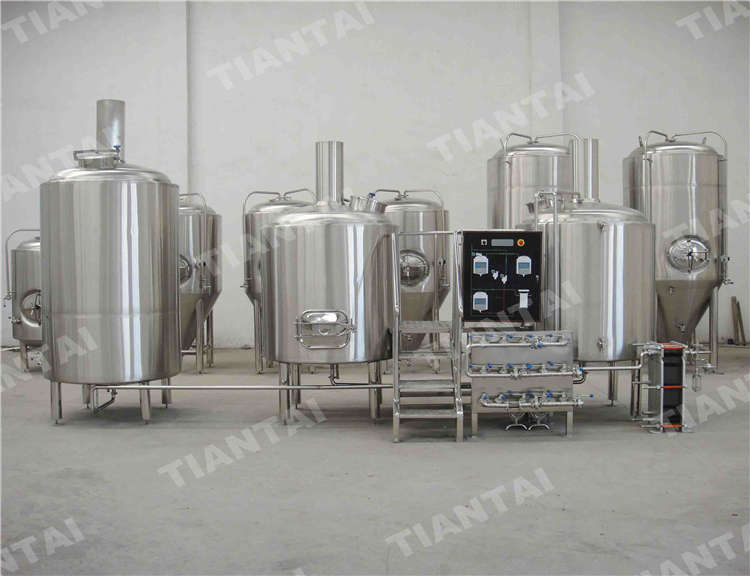
Aprovechando la experiencia de Tiantai en el diseño de sistemas de fermentación para cervecerías comerciales, este artículo analiza cómo la geometría de los depósitos y la planificación de la producción influyen en el comportamiento de la levadura una vez iniciada la fermentación. Aunque el ángulo del cono y el tiempo de llenado del depósito suelen considerarse detalles del equipamiento, estos factores influyen directamente en el rendimiento de la fermentación, la recuperación de la levadura y la calidad final de la cerveza.
En este artículo explicamos por qué estas decisiones de ingeniería merecen el mismo nivel de atención que la formulación de recetas o la selección de levaduras.
Sedimentación de la levadura, geometría del cono y por qué es importante el tiempo de llenado del depósito
Sedimentación de la levadura: por qué es importante la geometría del cono
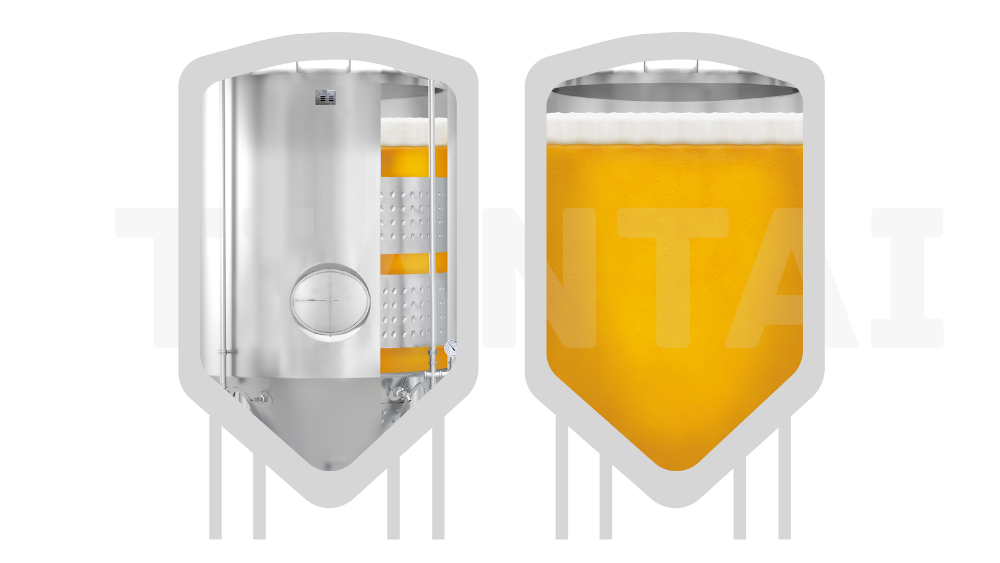
Una de las ventajas más destacadas del fermentador cilíndrico-cónico es su capacidad para separar la levadura de la cerveza de forma natural, sin intervención mecánica. Aunque esto parezca una simple consecuencia de la gravedad, el proceso subyacente viene determinado por una combinación de la fisiología de la levadura, la dinámica de fluidos, la geometría de los recipientes y el control de la temperatura.
A lo largo de la fermentación activa, las células de levadura permanecen continuamente en suspensión gracias a las corrientes de convección generadas por la liberación de dióxido de carbono y la circulación térmica. A medida que disminuye la disponibilidad de azúcar y se ralentiza la actividad metabólica, estas fuerzas de circulación se debilitan gradualmente. Al mismo tiempo, la levadura cervecera comienza a mostrar características de floculación más marcadas, formando agregados cada vez más grandes que se sedimentan más rápidamente que las células individuales.
Por lo tanto, la transición de la suspensión a la sedimentación no es un fenómeno aislado que se produzca al final de la fermentación. Más bien, representa la etapa final de la evolución de la cinética de la fermentación, en la que la actividad biológica y la separación física alcanzan gradualmente el equilibrio.
La geometría del fermentador influye de manera significativa en este proceso.
En comparación con los recipientes de fondo plano u horizontales, el fondo cónico crea un patrón de flujo predecible que guía los sedimentos hacia un único punto de recogida. A medida que la convección se debilita durante el enfriamiento, las fuerzas gravitatorias cobran cada vez más importancia, lo que permite que la levadura, las partículas de sedimento y otros sólidos en suspensión migren hacia el vértice del cono sin alterar apenas la cerveza que se encuentra por encima.
Las fábricas de cerveza comerciales suelen optar por ángulos de cono de entre 60° y 70°, lo que permite equilibrar varios requisitos contrapuestos. Un cono menos pronunciado puede retener un exceso de levadura en las paredes del recipiente, mientras que un cono excesivamente pronunciado puede reducir el volumen útil del depósito y complicar su fabricación. Para la mayoría de las aplicaciones en cervecerías, un cono de 60° ofrece un equilibrio eficaz, ya que favorece una compactación fiable de la levadura al tiempo que mantiene una recuperación eficiente de la cerveza.
La importancia de una sedimentación adecuada va mucho más allá de facilitar la recogida de la levadura.
La levadura sana recuperada de la primera cosecha suele reutilizarse a lo largo de múltiples ciclos de fermentación. Si quedan restos de sedimentos, partículas de lúpulo o células muertas mezclados con la levadura recogida, la vitalidad disminuye gradualmente y el rendimiento de la fermentación se vuelve menos predecible en los lotes posteriores. Una separación deficiente de la levadura también puede aumentar la autólisis durante un almacenamiento prolongado, lo que introduce compuestos de azufre no deseados y sabores a carne en las fermentaciones posteriores.
Por este motivo, las fábricas de cerveza suelen realizar una breve purga antes de recoger la levadura reutilizable. Al abrir la salida inferior durante un breve periodo de tiempo se elimina la suspensión inicial, que contiene la mayor concentración de «cold break», «hot break», residuos de lúpulo y células no viables. Una vez descargado este material, la fracción de levadura siguiente suele presentar una pureza y una viabilidad significativamente mayores.
Igualmente importante es la propia tasa de recaudación.
Una descarga rápida puede generar turbulencias internas que arrastren la cerveza terminada hacia el flujo de levadura, lo que reduce el rendimiento de la cerveza y diluye la levadura recogida. Por ello, la mayoría de las fábricas de cerveza retiran la levadura lentamente durante un periodo prolongado, lo que permite que el lecho de levadura compactado se desplace de forma constante hacia la salida, minimizando al mismo tiempo las perturbaciones en el interior del cono.
Aunque los procedimientos de recolección varían de una cervecería a otra, el objetivo sigue siendo el mismo: recuperar la mayor cantidad posible de levadura sana y con alta viabilidad, sin alterar en la medida de lo posible la cerveza en fermentación.
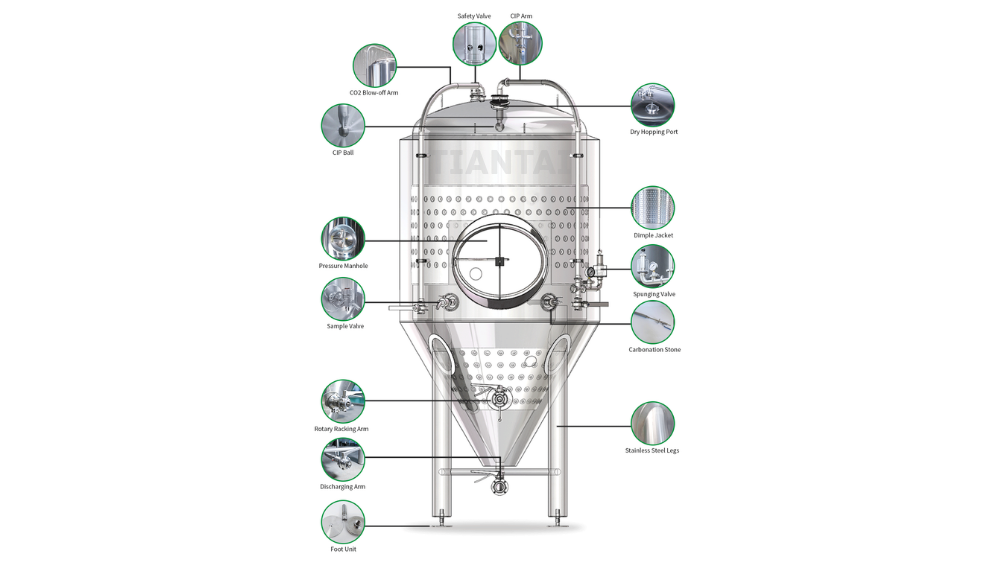
El diseño moderno de los fermentadores contribuye a este objetivo de varias maneras. Las válvulas de salida inferior, situadas de forma higiénica, reducen el producto estancado que queda en el interior de las tuberías, mientras que los brazos de trasvase ajustables permiten a los cerveceros seguir la interfaz entre la cerveza y la levadura durante el trasvase, maximizando la recuperación de cerveza sin alterar la capa de sedimentos. Los depósitos a presión permiten además que la fermentación, la maduración y la carbonatación se produzcan dentro del mismo tanque, lo que reduce los trasvases que, de otro modo, podrían exponer la cerveza al oxígeno y a la contaminación microbiana.
En lugar de considerar la recolección de levadura como una tarea rutinaria de producción, las cervecerías con experiencia la ven cada vez más como un componente fundamental de su estrategia de gestión de la levadura. Una levadura de alta calidad, recolectada de forma sistemática, contribuye no solo a la fiabilidad de la fermentación, sino también a reducir los costes operativos y a mejorar la uniformidad del sabor a lo largo de los sucesivos ciclos de producción.
Tiempo de llenado del tanque: una variable que suele pasarse por alto y que afecta a la calidad de la fermentación
Entre las numerosas variables que influyen en el rendimiento de la fermentación, el tiempo de llenado de los depósitos recibe, sorprendentemente, muy poca atención. Sin embargo, en las operaciones de elaboración de cerveza a gran escala, el tiempo necesario para llenar un fermentador cilíndrico-cónico puede influir de manera significativa en el comportamiento de la levadura, el desarrollo del sabor y la calidad general de la cerveza.
La estrategia ideal de llenado es muy sencilla: completar todo el proceso de llenado antes de que se inicie la fermentación activa.
Sin embargo, en la práctica, la planificación de la producción no siempre lo permite. Los fermentadores de gran tamaño suelen llenarse a lo largo de varios ciclos de elaboración en el mismo día, sobre todo cuando la capacidad de la sala de cocción es inferior a la capacidad de fermentación. Aunque este enfoque maximiza la utilización de los equipos, los periodos de llenado excesivamente largos dan lugar a condiciones de proceso que difieren significativamente de las previstas en el diseño estándar de la fermentación.
Una vez que la levadura comienza a metabolizar los azúcares, el fermentador deja de comportarse como un recipiente estático a la espera de que finalice el llenado. La fermentación comienza de inmediato en los primeros lotes, generando dióxido de carbono, calor y convección antes incluso de que el mosto final haya entrado en el depósito.
Posteriormente, el mosto entrante se mezcla con cerveza en plena fermentación, en lugar de con mosto fresco, lo que altera tanto el entorno biológico como el físico al que se enfrentan las levaduras recién introducidas.
Esta situación se asemeja a una fermentación ligeramente agitada, en la que el movimiento continuo del líquido modifica la interacción entre la levadura, las proteínas, los compuestos del lúpulo y los gases disueltos. Aunque el efecto pueda parecer sutil, puede influir en varios aspectos de la composición de la cerveza.
Una de las consecuencias es la eliminación acelerada de los complejos de proteínas y polifenoles durante las primeras fases de la fermentación. Aunque la clarificación suele favorecer la estabilidad de la cerveza, una precipitación excesiva en las primeras fases puede reducir la textura en boca, lo que da lugar a que la cerveza final presente un perfil sensorial más ligero de lo previsto.
Los subproductos de la fermentación también se ven afectados.
Las investigaciones han demostrado que los programas de llenado prolongados pueden alterar el equilibrio entre los alcoholes superiores y los ésteres, lo que da lugar a un perfil de sabor diferente al que se obtiene en condiciones de fermentación más homogéneas. Los cerveceros pueden observar una menor formación de ácidos volátiles deseables, junto con un retraso en la reducción de las dicetonas vecinas, en particular el diacetilo y sus precursores.
En la práctica, esto significa que la cerveza puede necesitar un tiempo de maduración adicional antes de alcanzar una estabilidad de sabor aceptable, lo que alarga el tiempo de ocupación de los depósitos y reduce el rendimiento global de la fábrica de cerveza.
La presión hidrostática supone un factor adicional a tener en cuenta.
A medida que aumenta la profundidad del líquido durante el llenado, la presión en el fondo del depósito aumenta de forma continua. Esta variación de la presión influye en la concentración de dióxido de carbono disuelto en torno a las células de levadura y puede frenar ligeramente el crecimiento de la levadura durante las últimas fases del llenado. Si bien el efecto es relativamente pequeño en los fermentadores artesanales de tamaño moderado, se vuelve cada vez más significativo en los depósitos industriales de gran altura que superan varios cientos de hectolitros.
Por consiguiente, las fábricas de cerveza modernas suelen determinar el tamaño de los fermentadores no solo en función de los objetivos de producción anuales, sino también en función de la capacidad de producción de la sala de cocción. A recipiente de fermentación Un proceso que requiere un día entero —o incluso más— para completarse puede parecer económicamente atractivo sobre el papel, pero puede generar ineficiencias ocultas en el proceso que superen cualquier ahorro aparente en el coste del equipo.
Esta relación ilustra un principio importante de la ingeniería cervecera: los equipos deben diseñarse como un sistema de producción integrado, en lugar de como máquinas individuales.
La capacidad de la sala de cocción, el volumen de fermentación, la programación de la bodega, la capacidad de refrigeración y el rendimiento del envasado se influyen mutuamente. Elegir un fermentador más grande sin tener en cuenta la duración de la cocción puede comprometer inadvertidamente el rendimiento de la fermentación, mientras que sobredimensionar la sala de cocción en relación con la capacidad de la bodega genera otros cuellos de botella operativos.
Por este motivo, los proveedores de equipos para cervecerías comienzan cada vez más el diseño de los tanques de fermentación evaluando los flujos de trabajo completos de la producción, en lugar de limitarse únicamente a las dimensiones de los depósitos. TIANTAI aplica este enfoque de ingeniería basado en sistemas a la hora de diseñar proyectos para cervecerías, ajustando la producción de la sala de cocción, la capacidad de los fermentadores, los requisitos de refrigeración y la programación de la bodega para ayudar a las cervecerías a mantener ciclos de llenado eficientes y un rendimiento de fermentación constante a lo largo de la producción a largo plazo.
En última instancia, la calidad de la fermentación no solo viene determinada por la cepa de levadura o el diseño de los depósitos, sino también por la eficacia con la que encajan entre sí todas las fases de la producción. En muchas cervecerías, optimizar el tiempo de llenado de los depósitos resulta ser una de las formas más sencillas de mejorar tanto la consistencia de la cerveza como la eficiencia de la producción sin alterar la propia receta de elaboración.
Diseño recipientes de fermentación implica mucho más que determinar la capacidad del depósito.
Factores como el ángulo del cono, las proporciones de los recipientes, la configuración del sistema de refrigeración y el rendimiento de la sala de cocción deben combinarse para lograr una recolección eficiente de la levadura y un rendimiento de fermentación estable. TIANTAI desarrolla sistemas de fermentación para cervecerías como parte de soluciones de producción integrales, lo que permite a los cerveceros adaptar la capacidad de los fermentadores al rendimiento de la sala de cocción y a los planes de expansión futuros, en lugar de tratar cada equipo de forma independiente.
El siguiente artículo deja de centrarse en la geometría de los recipientes para centrarse en lo que ocurre en el interior de la propia cerveza, analizando cómo la convección, la presión hidrostática y el momento de la transferencia influyen en la homogeneidad de la fermentación y en el desarrollo del sabor.