
Product Overview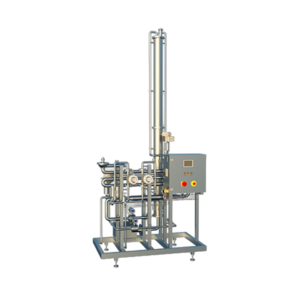
The Cold Water Deaeration System meticulously produces low residual oxygen, temperature-compliant, and hygienically sound deoxygenated water through scientifically segmented and integrated process controls. This deoxygenated water is then precisely blended with high-gravity beer at a predetermined ratio, simultaneously ensuring stable carbonation levels, to yield finished beer of superior quality.
Advantages
- Process Stability and Adaptability
The synergistic effect of functional units, coupled with precise flow, temperature, and concentration control, guarantees consistent deoxygenation efficacy and accurate beer dilution ratios. This system is adaptable to the high-gravity dilution production demands of breweries of varying scales, particularly meeting the stringent hygiene and quality requirements for “pure draft” beer. - High Automation and Simplified Maintenance
Integration with a Siemens PLC control system enables full-process automation, minimizing the need for extensive manual intervention. Remote monitoring capabilities allow for real-time tracking of equipment status and production data, facilitating straightforward and efficient daily operation, maintenance, and troubleshooting. - Energy Efficiency and Reduced Waste
The cooling unit adopts a three-stage heat exchanger design, significantly improving heat exchange efficiency and reducing energy consumption. The dilution process is designed for zero material waste. During deoxygenated water preparation, instantaneous sterilization is achieved simultaneously, streamlining subsequent process steps and improving production efficiency. - Controllable Quality and Enhanced Traceability
Equipped with comprehensive process monitoring units, the system provides real-time monitoring of critical parameters such as dissolved oxygen, temperature, concentration, and CO2 levels, initiating automatic alarms and emergency protocols upon anomaly detection. The redundant control system for concentration and volume ensures precise blending accuracy while enabling data traceability, thereby guaranteeing that finished beer quality meets specified standards. - Hygiene Compliance and Ease of Cleaning
The system incorporates a fully sanitary design throughout its process piping, utilizing sanitary welding techniques. The automated CIP cleaning unit effectively addresses the challenges of cleaning packed towers, preventing microbial contamination and residue buildup, thereby complying with food-grade production standards.| - Reliable Operation and Minimized Downtime Risk
The integration of dual mixing control methodologies creates a redundant protection system, substantially reducing the probability of unexpected system shutdowns and mitigating potential significant losses for breweries due to equipment failure. Key components are sourced from premium manufacturers, ensuring stable operation and extended service life.
Detailed Explanation of Functional Units
Pre-Balance Unit
Primarily responsible for stabilizing incoming water flow, laying the groundwork for subsequent mass transfer and deoxygenation efficiency. The system employs real-time online monitoring of inlet water flow, allowing for flexible adjustment of flow parameters based on production conditions. Through constant flow control, it ensures a stable mass transfer state between the “downward water film” within the mass transfer tower and the “upward carbon dioxide gas flow,” a critical prerequisite for achieving consistent deoxygenation.
Deoxygenation Unit
This unit is dedicated to removing oxygen from the incoming water to produce high-quality deoxygenated water while performing instantaneous sterilization simultaneously. It consists of a deoxygenation tower, a gravity-type distributor, high-efficiency packing, the main tower body, an automatic carbon dioxide distribution system, and a centrifugal pump. During operation, the gravity-type distributor ensures uniform water distribution on the packing. Combined with the high-efficiency packing design, this facilitates instantaneous water adhesion to the packing surface, creating a vast specific surface area for thorough mass transfer reactions with carbon dioxide to achieve deoxygenation. The high-temperature deoxygenation process performs instantaneous sterilization simultaneously. Process piping is constructed using sanitary-grade welding, complying with food-grade production requirements.
Liquid Level Control Unit
This unit dynamically manages liquid levels across various system stages to ensure optimal equipment operation. It comprises a liquid level detection system, a variable frequency control system, and associated control software. During operation, it monitors real-time liquid level data based on the specific requirements of each process phase and automatically adjusts parameters via the controller according to preset programs, thereby preventing equipment malfunctions caused by excessively high or low liquid levels.
Cooling Unit
Designed to cool deoxygenated water to the temperature required for subsequent dilution processes, this unit balances energy efficiency with precise temperature control. It incorporates a three-stage plate heat exchanger, a steam control system, a refrigerant thermostat control system, and a deoxygenated water temperature control system. The three-stage heat exchanger design significantly enhances heat exchange efficiency, reducing energy consumption while enabling precise control of deoxygenated water temperature to meet downstream process demands.
Carbon Dioxide Auto-Control Unit
This unit provides a stable and controllable supply of carbon dioxide to the deoxygenation and carbonation stages, ensuring process consistency. It consists of a pressure regulation system, a one-way check valve, a flow meter, and a pneumatic valve. Under PLC control, it executes CO2 purging and displacement according to preset programs, guaranteeing a stable CO2 supply and preventing pressure fluctuations that could impact deoxygenation and carbonation efficacy.
Dilution Water Carbonation Unit
This unit is responsible for carbonating deoxygenated water (dilution water) to achieve the required CO2 content for beer dilution, thereby safeguarding the quality of the diluted beer. During operation, under low pressure, a specialized mixing and dosing device, in conjunction with a holding tube section, ensures the CO2 content in the dilution water reaches 0.40-0.50% (aligning with the CO2 range for diluted beer). This ensures that the CO2 in the diluted beer remains in a stable dissolved state, preventing CO2 breakout and maintaining the beer’s palate sensation and foam characteristics.
High-Concentration Dilution and Blending Unit
This unit precisely blends high-concentration beer with carbonated dilution water at preset ratios to produce finished beer of the desired concentration. The unit features three key control systems that effectively address precision and stability issues inherent in traditional blending methods:
- PID Volumetric Ratio Control System: Composed of electromagnetic flowmeters, control valves, blending pumps, and mixing pipe sections, this system controls water flow rate in real-time to match the beer-to-water mixing ratio. Once the blending ratio is preset, the system automatically collects flow data from the beer and water lines and adjusts the water-side control valve to ensure the actual mixing ratio conforms to the preset ratio.
- High-Precision Blending Control System (Key Upgrade): This system utilizes high-precision density sensors to measure the original beer gravity, decoupling original gravity control from CO2 control for enhanced accuracy. Paired with high-precision flowmeters for accurate metering of beer and water flow, it achieves cascade closed-loop automatic control of concentration. A new small-ratio blending control program has been introduced to mitigate system vibration during small-ratio blending in large equipment, thereby preventing damage to instruments and valves.
- Concentration-Volume Redundancy Control System: This system integrates the aforementioned two control methods to reduce the probability of unexpected system shutdowns and prevent significant losses in breweries. It offers both the high precision of concentration ratio control and the data traceability of volumetric ratio control, further enhancing system reliability.
Process Monitoring Unit
This unit provides real-time monitoring of critical process parameters to ensure product quality and facilitate timely anomaly detection. Key functions include: Temperature Monitoring: Controls the temperature of dilution water to meet process specifications. Dissolved Oxygen (DO) Monitoring: Utilizes DO sensors to track residual oxygen in deoxygenated water, automatically initiating recirculation deoxygenation and triggering an alarm upon detecting anomalies. Concentration and CO2 Monitoring: Real-time surveillance of beer concentration and CO2 levels during the blending process for precise control of the finished product quality.
PLC Control Unit and Remote Monitoring
This unit enables fully automated system control, data acquisition, and remote supervision, thereby enhancing operational efficiency. Hardware comprises Siemens PLCs, touch panels, and industrial PCs. Core functionalities include: Automated System Control: Manages the start/stop operations and parameter adjustments for all integrated units. Real-time Data Acquisition and Logging: Collects and records real-time process data, including dissolved oxygen levels, beer concentration, beer CO2 values, and temperatures at various stages. Supervisory Control: Allows technical and production departments to view equipment status and production reports remotely, facilitating supervisory monitoring.
CIP Cleaning Automated Control Unit
This unit addresses the challenges of cleaning the unique structure of packed towers, ensuring equipment hygiene for the production of premium “pure draft” (unpasteurized) beer. The specialized design of packed towers renders traditional cleaning methods ineffective, leading to scale buildup on packing materials (impacting mass transfer efficiency), microbial contamination, or off-flavors. Through a fully automated CIP cleaning program, internal equipment residue is thoroughly removed, preventing carbonate scale adhesion and ensuring that the biological indicators of the dilution water comply with pure draft beer standards.
Application Areas
This equipment is primarily designed for the beer production industry, suitable for various scenarios including: High-gravity beer dilution processes in breweries, craft breweries, and brewpubs, with a particular emphasis on pure draft beer production. Flexible scalability to accommodate production demands ranging from large-scale industrial manufacturing to small and medium-sized production lines.