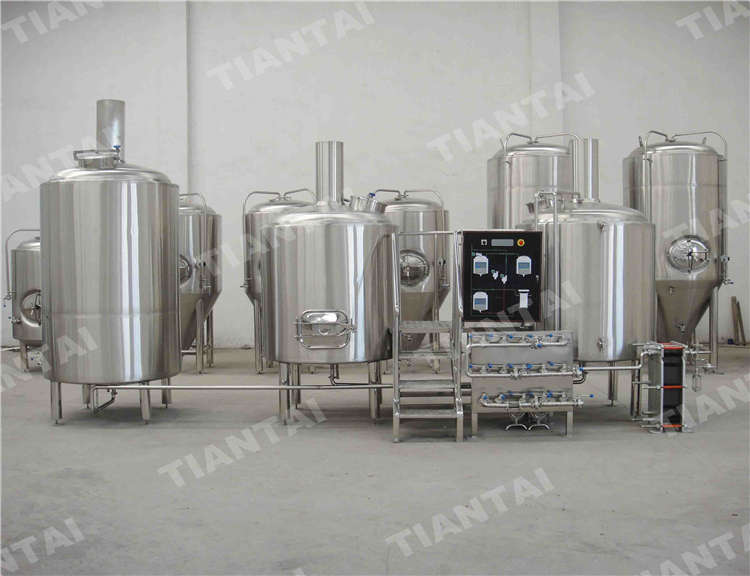
With the scaled development of the brewing industry, new industrial brewery construction and tank farm retrofitting projects commonly adopt large-volume outdoor コニカル発酵槽. Online CIP (Clean-in-Place) systems serve as the mainstream supporting equipment. While meeting microbiological compliance requirements, such systems reduce water, energy and chemical consumption, mitigate tank damage and extend the service life of pressure vessels.
Ⅰ. Factors Affecting CIP Cleaning Performance
In brewery engineering implementation, cleaning results are governed by multiple parameters:
- Adhesion between contaminants and tank wall: Stronger adhesion raises the difficulty of contaminant removal.
- Inner surface roughness of the tank: Rougher inner surfaces are more prone to biofilm formation and entrapment of contaminants and microorganisms. The standard mirror polish requirement for brewing equipment is Ra ≤0.6 μm. Tiantai Equipment delivers internal tank surface polishing with Ra ≤0.4 μm to minimise contaminant adhesion.
- Cleaner concentration: Higher concentration boosts cleaning power and shortens cycle time, yet excessive concentration leads to chemical waste and elevated corrosion risk.
- Cleaning duration: Longer cleaning cycles achieve superior cleanliness. Continuous production demands optimised cycle time to improve tank turnover efficiency.
- Cleaning medium temperature: Higher temperatures accelerate chemical reaction rates of detergents, meanwhile increasing corrosion risks for stainless steel.
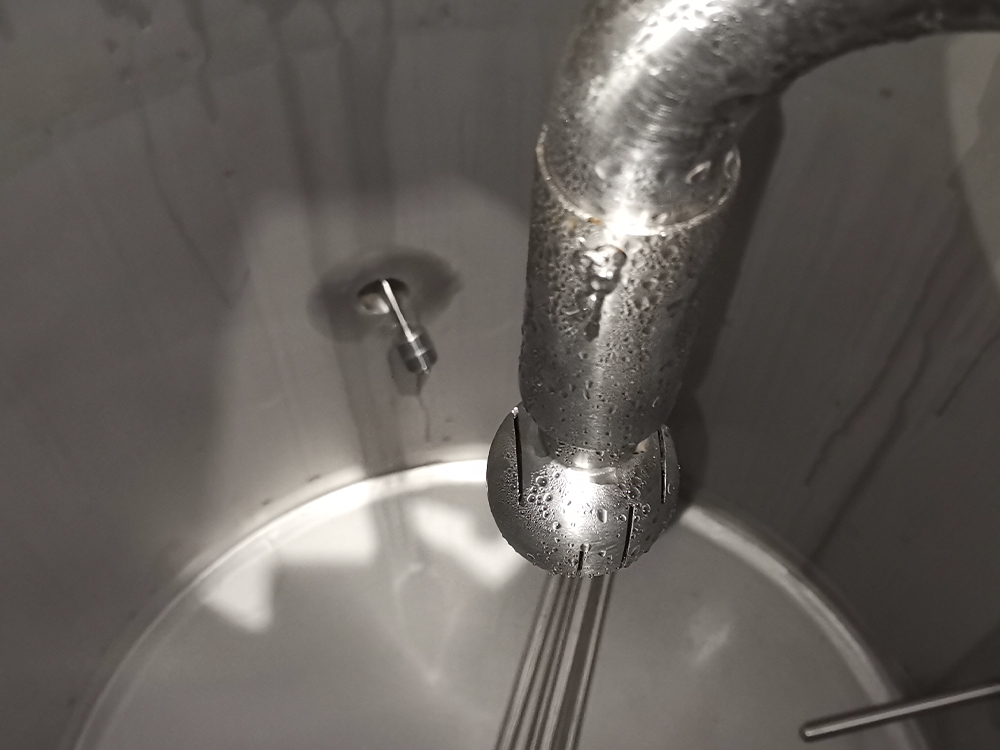
- Spray intensity: Spray balls installed inside fermenters must maintain rated effective jet pressure to strip residues from tank walls via hydrodynamic impact.
From the perspective of industrial environmental policies for brewing, optimising fermenter CIP processes cuts water consumption, energy use and chemical detergent dosage, complying with cleaner production standards for breweries.
Ⅱ. Detergent Selection Guidelines
Qualified CIP detergents for fermenters shall feature good water solubility, high detergency, excellent wetting and penetrating properties, hardness tolerance, low corrosivity, controllable cost and operational safety. The two primary categories are alkaline detergents and acidic detergents:
Alkaline Detergents: Sodium hydroxide acts as the primary active ingredient, compounded with sodium carbonate, sodium silicate, polyphosphates, wetting agents and chelating agents. Alkaline cleaning hydrolyses organic deposits including proteins, yeast sludge and hop resins.
Acidic Detergents: Formulated mainly with nitric acid, phosphoric acid and food-grade organic acids, together with wetting agents and surfactants. Acid cleaning removes inorganic mineral scale and beerstone, neutralises residual alkaline liquor and assists passivation of stainless steel surfaces.
Ⅲ. CIP System Configuration
- Recovered Water Tank: Reuse pre-rinse water to reduce water consumption
- Alkali Tank: Prepare alkaline cleaning solution at qualified concentration
- Recovered Alkali Tank: Recycle eligible alkaline liquor for repeated use
- Acid Tank: Prepare acid cleaning solution at qualified concentration
- Sanitiser Tank: Prepare sanitising solution
- Sterile Water Tank: Store process clean water reserve
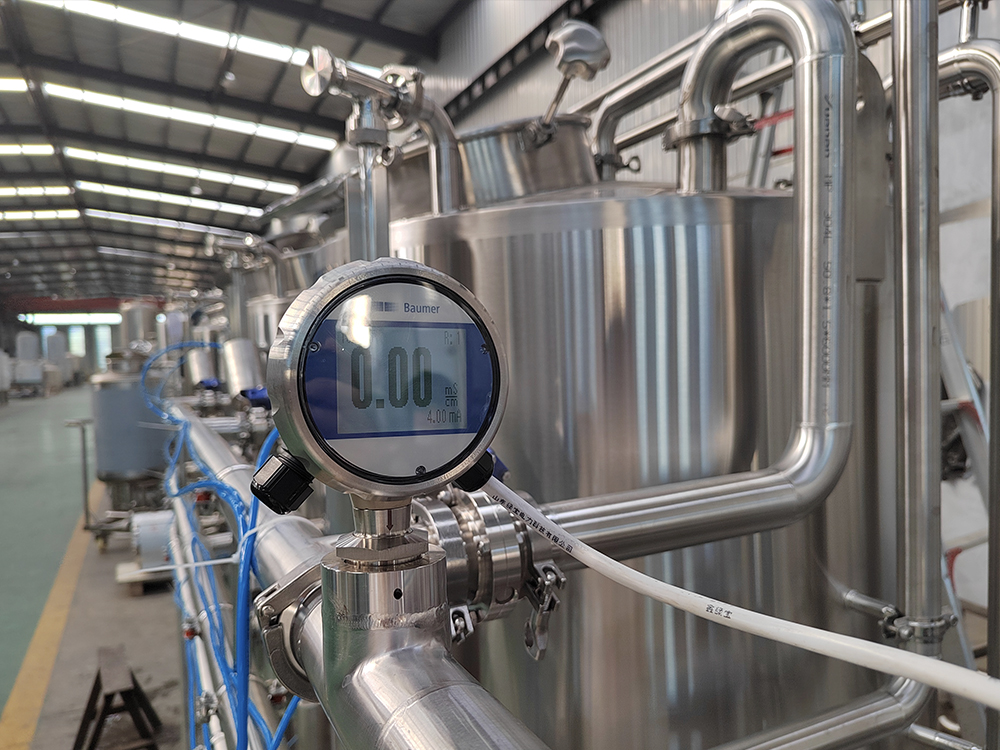
A supplementary dosing sub-system includes alkali dosing tanks, acid dosing tanks and sanitiser dosing tanks. Real-time online conductivity measurement drives metering pumps for automatic chemical replenishment, stabilising cleaning solution concentration to offset chemical depletion throughout circulation.
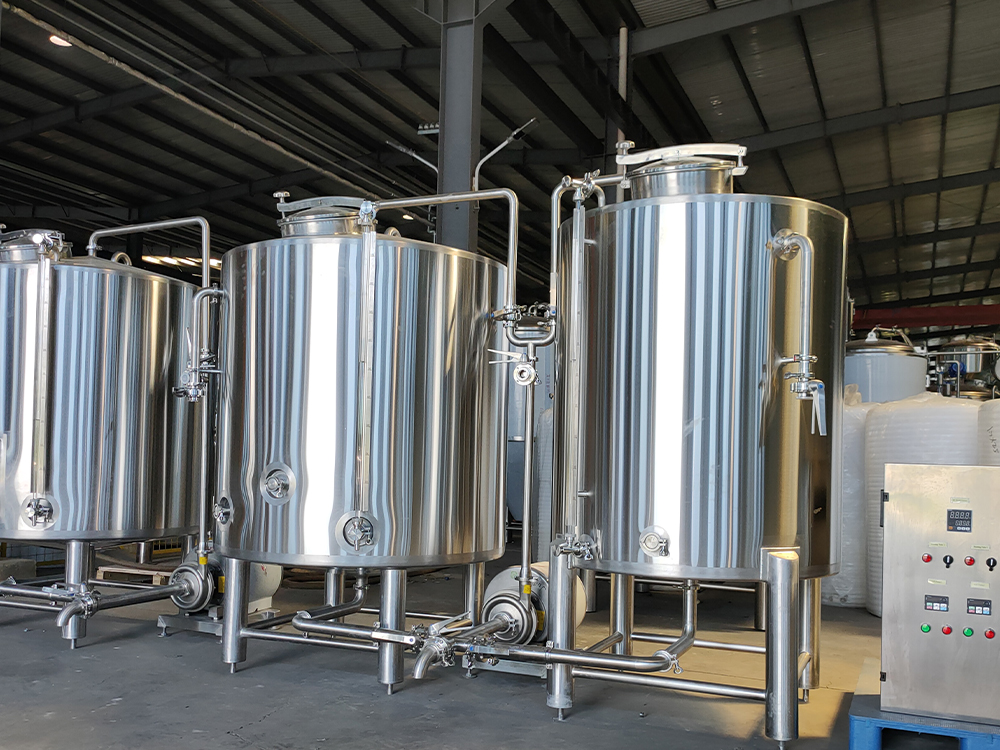
Most large-scale breweries adopt recirculating detergent operation. Compared with single-pass discharge modes, recirculation requires higher capital investment and occupies more floor space. Nevertheless, it drastically reduces long-term chemical consumption, cutting procurement costs and energy expenditure, making it the preferred option for brewery energy-saving retrofits.
Ⅳ. Benefits of Dedicated CIP Systems for Large Conical Fermenters
- Preserve the passive film on stainless steel tank interiors, extend pressure vessel service life and reduce overhaul and re-polishing costs.
- Remove residual CO₂ before alkaline cleaning to prevent carbonate precipitation generated by CO₂-alkali reaction, which causes pipeline blockage. This practice also avoids negative pressure formed by gas consumption inside closed vessels, eliminating the critical safety hazard of tank collapse for large conical units.
- Control cleaning media to mitigate pitting and crevice corrosion risks and secure long-term safe operation of stainless steel tanks.
- Lower overall operation and maintenance costs: reduce consumption of water, electricity, steam and chemicals; minimise downtime repairs caused by tank deformation, passive film degradation and pipeline scaling and blockage.
For large beer fermenter projects, a professionally engineered cleaning solution balances equipment safety, energy consumption, production efficiency and OPEX. It ranks among the priority considerations for new large brewery construction and tank farm retrofitting.
If you require CIP calculation and system configuration for large-volume outdoor conical fermenters, Tiantai Equipment provides on-site condition assessment, process design and complete equipment delivery, supporting breweries to achieve efficient, low-consumption and safe tank cleaning operations.