
Descripción general del producto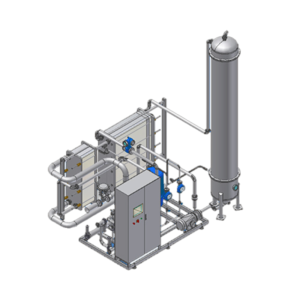
El sistema de desaireación térmica es una solución sofisticada e integrada que consta de diez unidades funcionales principales: una unidad de preequilibrio, una unidad de desaireación, una unidad de control de nivel de líquido, una unidad de esterilización y enfriamiento del agua, una unidad de carbonatación, una unidad de control automático de CO₂, una unidad de detección de procesos, una unidad de control mediante PLC y de monitorización remota, unidad de control automático de limpieza CIP y una unidad de mezcla por dilución de alta concentración. Este sistema abarca de forma integral todo el proceso de preparación de agua desaireada, regulación de la temperatura, tratamiento de carbonatación y dilución de cerveza de alta densidad. En esencia, el sistema adopta un proceso de desaireación térmica. Mediante el funcionamiento preciso y sincronizado de cada unidad, produce en primer lugar agua desaireada que cumple con las normas higiénicas y los parámetros del proceso. A continuación, esta agua desaireada se mezcla con precisión con cerveza de alta densidad en una proporción preestablecida, lo que garantiza una calidad constante del producto final. El sistema se adapta a diversos escenarios de producción de cerveza y cumple especialmente con las estrictas normas de producción de la cerveza sin alcohol. Su funcionamiento totalmente automatizado mejora significativamente la eficiencia de la producción, reduce los costes de mano de obra y garantiza un proceso de fabricación estable y controlable.
Aventajas
- Control preciso de los procesos, calidad constante
El proceso de desaireación térmica, combinado con un diseño eficiente de transferencia de masa, permite obtener agua desaireada de alta calidad. La coordinación de las operaciones de la unidad controla con precisión los caudales, la temperatura, el contenido de CO₂ y las proporciones de mezcla, lo que garantiza una calidad estable de la cerveza final y evita problemas como la liberación repentina de CO₂ o las desviaciones de temperatura que podrían comprometer el sabor y las características del producto. - Alto grado de automatización, fácil manejo y mantenimiento
El sistema de control, equipado con un PLC de Siemens, una pantalla táctil y un ordenador industrial, permite la automatización completa del proceso. Facilita la adquisición de datos en tiempo real y el registro de todos los parámetros operativos. Las funciones de supervisión remota permiten a los departamentos técnicos y de producción acceder al estado de los equipos y a los informes de producción en cualquier momento, lo que hace que las operaciones diarias y el mantenimiento sean sencillos y eficientes. - Eficiente desde el punto de vista energético y muy adaptable
La unidad de esterilización y refrigeración del agua utiliza un intercambiador de calor de tres etapas para mejorar considerablemente la eficiencia del intercambio de calor y ahorrar energía. El sistema de control de temperatura constante del agua desaireada mantiene con precisión el agua desaireada a la temperatura de proceso requerida, entre 2 y 4 °C. También cuenta con una regulación automática de las fluctuaciones de temperatura del refrigerante, lo que permite adaptarse a las condiciones variables de la instalación y evita la formación de hielo en el intercambiador de calor de placas, que podría mermar el rendimiento del intercambio de calor. - Cumplimiento de las normas de higiene, seguridad y fiabilidad
Las tuberías de proceso utilizan técnicas de soldadura sanitaria. La unidad de control automático de limpieza CIP automatiza todo el ciclo de limpieza, resolviendo de forma eficaz el reto que supone la limpieza de las torres de relleno y evitando la acumulación de incrustaciones, la contaminación microbiana y la generación de olores. Esto garantiza que los indicadores microbiológicos del agua de dilución cumplan los requisitos para la cerveza sin alcohol. - Funcionamiento flexible, mezcla precisa
La unidad de mezcla por dilución de alta concentración cuenta con un diseño de mezcla volumétrica de gran precisión. La proporción de mezcla puede preajustarse y mantenerse mediante la supervisión y el ajuste en tiempo real, lo que garantiza que la proporción real de mezcla se ajuste al valor de consigna programado. Los parámetros de cada unidad pueden ajustarse de forma flexible en función de las exigencias de producción, adaptándose así a las diversas necesidades de fabricación.
Explicación detallada de las unidades funcionales:
- Unidad de preaireación
Esta unidad garantiza un caudal de afluente estable, lo que sienta las bases para la eficacia posterior de la transferencia de masa y la desoxigenación. Un caudal de afluente constante es fundamental para mantener un flujo de película estable de arriba abajo dentro de la torre de transferencia de masa y una corriente constante de dióxido de carbono a contracorriente. Este equilibrio es esencial para una transferencia de masa óptima. Además, la relativa constancia de ambos caudales es un requisito previo para lograr una desoxigenación estable. El sistema emplea un control de caudal en tiempo real para supervisar continuamente el caudal de entrada, con capacidades de ajuste flexibles en función de las demandas de producción, lo que garantiza un caudal constante y controlable. - Unidad de desoxigenación
Esta unidad está compuesta por la torre de desaireación, el distribuidor por gravedad, el relleno de alta eficiencia, el cuerpo principal de la torre, el sistema automático de distribución de dióxido de carbono y la bomba centrífuga. Gracias a un diseño eficaz de distribución del flujo y a la arquitectura de la torre con relleno de alta eficiencia, el agua entrante se dispersa instantáneamente por la superficie del relleno. Esto genera una superficie específica considerable, lo que facilita una transferencia de masa eficiente con el dióxido de carbono para producir agua desaireada de alta calidad. Al mismo tiempo, el proceso de desoxigenación a alta temperatura logra una esterilización instantánea. Las tuberías del proceso utilizan técnicas de soldadura sanitaria, cumpliendo con las normas de producción de grado alimentario y minimizando los riesgos de contaminación. - Unidad de control de nivel
Esta unidad se encarga principalmente del control dinámico del nivel global de líquido del sistema, garantizando un funcionamiento estable de los equipos. Consta de un sistema de detección de nivel, un sistema de control de frecuencia variable y la lógica de control asociada. El sistema supervisa dinámicamente los datos del nivel de líquido en tiempo real, de acuerdo con los requisitos de nivel de las diferentes fases operativas. Bajo el mando del controlador, ajusta con precisión el nivel de líquido según un programa predefinido, evitando fallos en el funcionamiento de los equipos debidos a niveles excesivamente altos o bajos y garantizando una producción continua y estable. - Unidad de esterilización y refrigeración para agua desaireada
Esta unidad, compuesta por un intercambiador de calor de placas de tres etapas, un sistema de control de vapor, un sistema de control de temperatura constante del refrigerante y un sistema de control de temperatura del agua desaireada, es fundamental para esterilizar y enfriar el agua desaireada a fin de cumplir con las especificaciones de temperatura. El uso de un intercambiador de calor de tres etapas mejora significativamente la eficiencia térmica y ahorra energía. Para reducir aún más la temperatura del agua desaireada hasta los 2-4 °C exigidos por el proceso, el sistema incorpora un sistema específico de control de temperatura constante del agua desaireada. Este sistema utiliza un refrigerante a base de glicol, y la detección de la temperatura se realiza mediante un termómetro de resistencia de platino. El PLC calcula y emite órdenes de control basadas en los valores preestablecidos del sistema, ajustando dinámicamente la temperatura del refrigerante que entra en el intercambiador de calor de placas para garantizar que la temperatura del agua desaireada se ajuste a las especificaciones del proceso. Para situaciones en las que se producen fluctuaciones significativas de la temperatura del refrigerante, el sistema cuenta con una función de ajuste automático que evita eficazmente la congelación del intercambiador de calor de placas. La congelación reduce la superficie efectiva de intercambio de calor, lo que provoca dificultades de refrigeración y compromete la adaptabilidad del sistema a las condiciones de la instalación. - Unidad de carbonatación del agua de dilución (presaturación, mezcla)
La función de esta unidad es carbonatar el agua desaireada (agua de dilución) para alcanzar el contenido de dióxido de carbono necesario para la dilución de la cerveza. A baja presión, un dispositivo de mezcla e inyección de diseño exclusivo, junto con una sección de tubo de retención, garantiza que el contenido de dióxido de carbono del agua de dilución alcance o se aproxime lo más posible al rango objetivo para la cerveza diluida (especificado entre 0,40 y 0,501 TP3T). Este proceso garantiza que el dióxido de carbono permanezca disuelto de forma estable en la cerveza diluida, evitando la efervescencia y la inestabilidad que podrían afectar negativamente a la sensación en boca y a las características de la espuma del producto diluido. - Unidad de control de dióxido de carbono
Esta unidad, compuesta por un sistema de regulación de presión, una válvula de retención, un caudalímetro y una válvula neumática, es fundamental para suministrar dióxido de carbono de forma estable y controlada a las unidades de desoxigenación y de carbonatación del agua de dilución. Bajo el control del PLC, lleva a cabo la purga y el desplazamiento de CO₂ preprogramados, lo que garantiza un suministro constante y evita las fluctuaciones de presión que podrían afectar a la transferencia de masa, la desoxigenación o la eficacia de la carbonatación, manteniendo así la estabilidad del proceso. - Unidad de detección de procesos
Esta unidad permite supervisar en tiempo real los parámetros clave del proceso para garantizar un control preciso de la calidad del producto y la detección oportuna de anomalías. El sistema de detección de temperatura comprueba que la temperatura del agua de dilución cumpla con las especificaciones del proceso. Los sensores de oxígeno disuelto controlan el oxígeno residual en el agua desoxigenada, activando un ciclo automático de reoxigenación y una alarma en caso de que se produzcan desviaciones. Además, supervisa la concentración de la cerveza y los niveles de CO₂ durante el proceso de dilución y mezcla, garantizando el cumplimiento de los requisitos de calidad de la cerveza terminada. - Unidad de control PLC y supervisión remota
Esta unidad, que actúa como centro de control central del sistema, utiliza un PLC de Siemens, una pantalla táctil y un ordenador industrial para el control totalmente automatizado de todo el sistema. Facilita la adquisición y el registro de todos los datos de campo, incluidos los valores de oxígeno disuelto, la concentración de cerveza, el contenido de CO₂ de la cerveza y las temperaturas en las distintas etapas. Los departamentos técnicos y de producción pueden supervisar de forma remota el estado de los equipos y los informes de producción a través de un sistema de supervisión de nivel superior, lo que permite una supervisión precisa del proceso y mejora la eficiencia operativa. - Unidad de limpieza automatizada CIP
Dada la estructura única de las torres de relleno, los métodos convencionales de limpieza de tuberías y equipos resultan insuficientes. Una limpieza inadecuada puede provocar la formación de incrustaciones en el material de relleno, lo que compromete la eficiencia de la transferencia de masa o, en casos graves, puede dar lugar a contaminación microbiana y sabores indeseados. El diseño del programa CIP totalmente automatizado de este sistema garantiza una limpieza exhaustiva de la torre de relleno, evitando la acumulación de precipitados, como los carbonatos. De este modo, se mantiene la calidad microbiológica del agua de dilución para cumplir los estrictos requisitos de la elaboración de cerveza “pura de barril”, salvaguardando así la higiene y la seguridad del producto. - Unidad de dilución y mezcla de alta concentración
Esta unidad utiliza un sistema de proporción volumétrica, compuesto por caudalímetros electromagnéticos, válvulas de control, bombas dosificadoras y las tuberías correspondientes. Su función principal es la mezcla precisa de cerveza de alta concentración con agua de dilución. Mediante el control continuo del caudal de agua, ajusta la proporción de mezcla entre cerveza y agua, que puede preajustarse a través del panel de control. El sistema de control recibe datos en tiempo real de los caudalímetros de las líneas de cerveza y de agua, y ajusta la válvula de control de la línea de agua para garantizar que la proporción de mezcla real coincida exactamente con el valor de consigna, asegurando así una concentración estable de la cerveza final.
Ámbitos de aplicación
Este sistema se utiliza principalmente en la industria cervecera, concretamente para el proceso de dilución de cerveza de alta concentración en las fábricas de cerveza. Es adecuado tanto para la elaboración de cerveza “pura de barril” como de diversos tipos de cerveza convencionales.