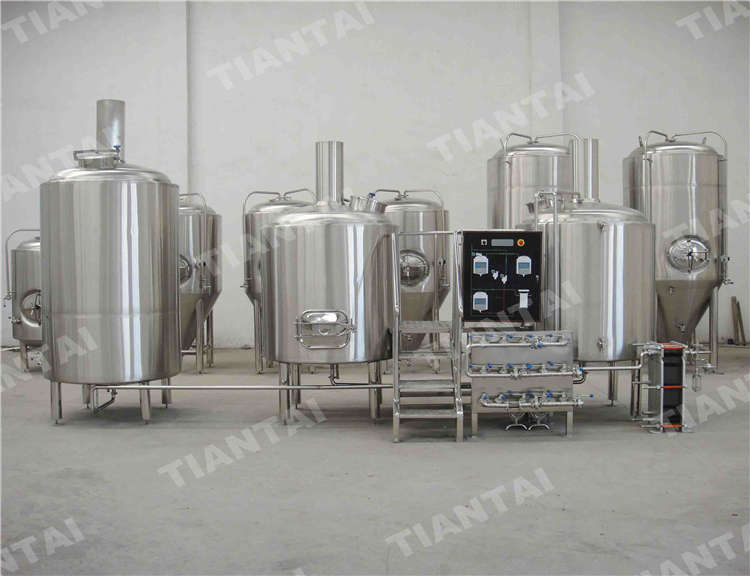
Building a brewery where temperatures stay above 25°C year-round requires more than standard equipment specs. This practical guide covers everything from grain handling to packaging lines, with specific recommendations for high-temperature, high-humidity operations.
Standard brewery design assumes temperate climates. In tropical regions like Vietnam, Indonesia, or Nigeria, you face a different reality:
-
Ambient temperatures regularly hit 30-35°C, increasing cooling loads by 25-40%
-
High humidity (70-90%) creates condensation, corrosion, and mold challenges
-
Power reliability varies, with outages that can spoil entire batches
-
Water quality requires more aggressive treatment
These factors affect every equipment decision. The breweries thriving in Southeast Asia’s expansion invest in climate-specific infrastructure from day one.
Grain Handling & Milling Systems
The challenge: Malt stored at 30 °C or higher degrades faster. Humidity causes clumping and spoilage.
What you need:
-
Negative pressure milling: Prevents dust explosions and keeps humidity out of the grain stream.
-
Roller mills with moisture-resistant bearings: Hammer mills work too, but rollers give better control for lautering.
Brewhouse Design for Heat
The brewhouse is your thermal engine. In hot climates, it works against the ambient temperature constantly.
Critical Specifications for Tropical Operations
Materials: All 304 or 316L stainless steel, interior polished to Ra ≤0.6 μm. In coastal Vietnam, 316L resists salt-air corrosion better.
Insulation: Standard 50mm polyurethane isn’t enough. Specify 80-100mm PU foam on all hot surfaces (kettle, HLT, hot water tanks). This reduces heat loss by 40% and keeps your brewhouse from becoming an oven.
Heating: Steam jackets are standard, but direct-fire systems work where boiler reliability is questionable. Steam demand: roughly 100-150 kg of steam per hectoliter of wort produced.
Cooling: Plate heat exchangers need glycol-chilled water on the cold side. In 30°C+ ambient, your cooling water might arrive at 28°C—too warm for effective knockout. Consider a pre-cooling loop.
Power reality: Vietnam’s grid reliability has improved dramatically (99%+ urban coverage), but voltage fluctuations still occur. Specify voltage stabilizers and surge protection for all control systems.
Fermentation & Cellar Equipment
This is where climate challenges peak. Fermentation generates heat—yeast can raise wort temperature 5-8°C above ambient in uncontrolled conditions. In a 35°C room, you’re looking at fermentation temperatures that ruin beer.
Cylindroconical Tanks (CCTs)
The non-negotiable specs for tropical climates:
-
Wall thickness: 3.0mm minimum (pressure-rated to 3 bar working, 4 bar test)
-
Cooling jackets: Dimple-style, covering 100% of the cylindrical surface
-
Insulation: 80mm polyurethane minimum—100mm for tanks larger than 5,000 L
-
Glycol flow: Design for 1.5 m/s turbulent flow, not just laminar circulation
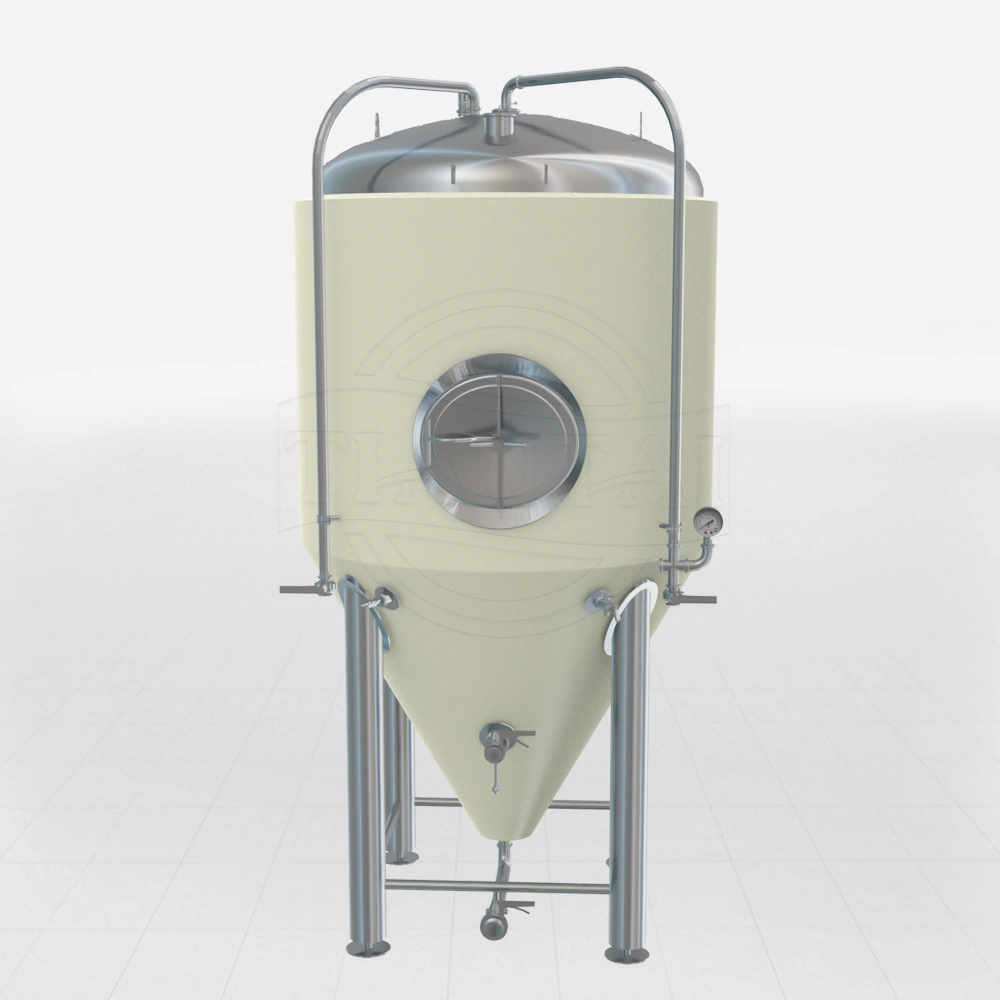
Sizing example: A 1,000 L CCT with 2 m² jacket surface and 80mm insulation can handle 50-100 kW heat removal—enough for active fermentation even at 30°C ambient.
Bright Beer Tanks (BBTs)
These hold finished beer at 0-4°C before packaging. In tropical climates, they’re actually more critical than fermenters because:
- They hold beer longer (days to weeks)
- Any temperature fluctuation affects carbonation stability
- They’re your last line of defense before packaging
Specify the same insulation and cooling as CCTs, with pressure ratings to 2-3 bar for carbonation.
Cold-Side Processing
Filtration Options
Diatomaceous Earth (DE) filters: Still the workhorse for clarity. A 1,000 L/h unit runs $20k-50k, footprint ~10 m². CIP-compatible, reliable.
Crossflow membrane systems: Newer technology, lower consumables cost, smaller footprint (3-5 m² for equivalent capacity).
Centrifuges: Disc-stack separators at 500-1,000 L/h remove yeast and proteins without filtration media. Require ventilation (motors generate heat—problematic in already-hot spaces).
Pasteurization
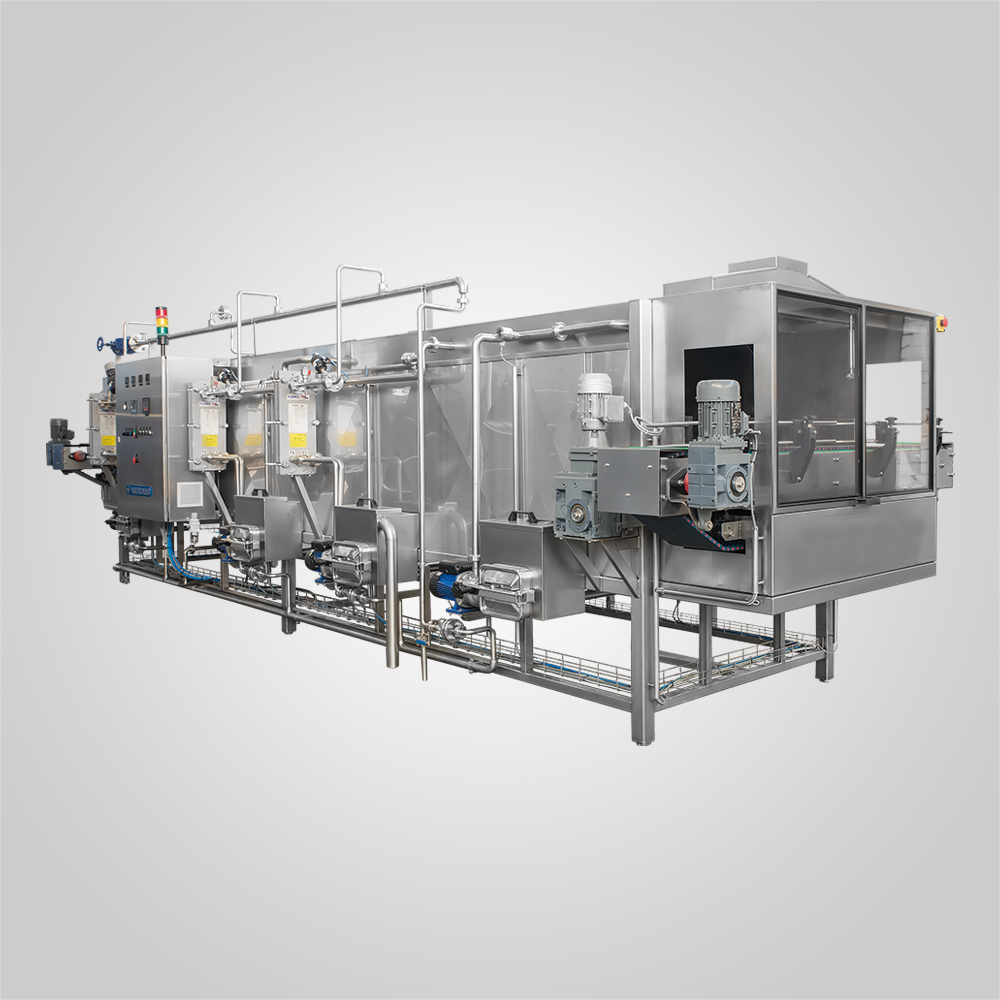
In tropical climates, the cooling section must be oversized. You’re starting with 30°C+ product, not 20°C.
Packaging Lines
The packaging hall is where many breweries lose quality after protecting it through fermentation. In 30°C+ ambient with 80% humidity, you face:
-
Condensation on cold cans/bottles
-
Label adhesion failures
-
Cardboard packaging degradation
-
Slip hazards
Environmental Control
Climate-controlled packaging hall: 18-20°C, 60-65% relative humidity. This is non-negotiable for consistent quality.
Critical for tropical operations:
-
Pre-evacuation systems to minimize oxygen pickup (high temperatures increase oxidation rates)
-
Inline dissolved oxygen monitoring with automatic line stops at >50 ppb
-
Stainless steel conveyors (resist humidity corrosion)
CIP Systems: Cleaning That Actually Works
Hot climates accelerate bacterial growth. Your CIP system isn’t just about convenience—it’s about survival.
Standard configuration:
-
2-3 tanks (caustic, acid, hot water), 1,000-5,000 L each
-
Centrifugal pumps: 5-15 m³/h at 2-5 bar
-
Flow meters or conductivity sensors for concentration verification
-
PLC-controlled sequencing with HMI interface
Tropical modifications:
-
Larger tanks: Heat accelerates chemical degradation; you need a fresh solution more often
-
Ventilation: CIP areas generate steam and heat; extract it, or your brewhouse becomes unbearable
-
Chemical storage: Store concentrated chemicals in an air-conditioned space. Heat degrades caustic and acid solutions, reducing effectiveness and increasing costs.
Maintenance reality: Check spray balls monthly—mineral buildup from hot water happens faster. Replace pump seals quarterly in continuous operation.
Utilities: The Systems That Keep You Running
Glycol Chillers
This is your most critical utility in hot climates. Size it wrong, and nothing else matters.
The oversizing rule: Calculate your cooling load, then add 30-40% for tropical ambient conditions. A 1,000 L brewery in Europe might run on a 10 kW chiller. In Ho Chi Minh City, you need 14-15 kW.
Configuration:
-
Redundancy: Two chillers at 70% capacity each beat one at 100%. When one is down for maintenance, you keep brewing.
-
Buffer tanks: Insulated glycol storage holding 2+ hours of capacity smooths compressor cycling and provides bridge cooling during power transitions.
-
Air-cooled vs. water-cooled: Air-cooled is simpler but less efficient in 35°C air. Water-cooled needs cooling towers (maintenance-intensive) or municipal water (often unavailable or expensive).
Steam Boilers
Diesel or gas-fired, 1-5 ton/hour for mid-size breweries. In Vietnam, natural gas infrastructure is expanding, but diesel remains common for reliability.
Hot climate consideration: Boiler rooms need ventilation. A 500 kW boiler in a 40°C room creates dangerous working conditions. Plan for 6-10 air changes per hour.
CO₂ Systems
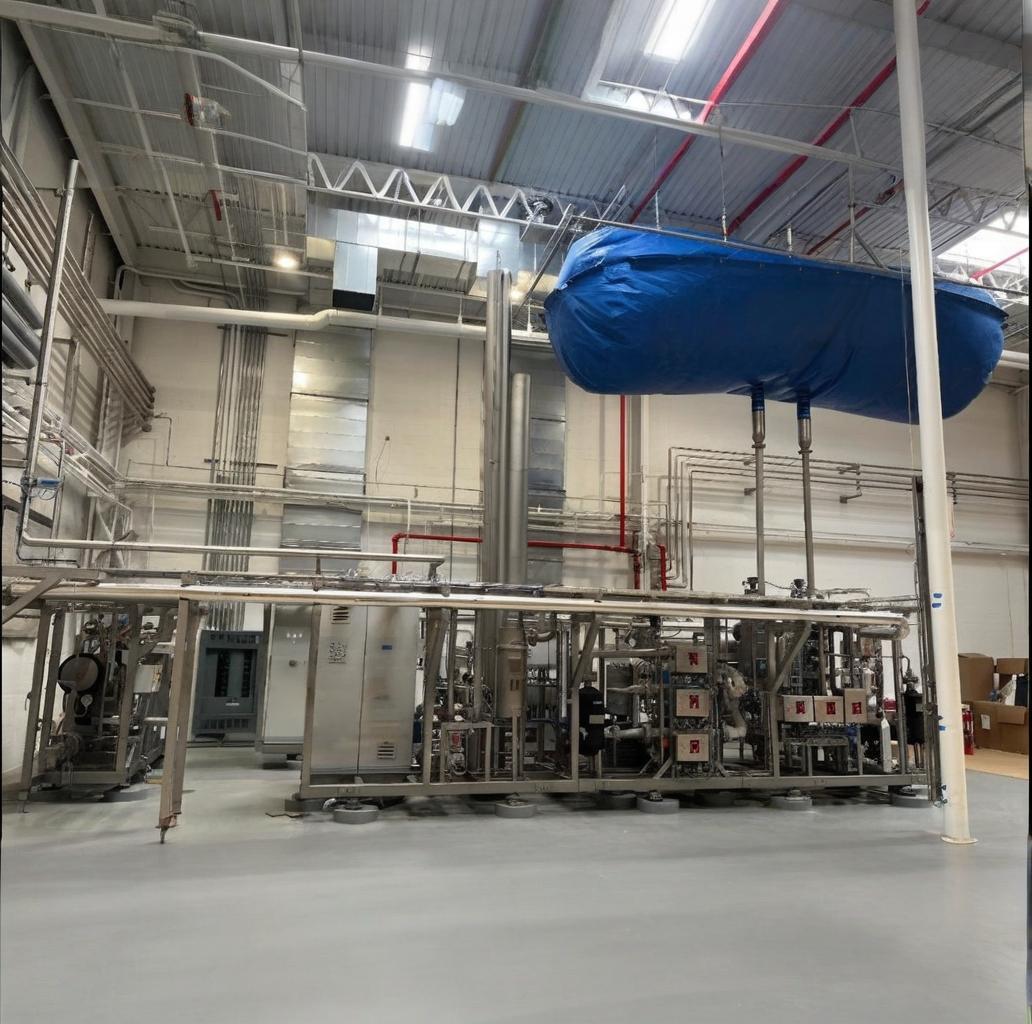
Bulk liquid CO₂ with vaporizer and pressure regulation. Alternative: fermenter gas recovery systems that capture and purify CO₂ from fermentation, reducing purchased gas by 30-50%.
Compressed Air
Oil-free compressors (5-20 kW) with air dryers and filtration. Critical detail: hot air holds more moisture. Undersized dryers fail in tropical humidity, causing valve malfunctions and contamination risks.
Water Treatment
Vietnam’s municipal water varies significantly by region. Standard treatment train:
-
5 μm sediment filtration
-
Activated carbon (removes chlorine, organics)
-
Water softener (prevents scale)
-
UV sterilization
-
Optional RO for specific mineral profiles
Budget 10-20 kW and 10-15 m² for a complete treatment system handling 1,000 HL/year production.
Automation & Control
Modern breweries run on PLCs. In tropical climates, you need additional protection:
Control system specs:
-
PLC with HMI touchscreen: Siemens or equivalent
-
Voltage protection: Surge suppressors and voltage stabilizers (grid fluctuations)
-
UPS backup: 30-minute minimum for safe shutdown sequencing during outages
-
Environmental protection: NEMA 4X or IP65 enclosures (dust and moisture)
Software capabilities:
-
Batch recipe management
-
Temperature trend logging (critical for quality documentation)
-
Remote monitoring (if internet reliability permits)
-
Local data storage backup (when cloud connectivity fails)
Language: Vietnam operates in Vietnamese and English. Ensure HMI interfaces support both for local operator training.
Vietnam Case Study: Why This Market Matters
Vietnam represents one of the world’s most dynamic beer markets. Understanding why helps explain the equipment demands:
Operational realities:
-
Climate: 25-35°C year-round, 70-90% humidity, monsoon seasons
-
Grid reliability: Excellent in urban centers (99%+), but voltage fluctuations common
-
Water: Municipal supply generally available but variable quality; RO treatment standard
-
Logistics: Major ports at Haiphong (north) and Ho Chi Minh City (south); plan 2-3 months for equipment import and customs
Success factors: Breweries thriving in Vietnam—whether producing 500 L batches for local craft markets or 50,000 L for national distribution—invest in oversized cooling, redundant power, and humidity control from day one. Those who try to adapt temperate-climate equipment struggle with consistency and costs.
About Tiantai: We design and manufacture commercial brewing equipment for demanding environments worldwide. From 500 L craft systems to 50,000 L industrial facilities, we provide integrated solutions including brewhouse, fermentation, CIP, utilities, and automation—engineered for your specific climate and market conditions. Contact us for a consultation on your brewery project.