
Carbon dioxide is a critical utility in beer production, used for carbonating beer, purging oxygen from tanks and lines, and maintaining safe pressure during transfers and packaging. This CO₂ supply system integrates a vacuum-insulated liquid CO₂ storage tank, air-cooled vaporizer (gasifier), pressure regulating station, and buffer gas tank to deliver reliable and controlled gas at brewery-appropriate pressures.
Outdoor installation allows bulk liquid CO₂ deliveries and a steady gas supply. The system components work together so breweries don’t have to depend on bottled CO₂ cylinders alone, improving operational stability and reducing logistics costs.
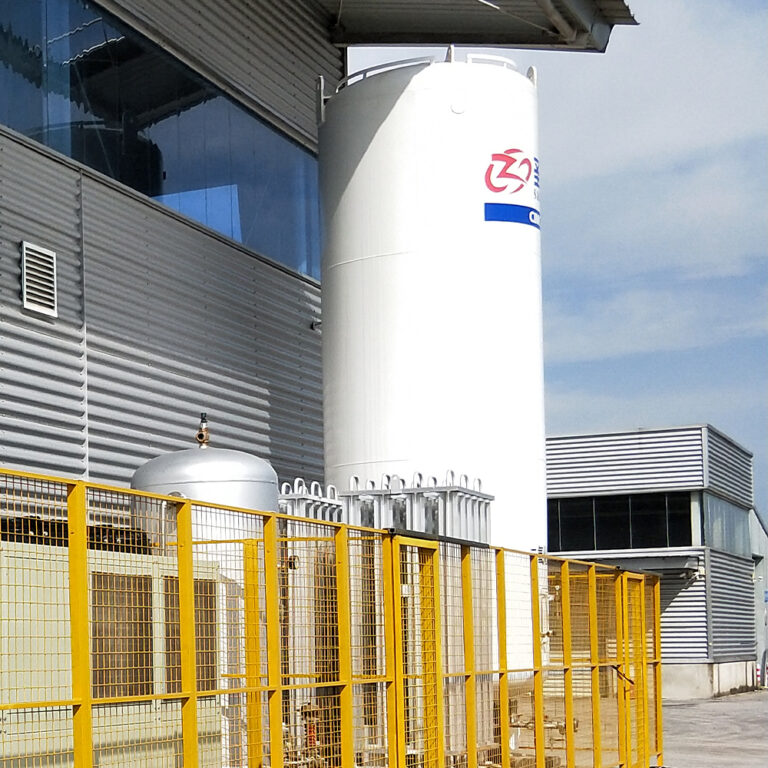
Process & performance parameters
- Storage design pressures: tanks are commonly designed for working pressures in the 15–25 bar range (design varies by tank type and refrigeration strategy).
- Liquid inlet/outlet ports: standard bottom liquid withdrawal plus top vapor/vent port and pressure-balance connections.
- Vaporizer inlet/outlet pressures: vaporizers accept liquid CO₂ at cryogenic inlet conditions; typical usable gas outlet (running) pressures in many brewery applications target ~0.6–0.8 MPa (6–8 bar) for high-pressure duty, with regulators dropping to service pressures as required. Verify site requirements when quoting.
- Ambient operation: outdoor-rated tanks and vaporizers with weather protection; vaporizers may be air-cooled or steam/electric-heated depending on flow and climate.
Key advantages
- Continuous high-flow supply: Bulk liquid storage plus properly sized vaporizer and buffer delivers steady gas for multi-line carbonation and filling operations.
- Safe outdoor installation: Vacuum-insulated tanks with monitored jackets and safety valve systems reduce on-site refrigeration needs and simplify logistics.
- Flexible vaporization: Air- or water/steam-heated vaporizers sized for peak and average loads, with options for staged or redundant vaporizers for critical processes.
- Process protection & control: Multi-stage pressure regulation and relief arrangements maintain setpoint pressures and protect downstream manifolds and vessels.
- Modular deployment: Skid-mounted assemblies with standardized flanges and instrumentation enable phased plant builds and straightforward integration with RO/DI, carbonation skids, and filling lines.
Detailed configuration & build quality
- Tank construction: Vacuum-insulated inner vessel (austenitic stainless or specified alloy) with carbon-steel outer jacket, multi-point vacuum monitoring and topside piping integrated for truck filling and liquid/gas take-off. Standard design codes apply; options for refrigerated or non-refrigerated operation.
- Vaporizer type: Shell-and-tube or fin-fan (air) vaporizers; materials rated for low-temperature service (stainless steel, copper alloys) and sized to required kW of latent/ sensible heat for conversion. Defrost and ambient performance should be confirmed for cold climates.
- Pressure regulation & safety: Dual-stage regulators, emergency relief valves and three-way switching safety valves where required (to isolate/vent or switch sources). Include monitoring and interlocks in the control logic.
- Piping & valves: All wetted parts and process fittings in stainless steel or low-temperature-qualified alloys; welded or tri-clamped sanitary connections depending on plant preference.
- Instrumentation & controls: Level gauges, liquid-phase temperature sensors, pressure transmitters, vacuum jacket monitoring, PLC with HMI and remote telemetry options for SCADA integration.
Technical specifications
- Storage tank type: Vacuum-insulated liquid CO₂ tank (vertical, outdoor).
- Typical operating pressures: Storage pressure based on tank design; vaporizer outlet ~0.6–0.8 MPa.
- Materials: Stainless steel low-temperature valves and pipework.
- Buffer tank: Sized per peak flow requirements.
Installation & brewery notes
- Place the CO₂ storage tank outdoors with an appropriate foundation and safety clearances.
- Ensure the vaporizer is properly sized for peak gas usage (e.g., packaging lines, carbonation units).
- Integrate pressure regulators to match downstream equipment pressure requirements and protect carbonation tanks, fillers and purgers.