
Breweries handle a variety of grain raw materials, including barley malt, wheat malt and adjunct grains. Storage solutions typically include flat warehouses (for bagged materials and limited capacity) or vertical silos for bulk handling. For breweries processing bulk malt, vertical steel silos provide higher storage density, improved hygiene control and full integration with automatic conveying systems.
The malt silo system not only satisfies storage requirements but also enables automated raw material supply to the milling and brewhouse sections. With integrated bucket elevators and En-Masse conveyors, malt intake, distribution and discharge are completed with minimal manual intervention, improving efficiency and consistency.
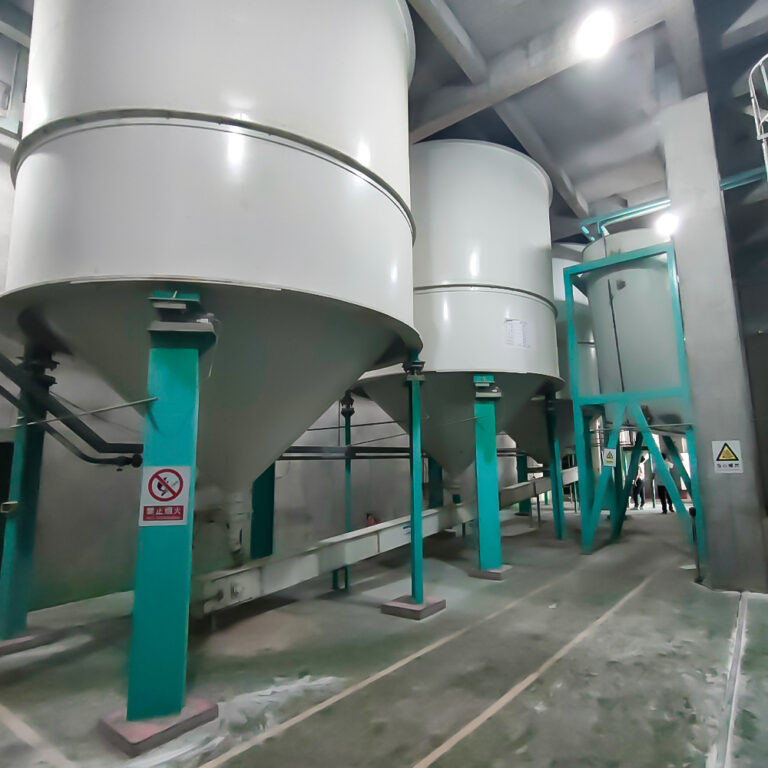
Key Features
- Cone-bottom design (45° / 60°): Ensures smooth gravity discharge and reduces material residue.
- High storage capacity: 100–1500 m³ per silo, suitable for 10–30 days supply planning.
- Space-efficient structure: Vertical design maximizes storage within limited plant area.
- Moisture protection: Elevated steel frame reduces the risk of ground humidity contamination.
- Safe maintenance access: Roof operating platform for inspection and servicing.
Configuration features
- Food-grade steel construction
- Steel support frame for cone-bottom installation
- Level sensors (high/low and continuous monitoring optional)
- Manual or fully automatic control integration
- Explosion-protection design available (dust-hazard environments)
- Integration with plant control systems (PLC/SCADA optional)
Technical specification
- Capacity per silo: 100–1500 m³
- Silo type: Cone-bottom, vertical steel structure
- Bottom cone angle: 45° / 60°
- Conveying system: Bucket elevator + En-Masse conveyor
- Installation: Elevated steel support frame
- Operation: Manual/semi-automatic / fully automatic
- Storage duration design: 10–30 days supply
Installation & layout considerations
- Determine total storage based on daily malt consumption and desired safety stock (10–30 days recommended).
- Provide dust collection systems at intake and transfer points.
- Consider explosion-protection requirements for grain dust environments.
- Ensure integration with milling section capacity and brewhouse throughput.
- Plan truck unloading zones and intake pits for efficient logistics.