
The system provides automated, metered delivery of strong alkali (caustic), strong acid and sanitiser into the CIP loop through a closed pipeline and controlled valves. It is intended for breweries that require safe chemical handling, precise dosing and integration with plant controls for recipe-based cleaning cycles. The skid supports integration with CIP tanks, reclaim systems and wastewater neutralization points.
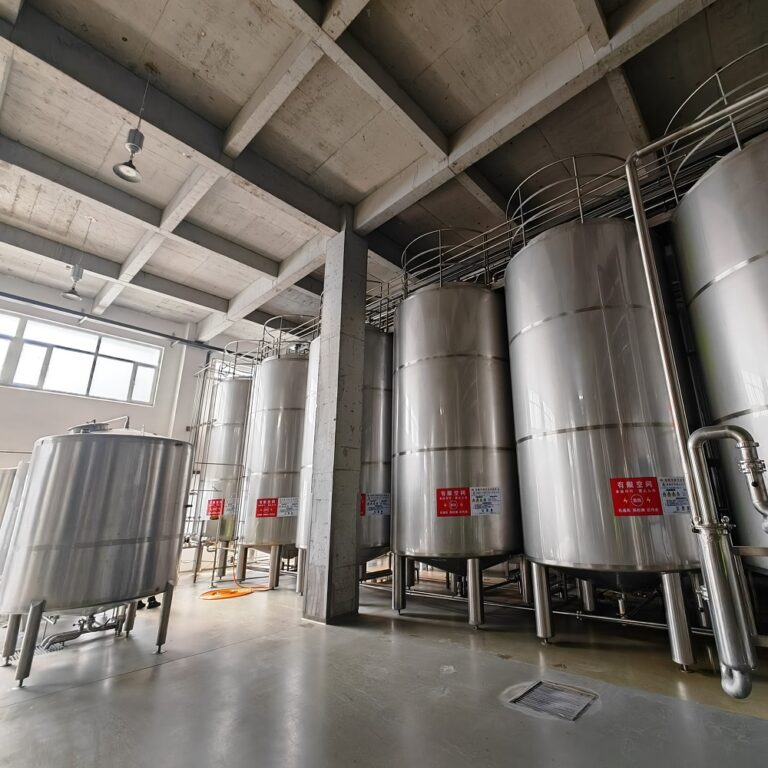
Material selection and equipment choices prioritize resistance to corrosive chemicals and long service life. For chemical compatibility and piping/tank design, use 316L stainless steel for all wetted tanks and lines; select pump and seal materials rated for strong caustics and acids.
Process parameters
- Dosing accuracy: typically ±0.5–2% depending on pump and flow regime (specify pump model for guaranteed accuracy)
- Tank material: 316L stainless steel standard (PTFE/lined options for extreme chemistries)
- Operating: fully automated with manual override and lockable access procedures
Configuration features
- Tanks & piping: all wetted tanks and primary piping fabricated in 316L stainless steel; secondary containment bunds sized per local code.
- Pump selection: diaphragm or plunger metering pumps recommended for caustic/acid durability; chemical-resistant diaphragms and PTFE-wetted seals where required.
- Sensors & verification: conductivity or pH probes in CIP return lines for closed-loop verification of dosing; flow sensors to confirm injection volumes.
- Control logic: recipe library on PLC/HMI; interlocks for minimum tank level, leak alarms, and automated isolation where faults occur.
- Safety design: closed fill points, pressure relief, vent scrubbers or neutralization for off-gassing (if needed) and PPE-free routine operation. See best-practice chemical handling guidance.
Detailed configuration & build quality
- Welds & finishes: hygienic welds, external pickling/passivation for corrosion resistance and longevity.
- Valves & fittings: chemical-rated actuators and seats; PTFE-lined or alloy-20 components available where 316L is insufficient.
- Containment & environment: bunded skids, drip trays, and leak-proof transfer couplings to protect personnel and the environment. Include neutralization dosing or reclaim routing in site wastewater design.
Technical specification
- Tanks: 316L stainless steel (sizes per site)
- Pumps: diaphragm/plunger metering (chemical-resistant wetted parts)
- Sensors: level, pressure, flow, conductivity/pH, leak probes
- Controls: PLC/HMI, recipe storage, alarms, remote SCADA integration
- Safety: secondary containment, venting, emergency isolation valves
Installation & operational notes
- Place tanks within bunds and route fill lines through sealed ports to avoid manual pouring.
- Use dedicated transfer pumps and continuous leak detection on chemical transfer lines.
- Integrate conductivity/pH feedback into CIP recipes so dosing is verified automatically during cleaning cycles.
- Provide operator training and documented SOPs for tank refill, emergency neutralization and maintenance.