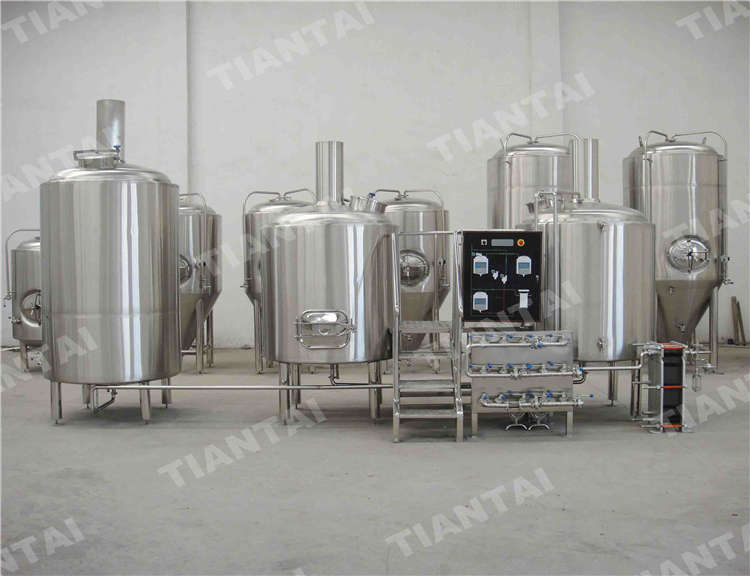
Brewery piping systems handle a diverse range of materials, including wort, fermentation broth, beer, steam, cooling water, compressed air, carbon dioxide, CIP cleaning solutions, and wastewater. The significant variations in the physicochemical properties of these materials necessitate targeted adaptations in pipeline design, emphasizing “hygiene, contamination prevention, and loss reduction.”
I. Piping for Corrosive and Hazardous Materials
In breweries, CIP cleaning solutions (e.g., caustic soda, acids) and wastewater are classified as corrosive materials. Pipelines for these substances should be routed below or outside parallel process lines. This configuration prevents potential leakage from corroding other critical pipelines, particularly hygienic lines carrying wort or beer. Material selection should prioritize 304 or 316L stainless steel to preclude material contamination stemming from corrosion.
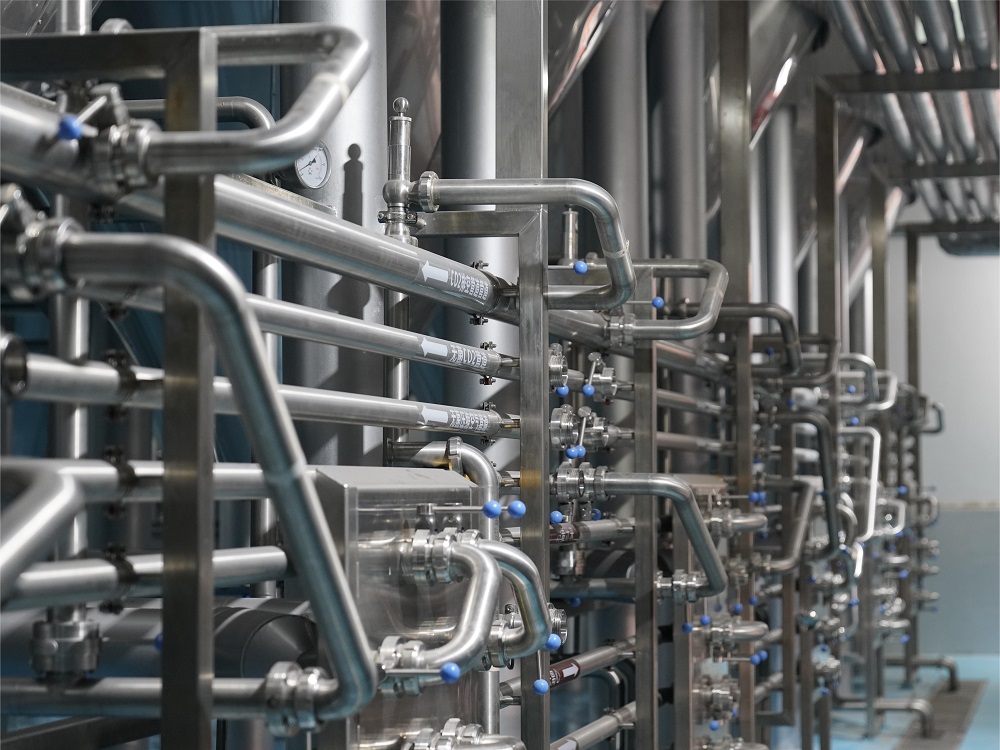
Pipelines for flammable, explosive, or toxic materials (such as carbon dioxide or alcohol) are strictly prohibited from being installed in living quarters, stairwells, corridors, or densely populated areas. These lines must be routed separately, distanced from ignition and power sources, and equipped with safety devices like relief valves, rupture discs, and flame arrestors. Carbon dioxide lines should avoid direct connection of high-pressure sections to low-pressure systems; pressure-reducing valves should be installed where necessary to prevent over-pressurization and pipe damage, ensuring personnel and operational safety.
II. Piping for Hot and Cold Materials
During beer production, pipelines for steam (used in mashing and sterilization), cooling water (for fermentation temperature control), and hot/cold wort require strict zoned routing to prevent heat transfer losses and associated energy waste. This also mitigates issues such as condensation on low-temperature lines or the impact of high-temperature lines on adjacent equipment.
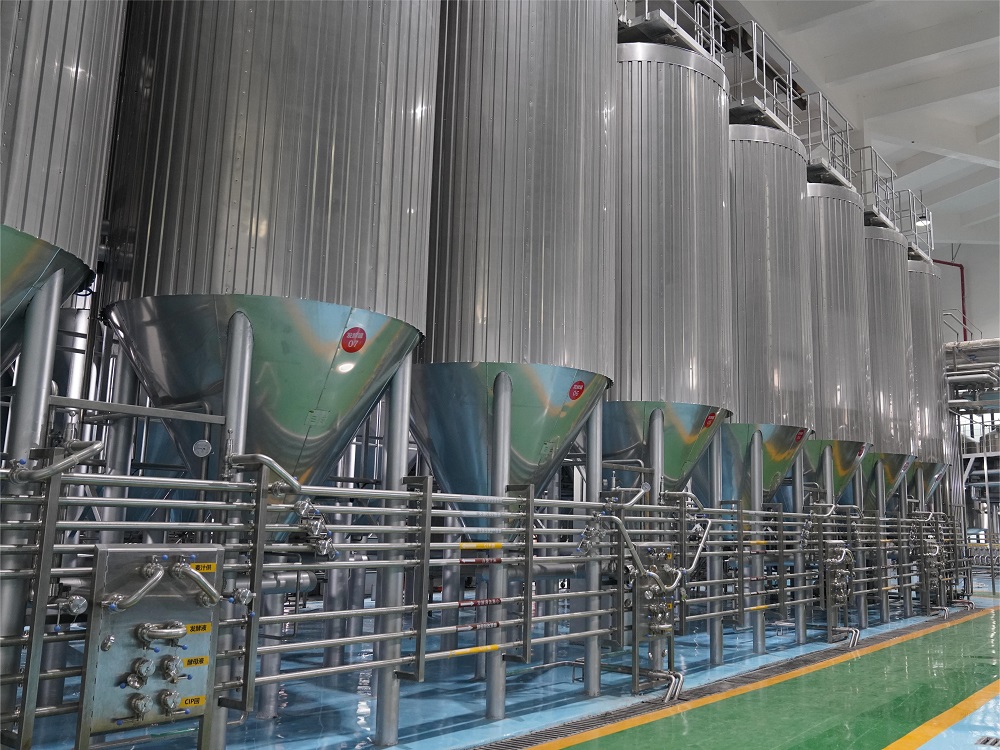
If parallel routing is necessitated by spatial constraints, the principle of “hot pipes above, cold pipes below” must be followed. The spacing between the outer surfaces of insulation layers should be no less than 0.5 meters for vertical parallel runs and no less than 0.25 meters for staggered arrangements. Insulation material and thickness must strictly adhere to industry standards. Steam pipeline insulation must possess excellent thermal insulation properties to prevent heat loss, while cooling water pipelines require adequate moisture-proofing and insulation to prevent condensation drips that could damage plant equipment and flooring.
A critical consideration for brewery steam pipelines is a slight downward inclination, with a slope typically ranging from 1:100 to 1:200. This gradient ensures that condensate flows towards drain points via gravity and steam flow, preventing condensate accumulation. Such accumulation can lead to water hammer, pipe vibration, and reduced service life for valves and pipelines.
III. Piping Slope
Brewery piping slope must be adjusted based on the characteristics of the conveyed materials, with the overall gradient directed along the material flow path. The primary objective is to prevent material accumulation, which can lead to bacterial growth, pipe blockages, and contamination risks. Specific requirements are as follows:
- Sanitary-grade piping for materials such as wort, fermentation broth, and beer should have a slope controlled between 0.3% and 0.5% (i.e., 3/1000 to 5/1000) to ensure smooth material flow and avoid the formation of “dead zones” within the pipes.
- Steam piping slope is set at 0.5%, directed towards condensate drainage devices to facilitate the discharge of condensed water.
- Chilled water, hot water, and condensate piping slopes are 0.3%. Wastewater piping slope is not less than 1% to ensure unobstructed drainage and prevent backflow.
- Compressed air and carbon dioxide piping slopes are 0.3%, inclined in the direction of flow to prevent water accumulation within the pipes, which could impact gas purity.
- For buried piping and pipes within trenches, if draining accumulated materials is not required, slopes may be omitted at the discretion of the design team, provided that anti-corrosion and anti-seepage measures are properly implemented.
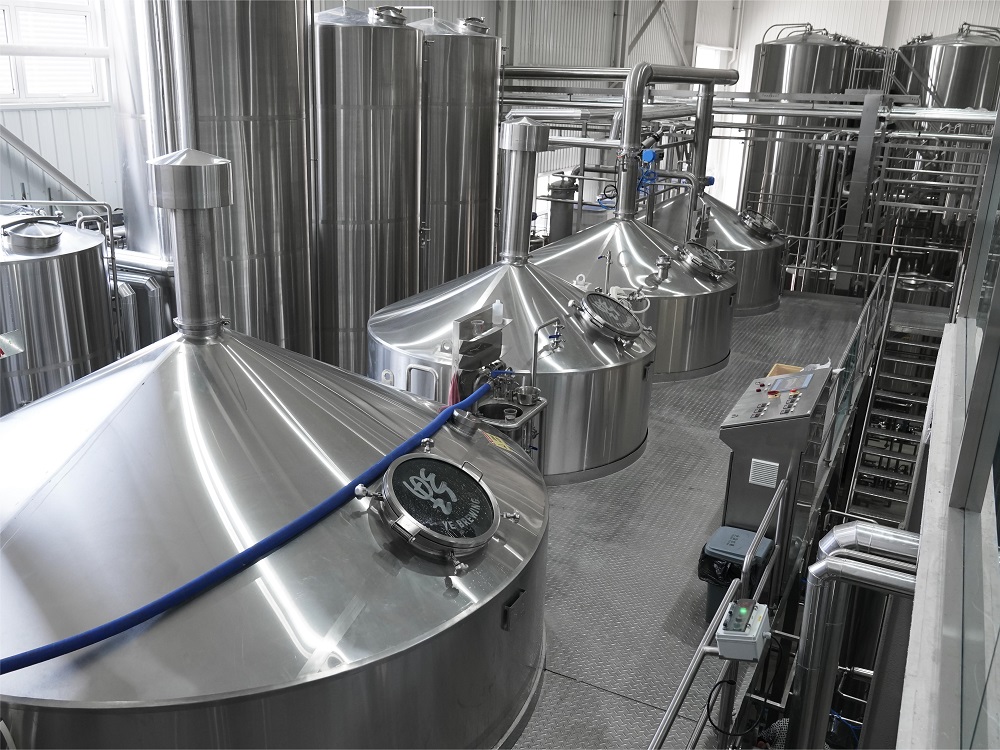
As an enterprise deeply involved in the integrated design, manufacturing, and installation of brewery equipment and associated piping systems, Tiantai not only holds D1 and D2 pressure vessel design and manufacturing certifications but also boasts a core team of seasoned engineers and specialized technicians with years of practical experience in brewery piping design. From initial process research and material characteristic analysis to material selection, slope control, branch pipe arrangement, safety protection design, and regulatory compliance documentation, Tiantai meticulously oversees and rigorously controls every stage. This comprehensive approach ensures full consideration for the piping requirements of various processes, including malt milling, mashing, fermentation, filtration, and packaging, thereby eliminating sanitary dead zones, safety hazards, and energy waste. Furthermore, in conjunction with the client’s actual production capacity needs and plant layout, we provide personalized, customized design solutions that balance ease of subsequent construction with economic operational and maintenance efficiency.