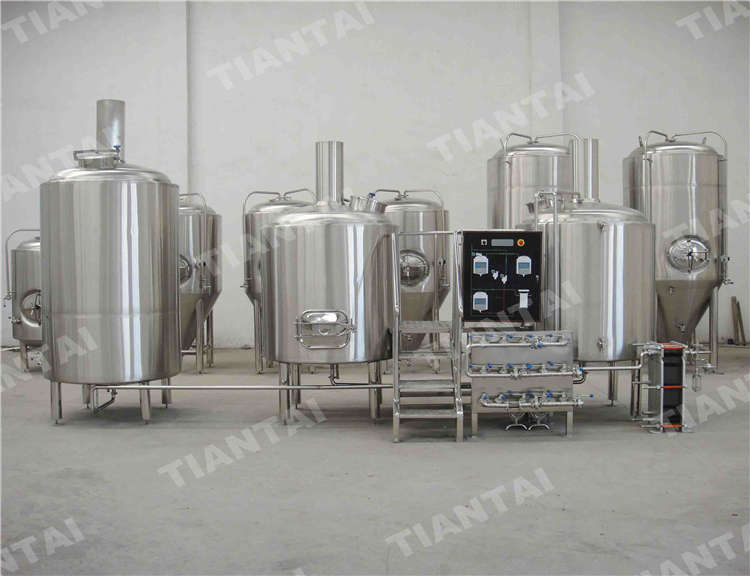
In the ever-evolving world of craft and commercial brewing, innovative high-gravity brewing uses wort at a higher-than-normal concentration and dilutes it later (typically with deoxygenated water). This approach lets breweries increase alcohol output and product variety without enlarging brewhouse, fermentation, maturation, or storage capacity.
How it works — the essentials
Produce a high gravity wort (higher original gravity) by concentrating mash/lauter output or using adjuncts.
Ferment the concentrated wort with increased oxygenation and higher pitching rates.
After fermentation, dilute to target gravity using low-oxygen (deoxygenated) water and adjust bitterness/color as needed.
Key advantages
Significant increase in brewery productivity
High gravity brewing allows a brewery to produce more finished beer from the same brewhouse and cellar volume. By fermenting concentrated wort and diluting post-fermentation, alcohol output per brew is increased. This enables higher annual production without adding mash tuns, fermenters, maturation tanks, or storage capacity, delivering a direct return without major capital investment.
Greater flexibility in product portfolio
A single high-gravity base beer can be diluted to multiple target gravities, enabling production of several SKUs from one fermentation. Breweries can efficiently create products with different alcohol levels, bitterness units, residual extract, color, and sweetness. This flexibility is particularly valuable for breweries supplying multiple brands, private labels, or export markets with varying specifications.
Reduced raw material costs
High gravity brewing supports increased use of adjuncts such as corn, rice, or sugar syrups. Because less malt is required per hectoliter of finished beer, raw material costs can be reduced. In addition, modern mash filters and high-efficiency lautering systems help recover more extract from the grist, partially offsetting efficiency losses associated with concentrated mashes.
Lower energy consumption per hectoliter
Energy savings are achieved because heating, boiling, and cooling are applied to a smaller volume of wort. Steam, electricity, and refrigeration demands per unit of finished beer are reduced. These savings are particularly significant in the brewhouse and wort cooling stages and contribute to lower overall production costs.
Reduced labor and cleaning costs
Fewer brews are required to achieve the same finished beer volume, which reduces operator time, CIP cycles, chemical usage, and wastewater generation. Over time, this leads to measurable reductions in labor hours, cleaning agent consumption, and effluent treatment costs.
Disadvantages of High Gravity Brewing and Process Solutions
Reduced hop utilization during boiling
More concentrated wort leads to lower hop utilization during wort boiling, potentially affecting bitterness and aroma balance.
Process solution:
This challenge is addressed through the use of kettle hop extracts or post-fermentation hop products, allowing precise bitterness adjustment independent of wort gravity.
Reduced foam stability in finished beer
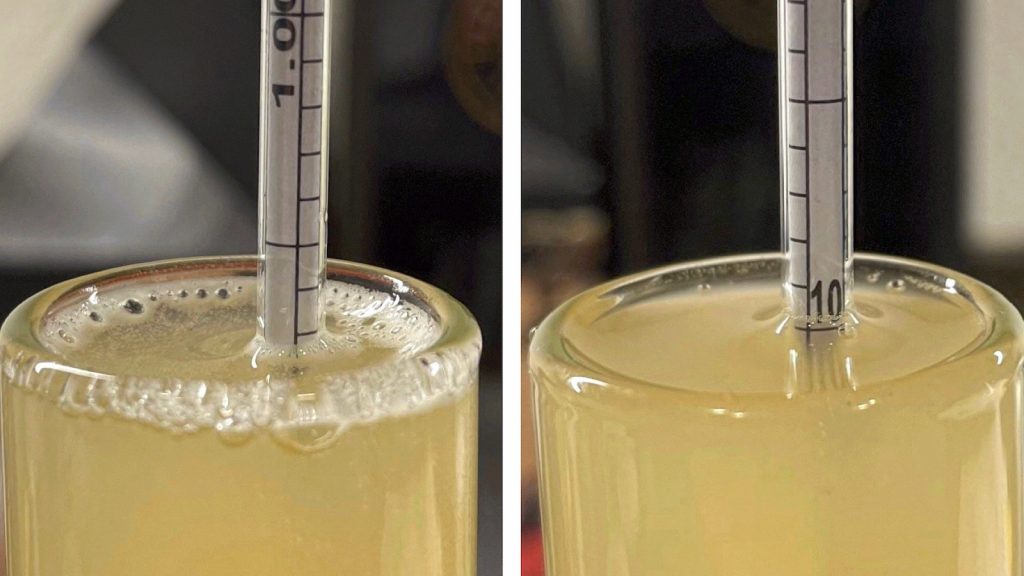
One of the major disadvantages of high gravity brewing is reduced foam stability, primarily caused by increased losses of hydrophobic polypeptides during processing.
Process solution:
Foam stability can be improved by incorporating wheat malt, optimizing sparging practices, or using hop-derived foam-enhancing products. Equipment choice and process control play a critical role in minimizing protein loss.
Flavor deviation from standard-gravity beers
Achieving exact flavor matches with lower-gravity beers can be challenging. Elevated ester formation—especially ethyl acetate and isoamyl acetate—may occur during fermentation due to increased osmotic pressure in high gravity wort.
Process solution:
Flavor deviation is controlled through precise fermentation temperature management, optimized yeast strain selection, and controlled fermentation kinetics. Modern fermentation systems enable brewers to regulate ester production within defined sensory targets.
Increased stress on yeast performance
High gravity worts significantly influence yeast behavior, affecting fermentation rate, flocculation, and the number of viable yeast recycling generations.
Process solution:
Higher pitching rates, dedicated yeast propagation, and controlled yeast handling ensure healthy fermentations and consistent performance across multiple production cycles.
Higher oxygen demand at fermentation start
Due to increased wort concentration, high gravity fermentations require higher dissolved oxygen levels at pitching to support yeast membrane synthesis and metabolic activity.
Process solution:
Inline oxygenation systems with accurate dosing capability provide the required oxygen levels without increasing oxidation risk, ensuring stable and complete fermentation.
Risk of oxidation during dilution
Post-fermentation dilution introduces an increased risk of oxygen pickup, which can accelerate staling reactions and negatively impact flavor stability and shelf life.
Process solution:
This risk is minimized through the use of specially treated, low-dissolved-oxygen dilution water combined with automated blending and dilution systems, ensuring precise gravity adjustment under oxygen-controlled conditions.
Practical equipment & process recommendations for
High-capacity mash filters / lauter tuns — improve extract recovery and reduce solids in spent grain.
Concentration kettles & kettle syrup recovery — produce consistent high-gravity wort while capturing extract.
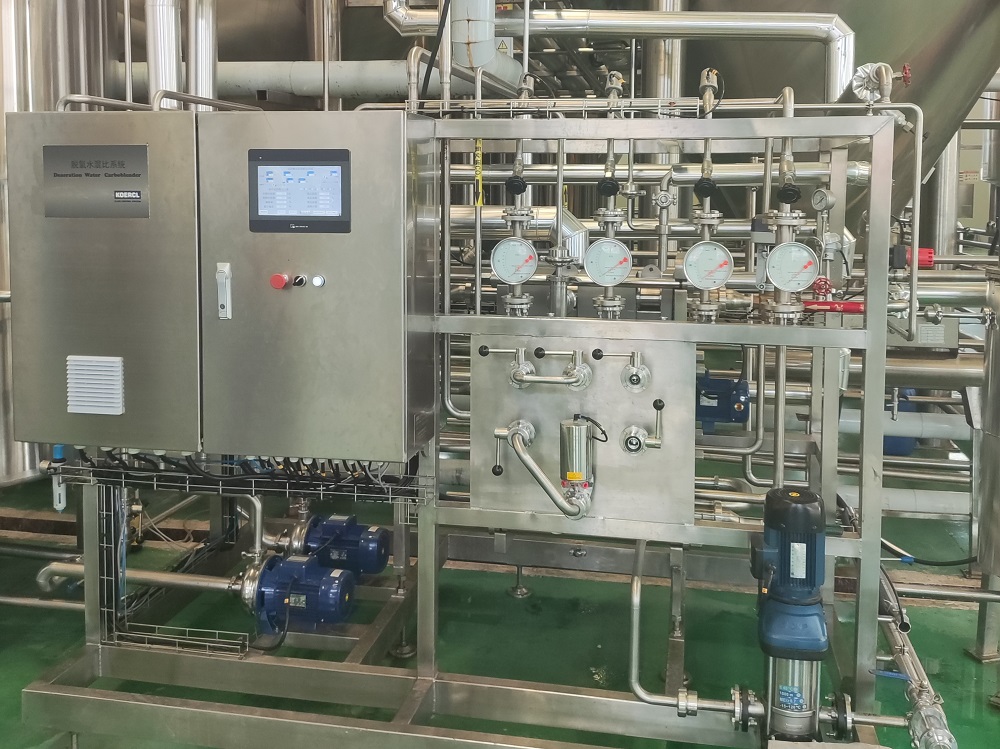
Automated dilution skids with DO control — precise post-fermentation gravity adjustments using deoxygenated water.
Yeast propagation and oxygenation systems — ensure optimal pitching rates and dissolved oxygen for high gravity worts.
Hop extract dosing equipment — compensate for reduced hop utilization and preserve sensory profile.
Effluent reduction & CIP optimization — realize labor and wastewater gains intrinsic to high gravity production.
For turnkey solutions—mash filters, dilution skids, deaeration systems, and custom brewhouse upgrades—review the equipment range on our product pages, or request a technical consultation to evaluate retrofitting options for high-gravity production.