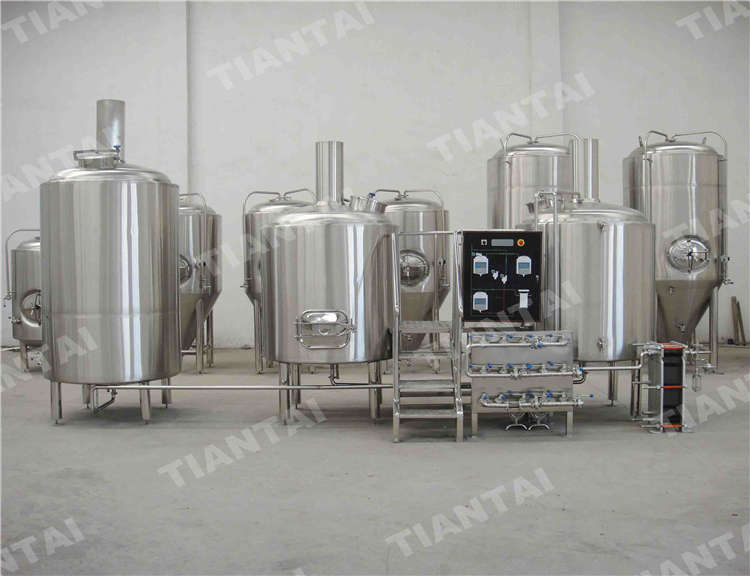
During the brewing process, lautering (The equipment used is the brewery lauter tun) is the longest stage in the mash phase. The effectiveness of lautering significantly affects the quality of the final wort, the extraction yield, and brewing efficiency. These factors subsequently influence the boiling, fermentation, and the clarity and flavor stability of the finished beer.
I.Lautering Process
An ideal lautering process efficiently separates water-soluble extracts (wort) from non-soluble materials (spent grains) within a short period. The process includes:
- Enzymatic enhancement stage: Residual α-amylase continues to hydrolyze incompletely liquefied high-molecular-weight dextrins into colorless dextrins and fermentable sugars, increasing extraction efficiency.
- First wort collection: Producing a clear, high-concentration initial wort.
- Grain washing: Multiple hot water rinses of the spent grains yield second and third runnings of wort.
However, Tian Tai has identified several practical issues that can cause wort turbidity, reduced yields, or lautering failure:
- Excessively fine milling of raw materials leading to clogging of the wedge wire false bottom within the lauter tun.
- Use of overly hot wash water, causing phenols and silicates to leach from the husks, disrupting colloidal stability.
- Improper pressure or liquid level control, leading to lauter layer collapse or “grain draw-off,” with oxygen ingress causing contamination.
These operational issues not only hinder lautering efficiency but also adversely affect the mouthfeel of the final beer and its post-bottling shelf life.
II. Tian Tai Lauter Tun Highlights
The lauter tun is more than a vessel; it extends the brewing process with advanced design features:
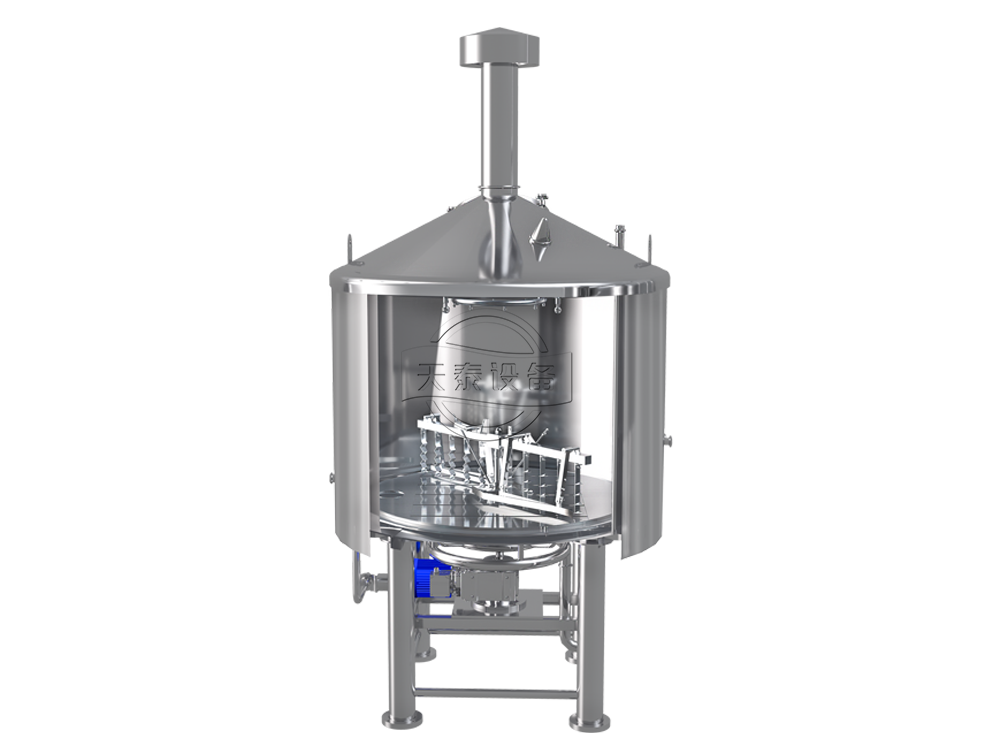
- Efficient, uniform feed: Wort is pumped from the mash tun through 2–6 adjustable inlet valves at the bottom, passing through a false bottom and wedge wire false bottom to ensure even distribution at the tank bottom, preventing localized aggregation or channeling.
- Innovative inclined milling wedge wire false bottom: With an open area of 13%, it prevents fine-grain particles from embedding in gaps, significantly increasing lautering speed, permeability, and reducing cleaning frequency, thus prolonging equipment lifespan.
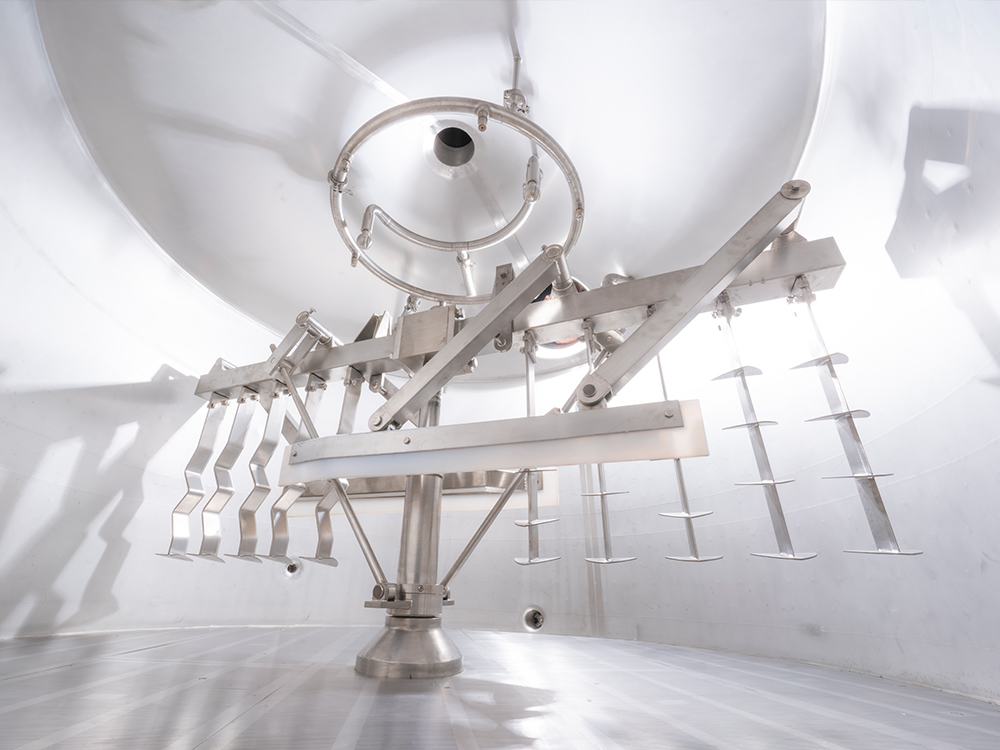
- Scientifically designed grain bed management: Equipped with 2–6 asymmetrically distributed raking arms paired with a single-leg rake design, ensuring complementary trajectories without blind spots. Precise rake height adjustments during washing loosen and aerate the grain bed, reconstructing wort pathways and maximizing yield.
- Anti-oxidation and turbidity prevention: Conical outlets on the wort outlet pipe and collection ring enable smooth, laminar flow, eliminating “grain draw-off.” These features also minimize oxygen ingress, protecting the wort’s reductive qualities and creating optimal conditions for fermentation.
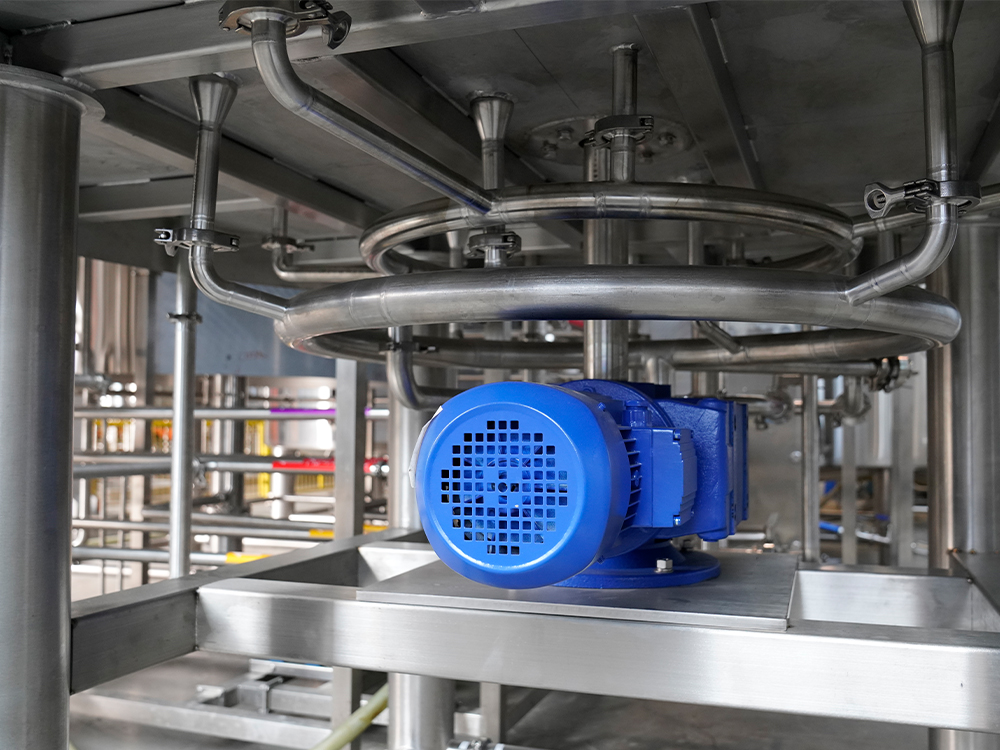
- CIP cleaning system: Top-mounted sparging ring with food-grade stainless steel and multi-angle spray nozzles achieves thorough cleaning of the false bottom; high-pressure spray nozzles facilitate rapid cleaning; optional pneumatic spent grain discharge and automatic grain bed stirring enhance operational efficiency.
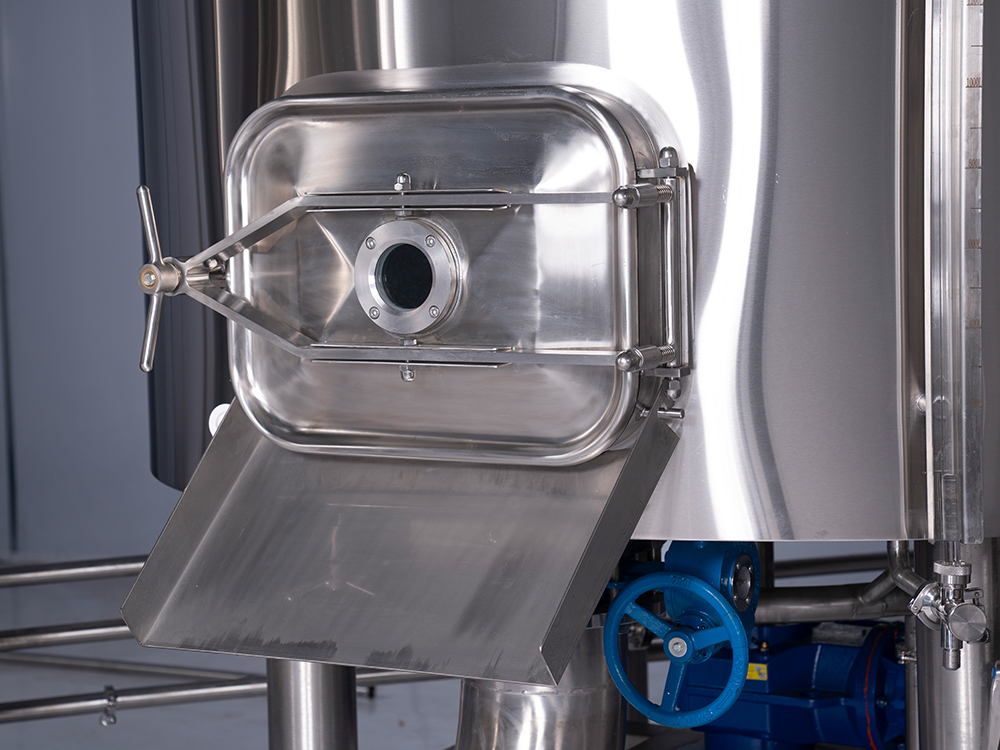
- Food safety and process visibility: Constructed from food-grade 304/316L stainless steel complying with GMP standards; large side-mounted spent grain door with EPDM sanitary gasket ensures airtightness; optional glass sight windows allow brewers to monitor grain bed conditions in real-time, facilitating process control.
With the maturity of IoT technology, standards in the beer equipment industry are moving towards “interconnectivity.” The lauter tun is not just an independent tank, but part of the entire brewing digital ecosystem. In the development of industrial automation, the beer brewing industry is moving from “human experience” to “data-driven.” The intelligent upgrade of Tiantai lauter tuns is not only a trend, but also key to improving product consistency and brewery brewing efficiency. The advantages of Tiantai lauter tuns are mainly reflected in the following two aspects:
- Evolution from a single physical structure to an “intelligent container”: By installing sensors for parameters such as temperature, pH, and flow rate in the lauter tun, comprehensive monitoring of the filtration environment is achieved.
- Automated brewing: Enables unattended automatic filtration and CIP cleaning, significantly reducing labor costs.
The advantages of a lauter tun lie in its stability and flexibility, high compatibility with raw materials, intuitive operation during brewing, and ease of mastery for brewers throughout the lauter process. Maintenance costs are also relatively low. For small craft breweries, bars, or breweries, a lauter tun is the preferred choice for wort lauting. Another type of lauter equipment manufactured by Tiantai is the filter press. Unlike a lauter tun, a filter press uses hydraulic pressure to extract wort for lauting. Filter presses offer higher lauter efficiency and beer yield, increasing brewery capacity and reducing the cost of raw materials for craft beer brewing.
So, when building a brewery or opening a bar or beer house, should you equip yourself with a lauter tun or a filter press? From an equipment supplier’s perspective, if you are brewing a small volume of beer and aim for steady growth, a lauter tun is recommended. If you are pursuing high production volumes and require highly efficient operation, a filter press is recommended. There is no absolute good or bad between the two main types of wort lauter equipment; it’s just a matter of whether they suit your current stage of the beer business.
Tian Tai—Your trusted expert in brewing equipment solutions. We offer customized solutions based on capacity—from small craft breweries to multi-thousand-ton facilities—considering factory layout and automation needs. Our engineering team engages throughout design, installation, commissioning, and training phases to ensure equipment seamlessly integrates with your brewing process.
Contact us for an exclusive Lauter Process solution.