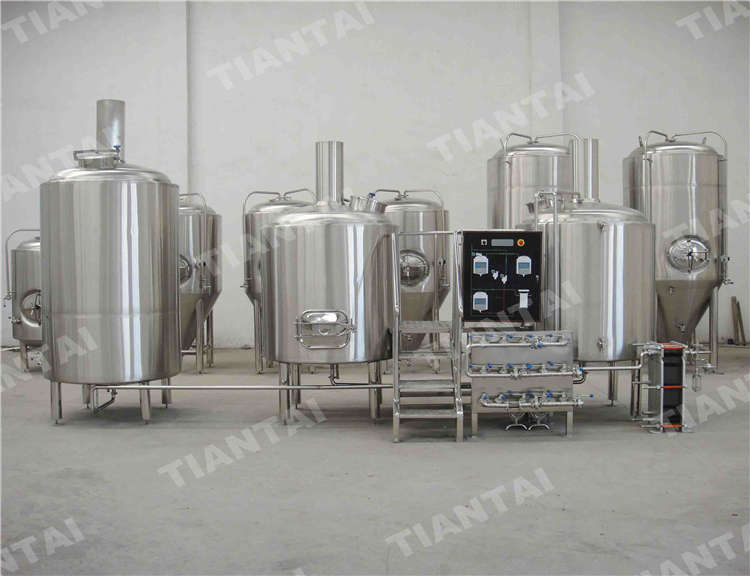
Tanto si dirige una bodega boutique como una explotación a gran escala, la elección de la prensa adecuada influye directamente en la calidad, el rendimiento y el estilo del vino. El prensado es la operación clave que separa el zumo o el vino de los hollejos. La presión, el diseño de la prensa y la estrategia operativa modifican el rendimiento, el contenido en sólidos y la extracción fenólica, factores todos ellos que afectan a la clarificación del zumo y al estilo final del vino.
En Tiantai Solutions, suministramos equipos avanzados para bodegas, diseñados para maximizar la eficiencia y preservar al mismo tiempo el delicado carácter de sus uvas. Nuestra gama de prensas continuas y discontinuas ayuda a los bodegueros de todo el mundo a conseguir resultados uniformes y de alta calidad.
Tipos de prensas y sus efectos
Prensas de lote (cesta): sencillas y suaves
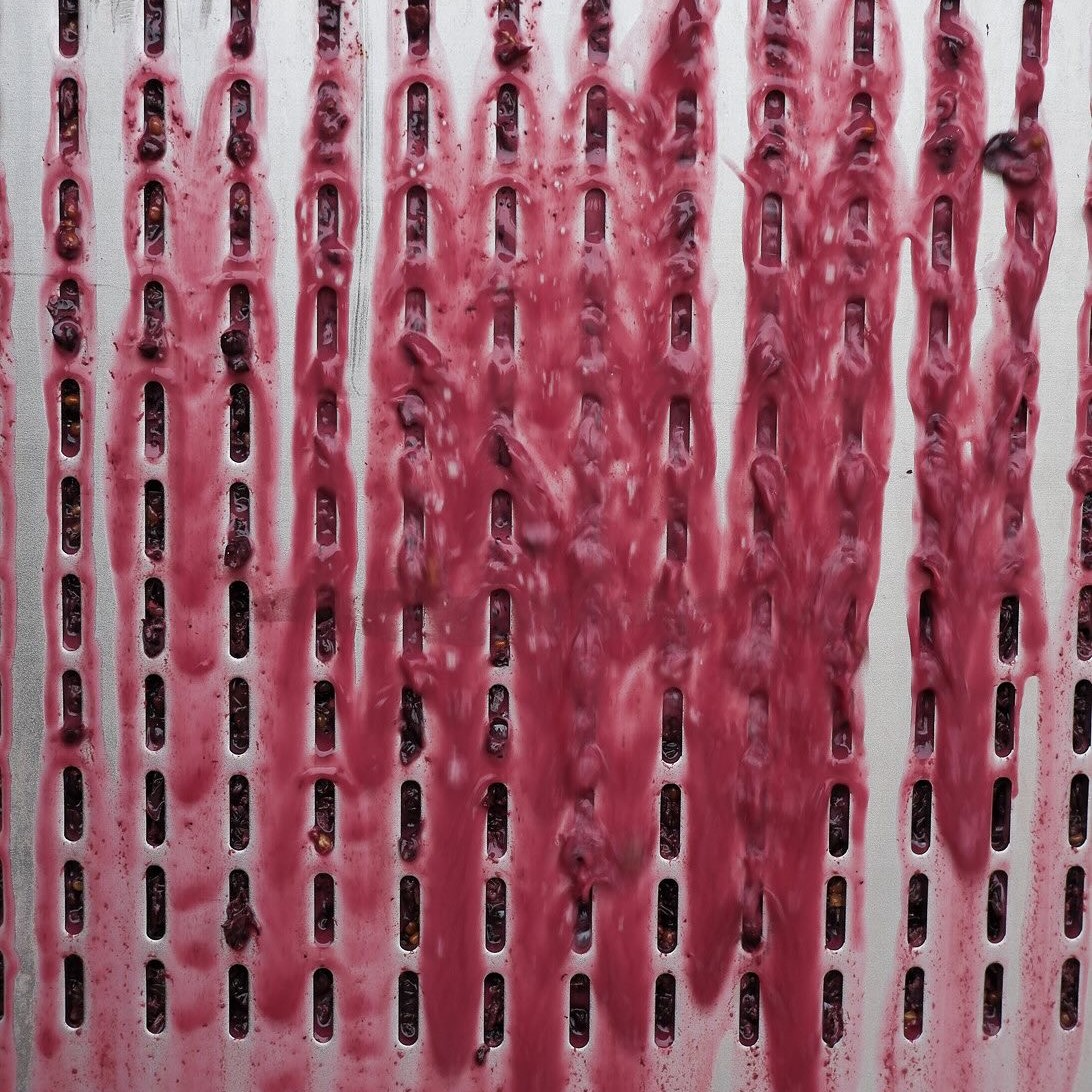
Prensas de cesta verticales tradicionales en las que el cabezal desciende y comprime las pieles; el zumo fluye radialmente a través de las perforaciones.
- Ventajas: Acción suave, poco cizallamiento, muy adecuada para el prensado delicado de vinos blancos en racimos enteros y la producción artesanal de lotes pequeños.
- Desventajas: Drenaje desigual (torta exterior seca, centro aún húmedo), menor rendimiento total en comparación con las prensas modernas, capacidad limitada para alcanzar sólidos “secos como el papel”; menor extracción de fenoles de la piel.
- Capacidades típicas: De 4 a más de 100 toneladas por lote (el dimensionamiento práctico depende del tipo de mosto).
Para las bodegas que necesitan un prensado suave en cestas para los blancos de primera calidad, consulte nuestras prensas de cestas para lotes pequeños y los kits de conversión retrofit, diseñados para una carga uniforme y una limpieza rápida.
Prensas de membrana / tipo vejiga / tipo vejiga - estándar comercial
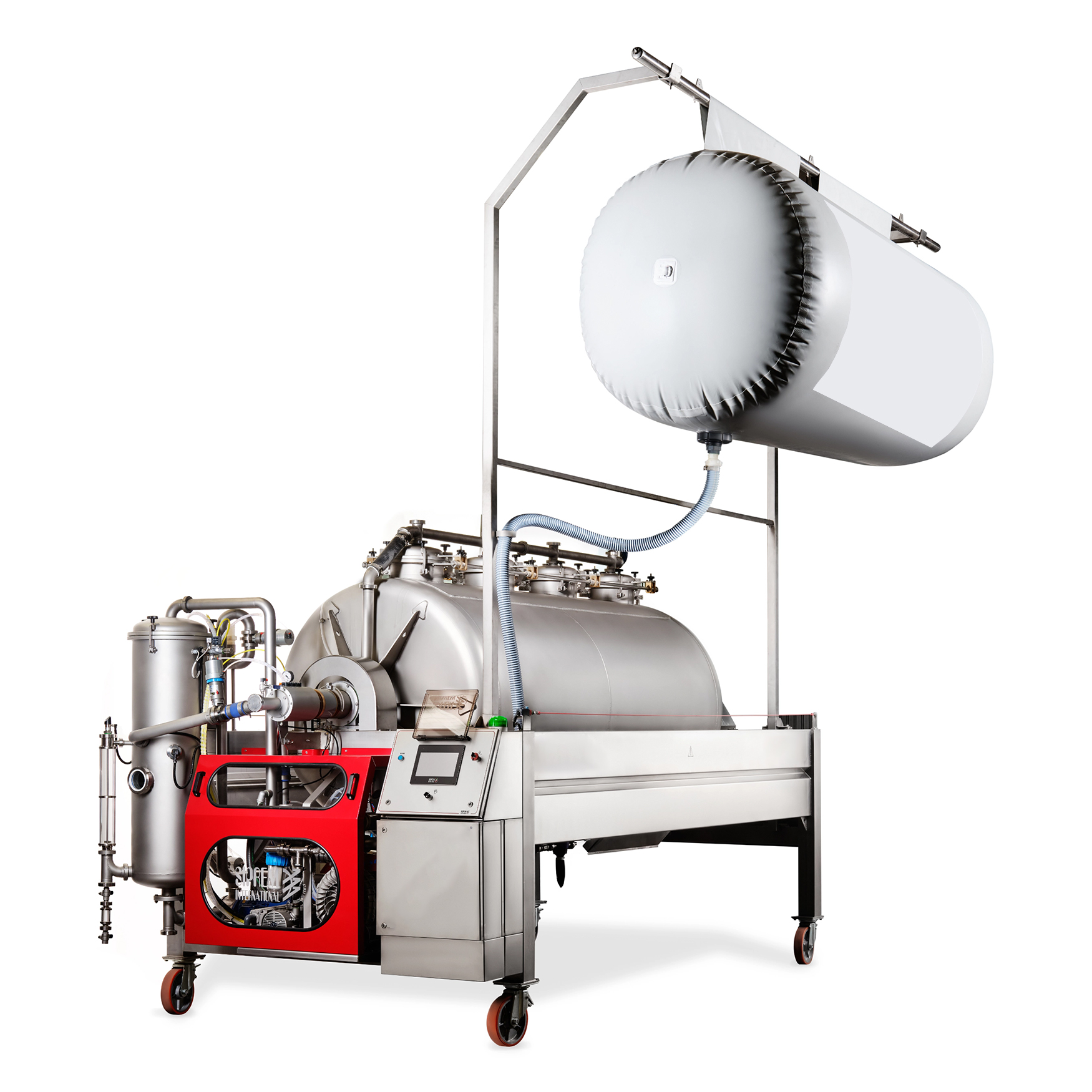
Cilindro horizontal inoxidable con una membrana o vejiga inflable que aplica una presión uniforme y fuerza el jugo a través de canales de jugo centrales o laterales. Carga mediante puerta o alimentación axial; el inflado exprime los sólidos contra las paredes perforadas; el zumo se acumula en una bandeja y se bombea.
- Ventajas: Mayor rendimiento que las prensas de cesta, control de extracción más uniforme, ciclos multietapa programables (por ejemplo, presiones progresivas 0,5→1→2 atm), prensado opcional con control de flujo, depósitos de gas inerte con minimización de oxígeno para reducir la oxidación.
- Contras: Las cargas mínimas prácticas se sitúan en torno a 20% de capacidad nominal para garantizar una cobertura adecuada del canal de zumo. El coste de capital es superior al de las prensas sencillas.
- Uso típico: La mayoría de las bodegas comerciales eligen prensas de membrana para obtener rendimientos constantes y ciclos automatizados.
Nuestras prensas de membrana incluyen perfiles de presión multietapa y control de caudal opcional. Solicite una hoja de datos y un análisis de dimensionamiento in situ.
Prensas continuas (tornillo sinfín) - alto rendimiento
Las uvas se transportan mediante un tornillo helicoidal a través de una restricción que se estrecha gradualmente; el zumo se recoge en múltiples puntos a lo largo del tornillo correspondientes a presiones crecientes.
- Ventajas: Funcionamiento continuo con un rendimiento muy elevado (puede alcanzar decenas de toneladas por hora), útil para bodegas muy grandes o cooperativas. Las uvas se introducen en una tolva y se desplazan a lo largo de un tornillo helicoidal hacia una restricción ajustable a la salida. La presión aumenta progresivamente y el mosto se recoge en varios puntos correspondientes a niveles de presión crecientes.
- Inconvenientes: mayor cizallamiento mecánico - mayor daño de la piel y las semillas que puede aumentar la extracción de fenoles y minerales; mayor cantidad de sólidos en el zumo que puede requerir pasos adicionales de clarificación; menos suave que las prensas discontinuas y de membrana.
- Uso típico: Producción a gran escala en la que el rendimiento y la velocidad pesan más que un sutil control de la extracción.
Orientación y capacidad
Dimensionamiento
El tipo de mosto es importante: Para el mismo tamaño de prensa, los mostos tintos macerados ocupan entre 1,5 y 2 veces el peso original de la uva en comparación con las uvas blancas estrujadas y despalilladas. El prensado de racimos enteros ocupa aproximadamente ⅓ de la capacidad de las uvas estrujadas/despalilladas.
Picos de cosecha: Utilice el tonelaje diario máximo de cosecha y los tiempos de ciclo realistas para decidir el número y la capacidad de las prensas. Ejemplo: si un ciclo de prensado dura unas 3 horas y se trabaja en dos turnos, calcule cuántos ciclos al día por prensa y dimensione en consecuencia.
Llenado mínimo de funcionamiento: Para las prensas de membrana, evite funcionar por debajo del llenado 20%; de lo contrario, el rendimiento y la producción se verán afectados.
Compromisos operativos - Rendimiento frente a calidad
Prensas de cesta: menor rendimiento, extracción más suave → buenas para vinos blancos delicados.
Prensas de membrana: mayor rendimiento y control más fino → equilibradas para blancos y muchos tintos cuando se combinan con maceración controlada.
Prensas continuas: mayor rendimiento pero riesgo de sobreextracción y mayores sólidos → mejor para estilos de gran volumen y menor extracción o cuando existe capacidad de clarificación aguas abajo.
Nuestros equipos cumplen:
Prensado suave y controlado que protege los aromas delicados y minimiza las extracciones no deseadas
Programación flexible para ciclos personalizados adaptados a sus variedades de uva y estilo de vino
Construcción duradera de acero inoxidable para una limpieza fácil y una larga vida útil
Actualizaciones opcionales como controles automatizados, sistemas de gas inerte y control de flujo integrado.
¿Listo para elevar su proceso de prensado?
Póngase en contacto con nuestro equipo hoy mismo para obtener recomendaciones personalizadas, planificación de capacidad o un presupuesto a medida. Descubra cómo la prensa de vino adecuada puede transformar su cosecha en vinos excepcionales.