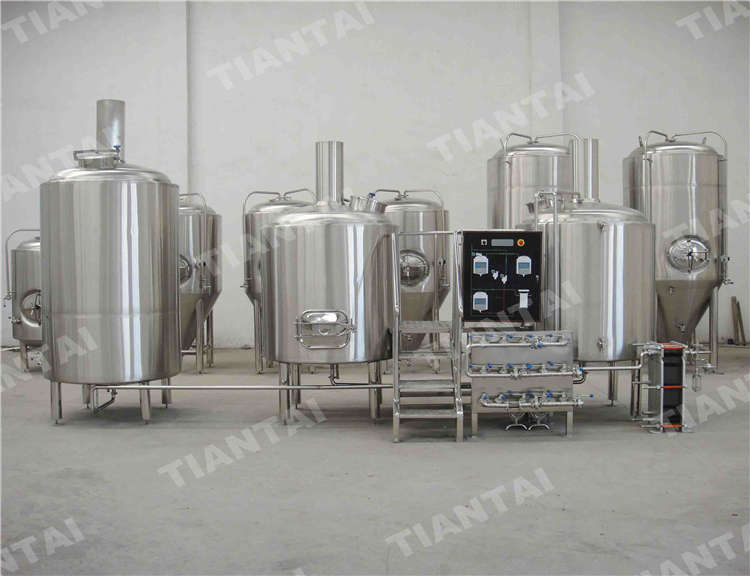
In the brewing process, separating spent grains after mashing is critical for both wort quality and production efficiency. The industry primarily utilizes two types of separation equipment: the Lauter Tun and the Wort Filter Press. These differ in their operating principles and suitable applications. This article will delve into their structural design, operational mechanisms, and selection criteria to provide a reference for brewery equipment choices.
Lauter Tun
Within brewery equipment, the Lauter Tun is responsible for solid-liquid separation between the Mash Tun and Brew Kettle, isolating the wort from the spent grains post-mashing.
- Function and Operating Principle
Following the mash process, starches have been converted into fermentable sugars such as maltose. However, the malt wort still contains a significant amount of solid spent grain material. The Lauter Tun employs gravity and slight pressure to achieve natural lautering, allowing the clarified wort to flow out smoothly. Concurrently, sparging water is used to rinse the spent grain bed, maximizing the extraction of residual sugars, thereby ensuring the beer’s body and final alcohol content.
- Internal Structure
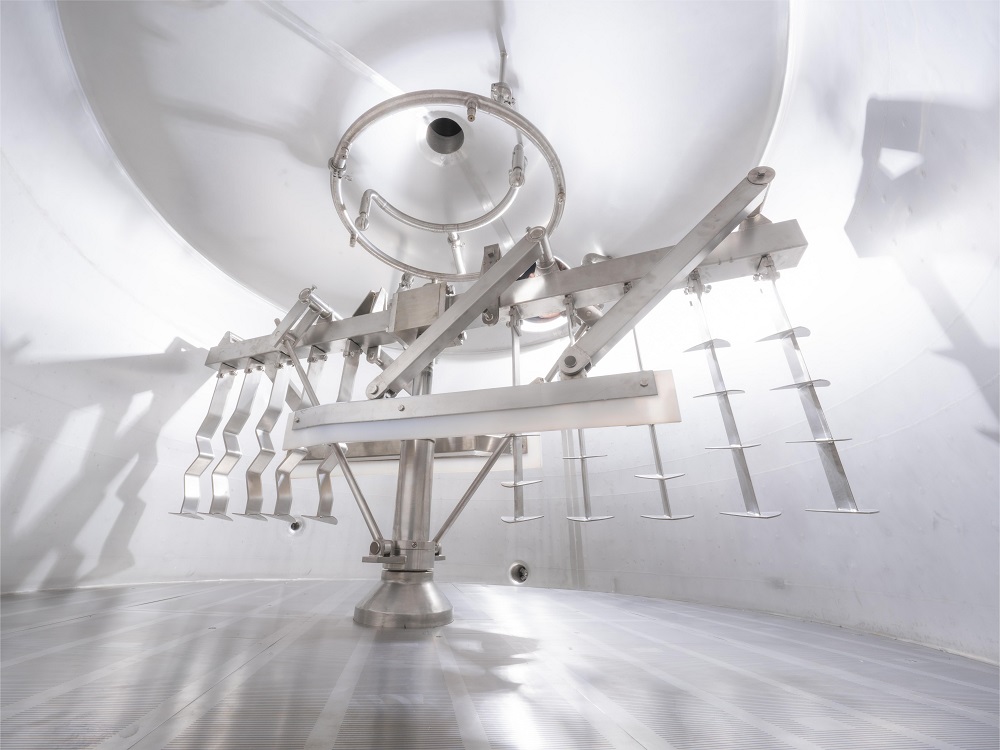
- Wedge Wire False Bottom: Located at the bottom of the Lauter Tun, this is typically constructed from wedge wire screens or food-grade stainless steel mesh, effectively separating wort from spent grains.
- Rake: Positioned above the Wedge Wire False Bottom, the rake loosens the grain bed during lautering to prevent the spent grain layer from compacting and blocking, ensuring smooth wort runoff.
- Sparging spray ring: Installed at the top of the equipment, this spray-style component uniformly rinses the spent grains, enhancing sugar extraction efficiency.
- Technical parameters
When selecting a Lauter Tun, consider the following:
- Lautering Area: A larger area facilitates a faster lautering process.
- Wedge Wire False Bottom Gap: The gap size affects lautering precision and permeability, and should be matched to the brewing process.
- Maximum Operating Pressure: Lauter Tuns typically operate under slight vacuum or low positive pressure. The equipment must possess adequate pressure-bearing capacity. For instance, Tian Tai designs its Lauter Tuns with an external Grant Tank to enhance operational stability and safety.
- Material: Must be food-grade stainless steel, subjected to pickling and passivation treatment, with a smooth, burr-free surface to prevent bacterial growth.
- Modernization Trends
With the advancement of the brewing industry, the Lauter Tun is also evolving towards greater efficiency and intelligence:
- Efficient Fluid Dynamics: Lauter speed is significantly enhanced through optimized hydrodynamic design and the utilization of large-radius centrifugal pumps.
- Automated Control Systems: Modern lauter tuns are equipped with control systems and pressure sensors, enabling precise management of lautering time, temperature, and pressure, thereby minimizing human error.
- Backflush System: To prevent clogging, the Lauter Tun features rapid backflush nozzles designed to quickly remove brewing haze, extending the equipment’s continuous operational uptime.
Wort Filter Press
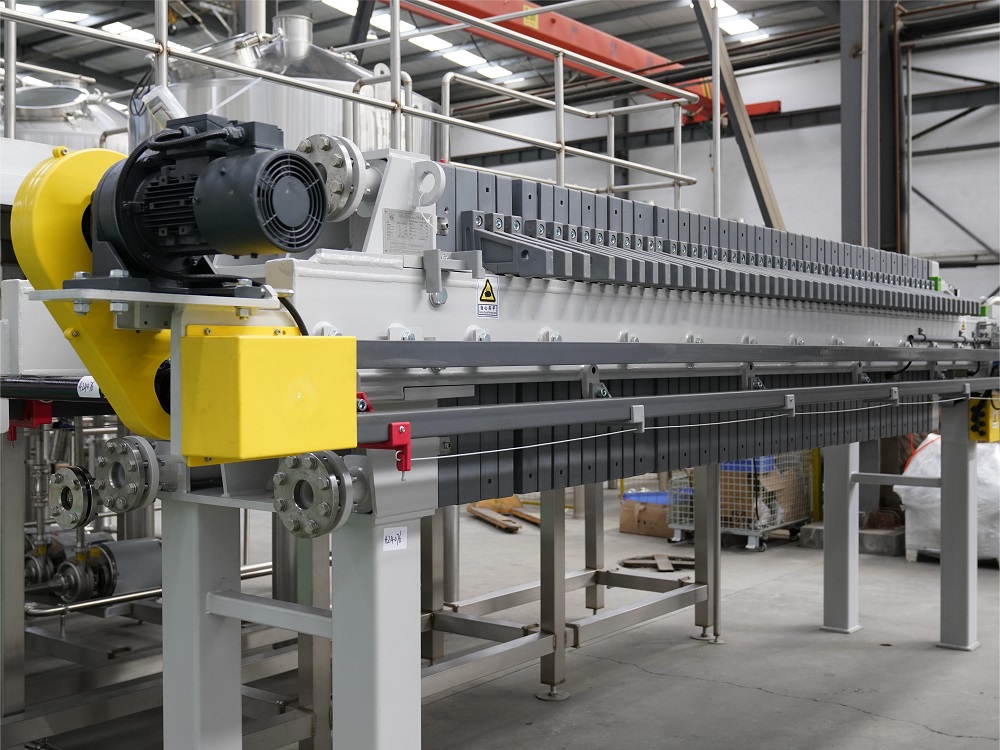
The Wort Filter Press is a high-efficiency solid-liquid separation equipment commonly employed in modern breweries. Its primary function is the rapid separation of wort from spent grains post-mash, thereby enhancing lautering efficiency, yield, and final product quality.
- Function and Working Principle
- Rapid Separation: Utilizes pressure (typically air) to quickly expel wort from the filter cake, achieving significantly faster separation than conventional gravity-based Lauter Tuns.
- Increased Yield: Pressurization compacts the spent grains bed, facilitating more thorough sugar extraction and maximizing raw material utilization, thus minimizing waste.
- Sealed and Oxygen-Controlled: The entire lautering process occurs within a sealed environment, preventing direct wort-air contact. Dissolved oxygen levels can be maintained below 0.1 ppm, substantially improving beer flavor stability and shelf life.
- Technical Specifications
- Processing Capacity: Modern, fully automated Wort Filter Presses can achieve daily processing capacities exceeding 10 KL per unit, catering to the needs of medium to large-scale breweries.
- Lautering Effect: Post-lautering wort exhibits extremely low turbidity and a clear color.
- Automation Level: Equipped with a fully automated control system, supporting automated lautering, Clean-in-Place (CIP), and filter cloth cleaning, simplifying operation and reducing manual labor intensity.
- Energy Saving and Environmental Friendliness: High lautering efficiency, a compact footprint, and a drier production environment reduce energy consumption and mitigate workshop humidity issues.
- Operation Process
- Full Automation Control: Operators monitor the entire brewing process via a central control screen. The equipment automatically performs parameter calculations, eliminating the need for manual adjustments on the brewhouse floor.
- Efficient Cake Discharge System: The Filter Press is outfitted with a reverse flushing or scraper cleaning mechanism for rapid removal of residual solids from filter cloths and plates, preventing clogging and ensuring production continuity.
- PostSpent Grains Handling: Pressed spent grains exhibit lower moisture content, facilitating easier transportation, milling, and reuse (e.g., as animal feed), thereby reducing downstream processing costs.
Although the Wort Filter Press surpasses traditional Lauter Tuns in efficiency, automation, and energy savings, it is not universally applicable across all brewing scenarios. For brewers prioritizing traditional flavor profiles, moderate yields, and cost management, the Lauter Tun remains an economically viable choice. However, in applications demanding high-efficiency continuous production, maximized raw material utilization, particularly when employing significant proportions of adjuncts like rice or corn to reduce production costs, the Wort Filter Press demonstrates a clear advantage. It also excels at efficiently processing high-viscosity malt wort, making it suitable for high-gravity brewing processes.
In practical beer production, it is recommended that breweries conduct a comprehensive equipment selection process based on their capacity planning, brewing style, ingredient formulation, and investment budget. Tiantai can provide customized services tailored to your production scale and site conditions, ensuring a precise match between brewing equipment and production demands. This approach guarantees wort quality and beer stability while achieving efficient, consistent, and cost-effective large-scale brewing production.