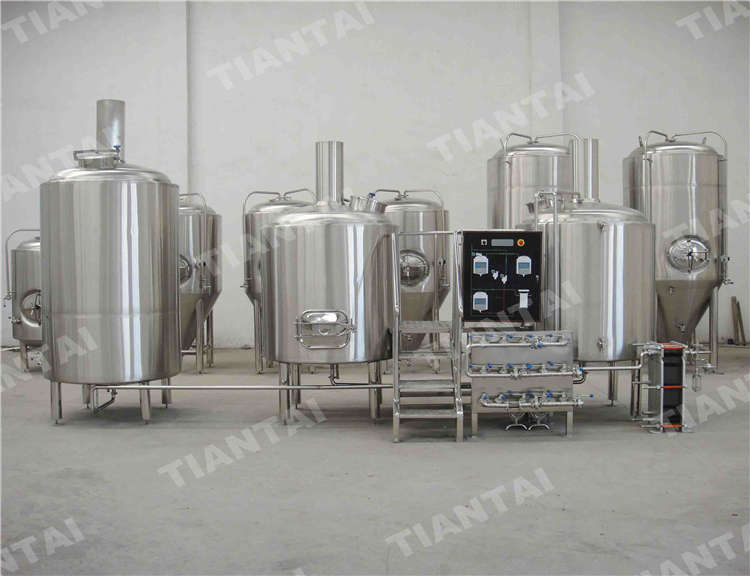
Every great beer begins as “green beer” straight from fermentation — drinkable, yet flat, rough, and flavour-unstable. The critical next stage is beer maturation and conditioning, where green beer transforms into the crisp, stable, market-ready product your customers love. At this stage, precise temperature control, pressure management, and gentle handling make all the difference.
Our brewery equipment specialists design bright beer tanks (BBTs) that deliver exactly what professional brewers need: reliable conditioning with zero compromise on quality or efficiency.
Why Beer Conditioning and Maturation Matter
Conditioning isn’t optional — it’s the step that defines your beer’s final character. Skilled brewers use this phase to:
- Induce secondary fermentation for natural carbonation
- Mature and round out flavours and aromas
- Reduce or eliminate haze-forming compounds
- Fine-tune flavour, colour, and aroma profiles
- Optimise foam-positive or foam-negative compounds
- Suppress bacterial growth for a longer shelf life
- Clarify the beer ahead of filtration or packaging
Without a properly designed conditioning vessel, these goals become difficult, inconsistent, or even impossible to achieve at scale.
That’s why modern breweries invest in purpose-built bright beer tanks — the final controlled environment where green beer becomes “bright” beer ready for the packaging line.
What is a bright beer tank?
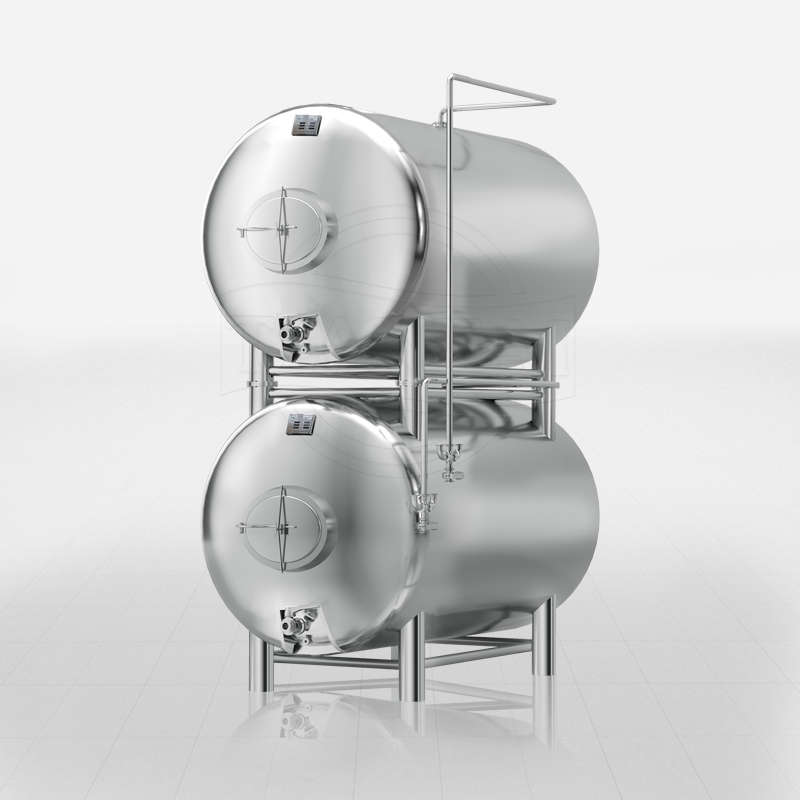
A bright beer tank is the vessel used to hold beer after fermentation and conditioning, but before packaging. It is designed to keep beer cold, pressurized, and stable while allowing final adjustments to carbonation and product handling.
Bright beer tanks are typically used to:
- hold conditioned beer before bottling, canning, or kegging,
- maintain carbonation,
- allow clarification and settling,
- support final blending or adjustment,
- provide a buffer between fermentation and packaging.
Bright beer tank design features
A bright beer tank is built differently from a fermenter because its function is different.
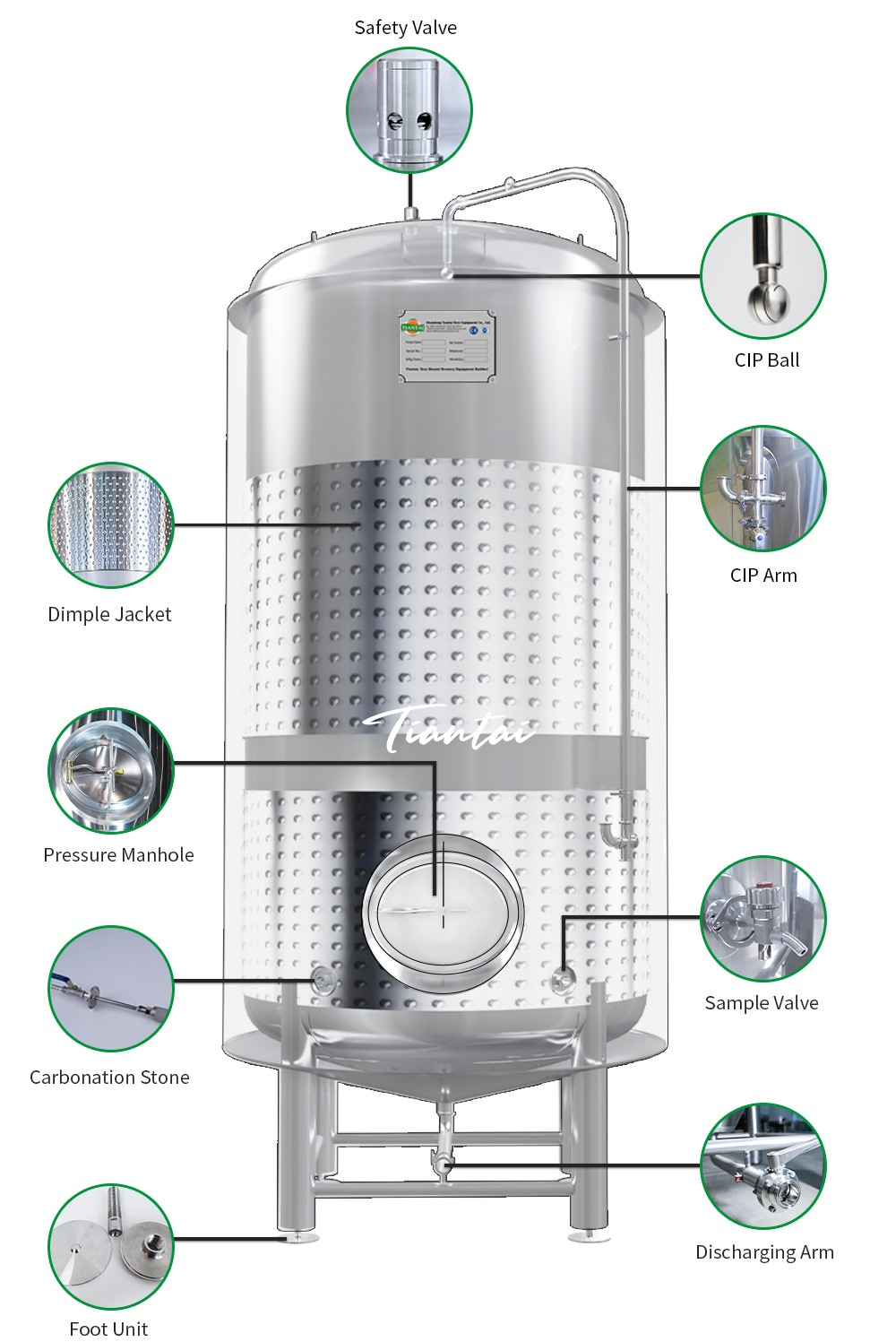
Jacketed vessel body
The tank is usually jacketed so the brewery can control temperature with glycol or another coolant. Cold storage helps preserve beer freshness, maintain carbonation, and improve stability.
Pressure-rated construction
Because the beer is stored under pressure, the vessel must be designed to handle carbonation and transfer safely. This is essential for maintaining dissolved CO₂ and minimizing oxygen pickup.
Bottom and side ports
Bright beer tanks usually include:
- a bottom port for beer inlet,
- side ports for beer withdrawal,
- a carbonation port,
- sampling and monitoring ports.
These connections make it easier to add beer, adjust carbonation, and send finished products to the packaging line.
Carbonation stone
Many tanks include a carbonation stone for controlled CO₂ addition. This allows brewers to fine-tune carbonation levels efficiently and consistently.
Monitoring instruments
Bright beer tanks are often fitted with gauges and control devices for pressure, temperature, and volume monitoring. These tools support safe operation and repeatable product quality.
Flatter tank bottom
Compared with fermentation vessels, bright beer tanks often have a flatter bottom because less sediment remains at this stage. The bottom is still slightly concave so the beer can be fully drained.
Advantages of bright beer tanks in brewery operation
Improved product consistency
By holding beer under controlled temperature and pressure, bright beer tanks help ensure that each batch reaches packaging with the same carbonation, clarity, and flavor stability.
Better packaging efficiency
Beer can be transferred smoothly to bottling, canning, or kegging equipment, helping maintain a steady production flow.
Lower oxygen exposure
Because beer is held in a closed, pressurized vessel, exposure to oxygen can be minimized. This is important for protecting flavor and shelf life.
More flexible production scheduling
Bright beer tanks act as a buffer between fermentation and packaging. This allows the brewhouse and packaging line to operate more efficiently, even when production timing varies.
Easier finishing control
Brewers can use the bright beer tank to make small final adjustments before packaging, such as carbonation and blending. This makes it easier to meet style specifications and product targets.
Equipment considerations when selecting a bright beer tank
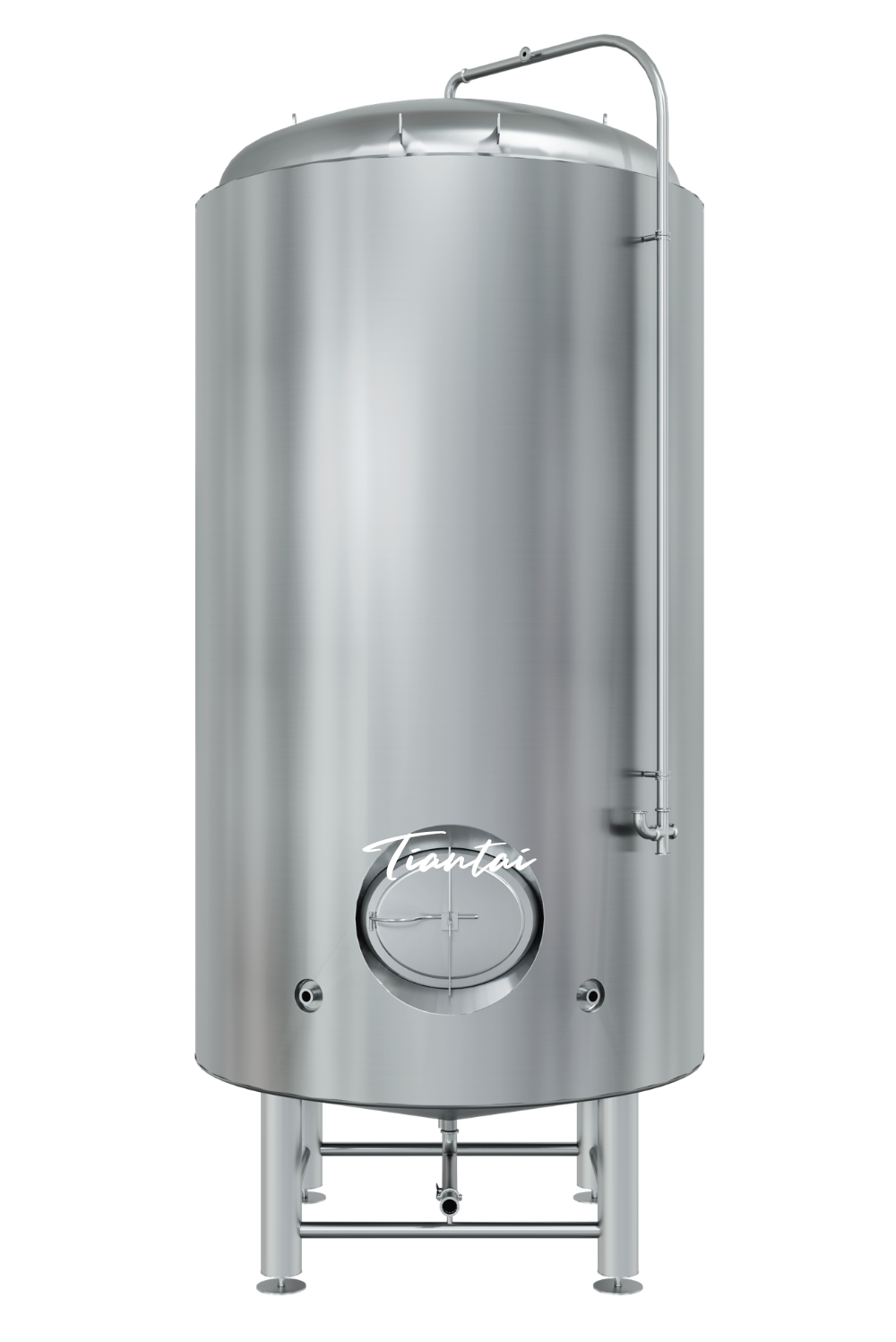
When choosing a bright beer tank, breweries should consider:
- vessel capacity and available floor space,
- cooling demand and jacket design,
- working pressure and carbonation requirements,
- port layout for transfer and cleaning,
- instrumentation for pressure and temperature control,
- compatibility with the packaging line,
- cleaning and sanitation access.
A well-designed tank should fit the brewery’s batch size, production schedule, and product portfolio.
From small craft breweries to large-scale production facilities, our bright beer tanks integrate seamlessly into new or existing lines and pay for themselves through higher quality and reduced losses. Contact our brewery equipment team today to discuss custom bright beer tanks and full conditioning systems designed for your specific needs.